Best portable power stations for emergency preparedness (2026)
If you are buying for blackouts first, the fastest way to narrow the field is this: get at least 1,200Wh for overnight essentials, at least 2,000W AC output for fridge-friendly flexibility, and LiFePO4 if you want long service life. In this lineup, the strongest value is the 2,073Wh / 2,600W BLUETTI Elite 200 V2 at $799. If you want a larger home-backup step-up, the 3,072Wh / 3,600W Jackery HomePower 3000 is the more serious outage machine.
We make money from reader-supported links; see our affiliate disclosure. If you want to compare beyond this shortlist, start with the full database.
Quick picks
| Category | Model | Why it wins |
|---|---|---|
| Best overall | BLUETTI Elite 200 V2 Portable Power Station - 2073.6Wh, 2600W | 2,073Wh, 2,600W, LiFePO4, 6,000 cycles, and a standout $799 price. |
| Best value | Apex 300 Home Integration Kit | $699 entry price for home-circuit integration, but read the caveat: this is an integration kit, not a standalone station. |
| Best for whole-home leaning backup | Solar Generator HomePower 3000 | 3,072Wh, 3,600W output, expandable to 24,000Wh, and sold as a blackout-focused package. |
How we picked
We prioritized emergency use, not camping appeal: usable capacity, AC output, battery chemistry, cycle life, expandability, weight, and current street price from the manufacturer pages in the dataset above. We also penalized listings with confusing bundle naming or obvious spec inconsistencies. You can read our scoring methodology and the full test framework at /how-we-test.
What “good” looks like at this price
For emergency preparedness in 2026, “good” starts around 1,200Wh and 2,000W if you want more than phone charging and LED lights. That gets you into the range where a station can realistically support Wi-Fi, laptops, fans, medical devices like many CPAP setups, and in many cases a refrigerator if startup demand stays within the inverter limit. The U.S. Department of Energy notes that refrigerators are among the key loads people try to preserve during outages, which is why inverter headroom matters as much as raw battery size (DOE Energy Saver).
The next tradeoff is runtime versus portability. A 1,264Wh unit around 14.5 kg is genuinely movable. A 2,000 to 3,000Wh class box at 24 to 44 kg is backup gear first, portable second. If you need help estimating fridge, router, lights, and CPAP runtime, use our tools to size your system or check our other solar calculators.
At this tier, LiFePO4 is the baseline to look for, and every model here uses it. Cycle life ranges from 4,000 to 6,000 cycles in the supplied data. That does not mean all units are equal in real-world durability, but it is a strong starting point. Missing fields matter too: several products here do not list solar input limits, surge power, or warranty length in the supplied data, so I do not score them as strongly on confidence.
The 7 best models
1) BLUETTI Elite 200 V2 Portable Power Station - 2073.6Wh, 2600W

This is the easy top pick for most buyers. The BLUETTI Elite 200 V2 Portable Power Station - 2073.6Wh, 2600W lands at 2,073Wh and 2,600W for $799, which is the best capacity-per-dollar number in this list among actual standalone stations. It also uses LiFePO4 and is rated for 6,000 cycles.
For outages, that spec mix is right in the middle of the useful zone: enough battery for overnight essentials, enough inverter for a fridge plus communications gear, and not so large that it becomes impossible to move. At 24.4 kg, it is still a two-hand carry, but manageable.
| Spec | Value |
|---|---|
| Capacity | 2,073Wh |
| AC output | 2,600W continuous |
| Battery | LiFePO4 |
| Cycle life | 6,000 |
| Weight | 24.4 kg |
| Expansion | Yes, up to 4,147Wh |
| Price | $799 |
Pros
| Pros |
|---|
| Excellent $/Wh for a 2kWh-class LFP unit |
| 2,600W output is strong for common outage loads |
| 6,000-cycle rating is higher than Jackery units here |
Cons
| Cons |
|---|
| Solar input max not specified by the manufacturer in this dataset |
| Warranty length not specified by the manufacturer |
| Still heavy enough to be awkward for stairs |
2) Jackery Portable Power Station Explorer 1000 Plus
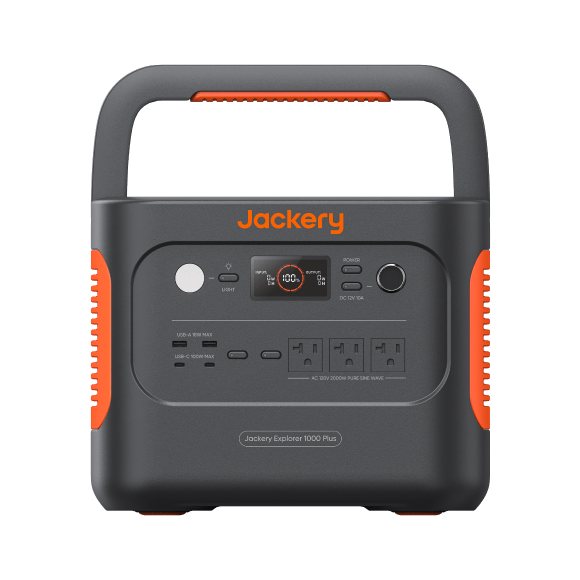
The Jackery Portable Power Station Explorer 1000 Plus is the best pick here if you care most about portability without dropping below serious backup specs. It gives you 1,264Wh, 2,000W output, LiFePO4 chemistry, and a 14.5 kg weight.
That makes it much easier to stash in a closet, move to a car, or carry to a neighbor’s house during an outage. The tradeoff is simple: 1,264Wh is enough for essentials, but not enough to feel relaxed about long blackouts unless you are very selective with loads.
| Spec | Value |
|---|---|
| Capacity | 1,264Wh |
| AC output | 2,000W continuous |
| Battery | LiFePO4 |
| Cycle life | 4,000 |
| Weight | 14.5 kg |
| Expansion | Yes, up to 5,000Wh |
| Price | $999 |
Pros
| Pros |
|---|
| Very good power-to-weight ratio |
| 2,000W inverter covers many household essentials |
| Expandable beyond its base capacity |
Cons
| Cons |
|---|
| Higher price than the larger Elite 200 V2 |
| 4,000-cycle rating trails Bluetti’s 6,000-cycle units here |
| Solar input and warranty not specified by the manufacturer in this dataset |
3) Solar Generator HomePower 3000
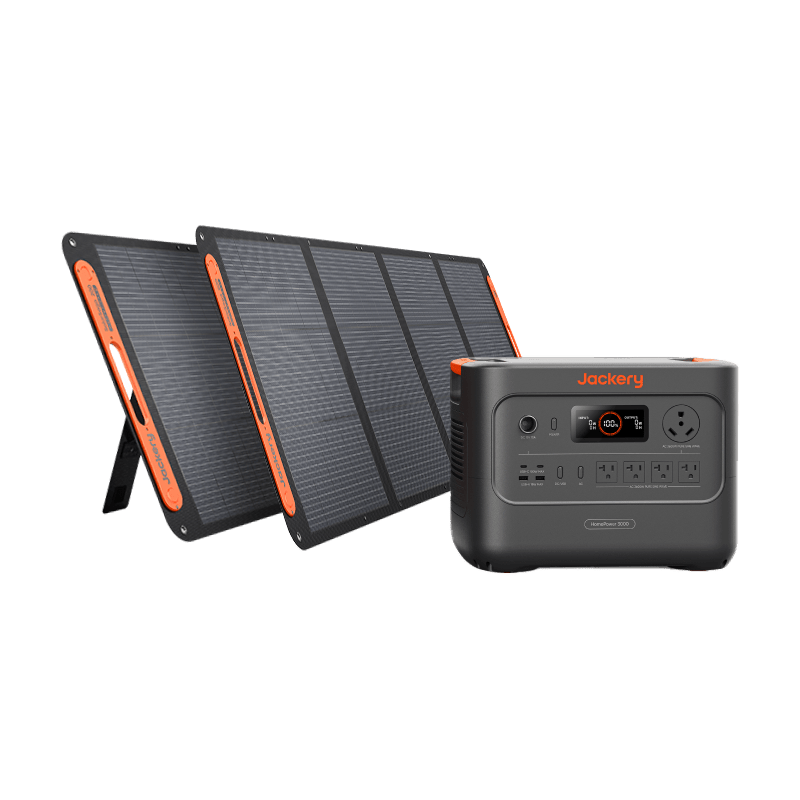
The Solar Generator HomePower 3000 is the best fit here for buyers who want a larger blackout-focused package and are willing to pay for it. You get 3,072Wh, 3,600W output, LiFePO4, and expansion up to 24,000Wh. The product description also mentions a 5-year warranty, though the structured warranty field in the supplied data is blank.
At 44 kg, this is not a casual portable station. It is a rolling backup asset. If your outage plan includes refrigerator runtime, lights, internet, fans, and intermittent kitchen loads, this class makes more sense than a 1kWh unit.
| Spec | Value |
|---|---|
| Capacity | 3,072Wh |
| AC output | 3,600W continuous |
| Battery | LiFePO4 |
| Cycle life | 4,000 |
| Weight | 44.0 kg |
| Expansion | Yes, up to 24,000Wh |
| Price | $2,999 |
Pros
| Pros |
|---|
| Strong 3,600W output for larger household loads |
| 3,072Wh base capacity is comfortable for outage use |
| Large expansion ceiling for multi-day backup plans |
Cons
| Cons |
|---|
| 44 kg weight limits true portability |
| Expensive for buyers who only need essentials backup |
| Solar input max not specified by the manufacturer in this dataset |
4) AC500 Inverter | 5000W , B300S Required

The AC500 Inverter | 5000W , B300S Required is the brute-force option in this list. It is rated at 5,120Wh and 5,000W continuous, with expansion up to 30,720Wh. For emergency preparedness, that is enough to start thinking beyond “essentials only” and into panel-fed home backup.
The caution is right in the product name: B300S required. This is not the cleanest pick for a buyer who wants a grab-and-go box. It is better suited to planned backup deployment than quick portability.
| Spec | Value |
|---|---|
| Capacity | 5,120Wh |
| AC output | 5,000W continuous |
| Battery | LiFePO4 |
| Cycle life | 6,000 |
| Weight | 30.0 kg |
| Expansion | Yes, up to 30,720Wh |
| Price | $1,599 |
Pros
| Pros |
|---|
| 5,000W output is the highest continuous rating here |
| Very large expansion ceiling for serious backup setups |
| 6,000-cycle LiFePO4 platform is strong on paper |
Cons
| Cons |
|---|
| Product naming and required battery dependency add buying friction |
| Not a simple “portable station” purchase for most people |
| Solar input, surge rating, and warranty not specified in this dataset |
5) BLUETTI Apex 300 Home Battery Backup | 2,764.8Wh, 3,840W

The BLUETTI Apex 300 Home Battery Backup | 2,764.8Wh, 3,840W should be a strong contender on paper: 2,764Wh, LiFePO4, 6,000 cycles, and expansion up to 29,400Wh. But the supplied structured data lists AC output at 840W, while the product title says 3,840W. That inconsistency matters.
Because of that mismatch, I would treat this as a “verify before purchase” model. If the true continuous output is 3,840W, it is much more compelling than its ranking here suggests. If it is 840W, it is badly constrained for outage use.
| Spec | Value |
|---|---|
| Capacity | 2,764Wh |
| AC output | 840W in structured data; title states 3,840W |
| Battery | LiFePO4 |
| Cycle life | 6,000 |
| Weight | 38.0 kg |
| Expansion | Yes, up to 29,400Wh |
| Price | $1,529 |
Pros
| Pros |
|---|
| Strong base capacity for overnight essentials |
| 6,000-cycle LiFePO4 chemistry is attractive |
| Very large expansion potential |
Cons
| Cons |
|---|
| AC output data is inconsistent across supplied fields |
| 38 kg is heavy for a mid-capacity unit |
| Warranty and solar input not specified by the manufacturer in this dataset |
6) Jackery Solar Generator 1000 Plus
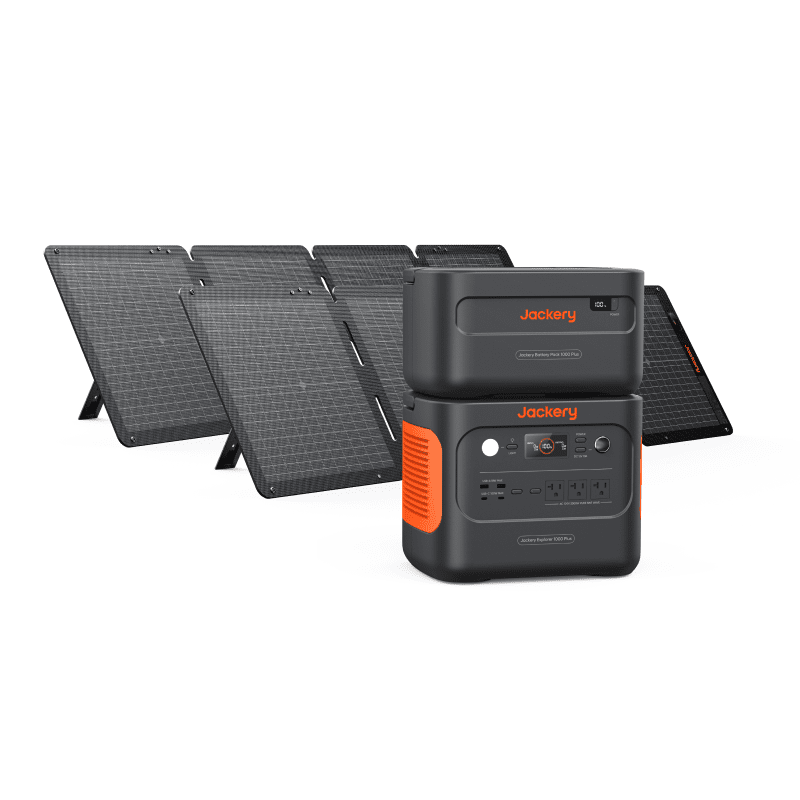
The Jackery Solar Generator 1000 Plus is effectively the Explorer 1000 Plus sold as a solar bundle. The core station specs are the same in the supplied data: 1,264Wh, 2,000W, 14.5 kg, and expansion to 5,000Wh. The problem is price: $2,099 versus $999 for the station listing.
That may still make sense if the included solar hardware is the right size and priced fairly, but this dataset does not provide panel wattage or solar charging details. For strict emergency-prep value, I would usually start with the standalone station and add panels later.
| Spec | Value |
|---|---|
| Capacity | 1,264Wh |
| AC output | 2,000W continuous |
| Battery | LiFePO4 |
| Cycle life | 4,000 |
| Weight | 14.5 kg |
| Expansion | Yes, up to 5,000Wh |
| Price | $2,099 |
Pros
| Pros |
|---|
| Same portable 14.5 kg platform as the Explorer 1000 Plus |
| 2,000W output is useful for outage essentials |
| Bundle format may simplify first-time solar buying |
Cons
| Cons |
|---|
| Much pricier than the standalone station listing |
| Included solar specs are not specified in this dataset |
| Lower cycle rating than Bluetti’s 6,000-cycle entries here |
7) Explorer 2000 Plus Series
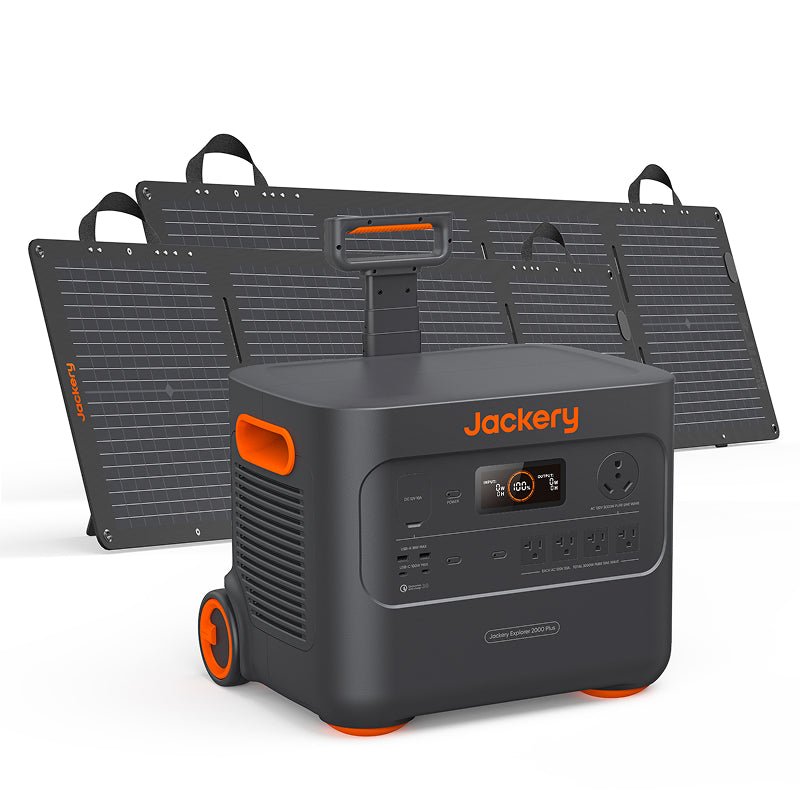
The Explorer 2000 Plus Series is the strangest listing in this group. The structured data says 24,000Wh capacity, 3,000W output, 27.9 kg, and expansion to 12,000Wh, while the product description says “2-24 kWh of expandable capacity” and also notes the product shown is not available for purchase.
That means the data is internally inconsistent enough that I would not recommend it as a first-click buy despite the attractive headline specs. Keep it on your comparison list, but verify the exact base configuration on the manufacturer page before treating it as a real 24kWh portable purchase.
| Spec | Value |
|---|---|
| Capacity | 24,000Wh in structured data; description references 2-24kWh expandable |
| AC output | 3,000W continuous |
| Battery | LiFePO4 |
| Cycle life | 4,000 |
| Weight | 27.9 kg |
| Expansion | Structured data says 12,000Wh max expansion |
| Price | $2,599 |
Pros
| Pros |
|---|
| 3,000W output is solid for home essentials |
| Expandable concept suits longer outages |
| 27.9 kg is reasonable if the base unit is truly 2kWh-class |
Cons
| Cons |
|---|
| Structured capacity data appears inconsistent with the description |
| Page text says the shown product is not available for purchase |
| Not a confidence-inspiring buy without manual verification |
What you give up at this price
The biggest compromise in this lineup is certainty. Several products have missing fields for surge power, solar input limits, or warranty length. Two entries also have obvious data conflicts: the Apex 300 output figure and the Explorer 2000 Plus capacity framing. If you are shopping for emergency gear, missing or contradictory specs are not a small issue. They directly affect whether a unit can start a fridge, recharge fast enough from solar, or justify its price over a cleaner alternative.
You also give up true portability once you move into serious blackout coverage. The models that feel best for outages are mostly 24 kg to 44 kg. That is workable in a garage or utility room, less ideal in an apartment walk-up. If portability is a hard requirement, the Explorer 1000 Plus class is easier to live with, but you are giving up runtime. Use our battery runtime calculator before you buy, and compare current listings in the full database if you want cleaner spec sheets.
Finally, none of these products should be treated as “whole-home backup” in the same sense as a permanently installed battery unless you are pairing them with transfer gear and a defined critical-load plan. NREL’s resilience work consistently points back to load planning, not just battery size (NREL). For most households, the smart move is still to list your must-run loads, size your system, then buy the smallest station that covers them with margin.
Frequently asked questions
What size portable power station is best for emergency preparedness?+
For most outage kits, 1,000 to 3,000Wh is the practical sweet spot. That is usually enough for lights, phones, Wi-Fi, CPAP, and some fridge runtime, but you should still map your actual loads before buying.
Is LiFePO4 the best battery chemistry for backup power?+
For most buyers, yes. Every model in this lineup uses LiFePO4, which is widely favored for long cycle life and thermal stability compared with older lithium-ion chemistries.
Can a portable power station run a refrigerator during a blackout?+
Many can, but runtime depends on the fridge's real energy use and startup surge. In this list, models from 2,000W and up are the safer bets for full-size refrigerators, while 2,000Wh-plus capacity is more comfortable for overnight backup.
Should I buy a power station bundle with solar panels for emergencies?+
Only if the bundle price makes sense and you know you will use the panels. For outage-only buyers, the power station alone is often the better first purchase, then add solar later if recharge resilience matters.
What matters more in an outage: watt-hours or watts?+
Both matter, but they solve different problems. Watt-hours determine how long you can run loads, while watts determine what you can start and run at the same time.
Editor at SolarWorld covering portable power, balcony PV and home energy storage. Specifications quoted in this guide are pulled directly from our product database; analysis and recommendations are by Nathan Cole.
Full bio & methodology →Related articles
- Buying guide · 9 min
Best Construction Site Power Stations 2026: 7 Worth Buying
We ranked 7 portable power stations for jobsite use by watts, watt-hours, expandability, and price. See the best picks before you buy.
- Buying guide · 8 min
Best Portable Power Stations for Tailgating 2026: 7 Picks
The best portable power stations for tailgating and outdoor events in 2026, ranked by usable capacity, output, and price. Buy smarter fast.
- Buying guide · 8 min
Best Stackable Home Batteries 2026: Only 7 Worth Buying
Our 2026 shortlist of modular home batteries, ranked by usable kWh, power, and price—so you can buy the right stack first.