Verdict at a glance
Buy the Jackery Explorer 240 v2 Portable Power Station unless you have a very specific reason to save weight. At current pricing, it costs $249 vs $219, but that extra $30 buys you 256 Wh vs 240 Wh, 300 W vs 200 W of AC output, and a massive battery longevity jump from 500 cycles on the original Li-ion pack to 4,000 cycles on the LiFePO4 version. For most shoppers comparing these two side by side, that is the better value. The older Jackery Explorer 240 Portable Power Station still makes sense if your priority is the lightest small AC power station in this pair at 3.0 kg.
| Model | Best pick if… |
|---|---|
| Jackery Explorer 240 Portable Power Station | Pick A if you want the lower upfront price and lighter 3.0 kg carry weight, and your loads stay well under 200 W. |
| Jackery Explorer 240 v2 Portable Power Station | Pick B if you want the stronger long-term buy: 256 Wh, 300 W output, LiFePO4 chemistry, and 4,000-cycle durability for only $30 more. |
Side-by-side specifications
| Spec | Jackery Explorer 240 Portable Power Station | Jackery Explorer 240 v2 Portable Power Station |
|---|---|---|
| Product | Jackery Explorer 240 Portable Power Station | Jackery Explorer 240 v2 Portable Power Station |
| Image | 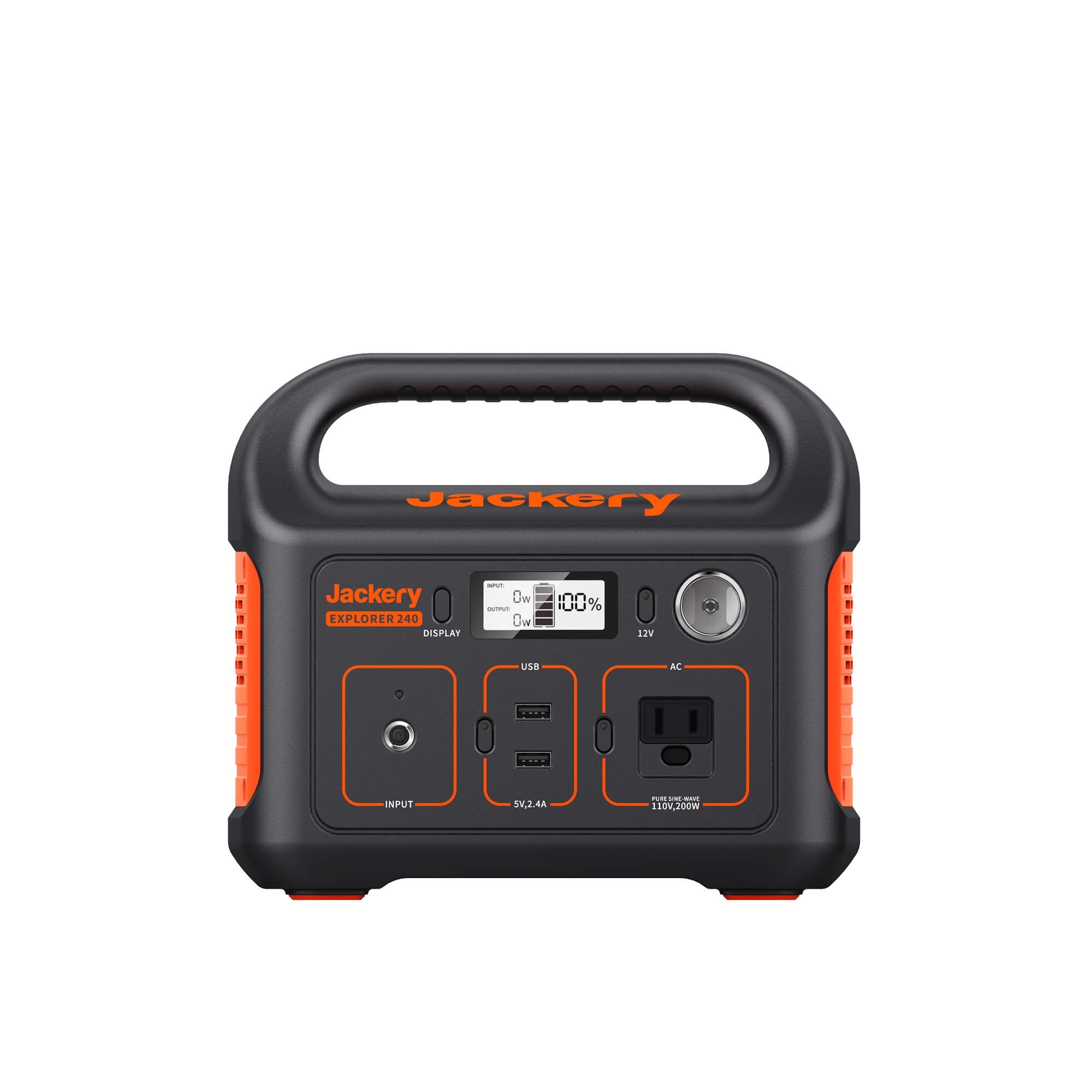 |
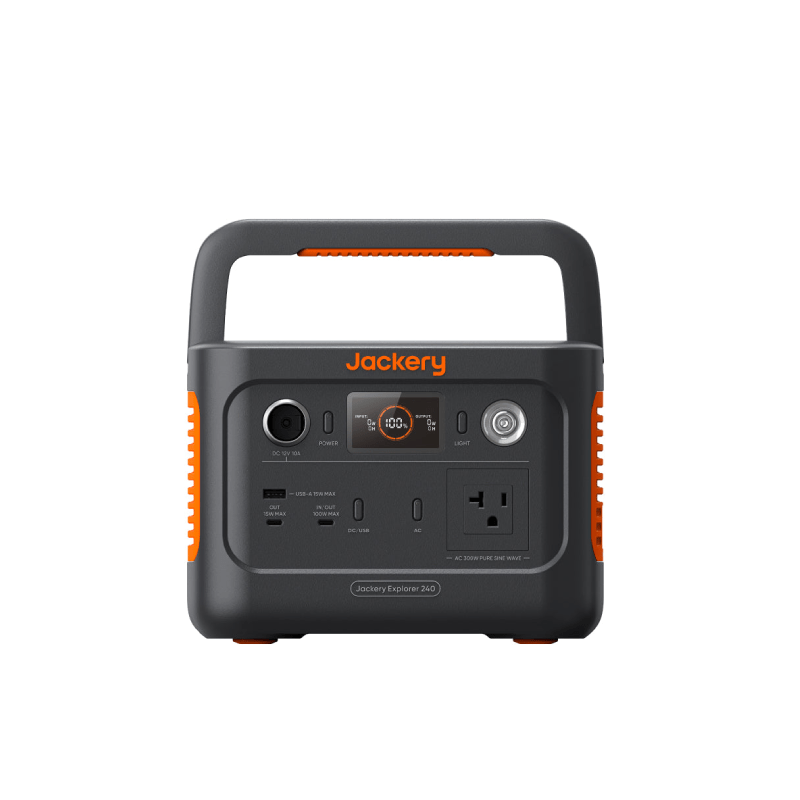 |
| Capacity | 240 Wh | 256 Wh |
| AC output (continuous) | 200 W | 300 W |
| AC output (surge) | not specified by the manufacturer | not specified by the manufacturer |
| Battery chemistry | Li-ion | LiFePO4 |
| Cycle life | 500 cycles | 4,000 cycles |
| Weight | 3.0 kg | 3.6 kg |
| Warranty | not specified by the manufacturer | not specified by the manufacturer in the structured product data |
| Expandable battery | No | No |
| Max expansion | not applicable | not applicable |
| Solar charging input | not specified by the manufacturer | not specified by the manufacturer |
| Charging speed | not specified by the manufacturer in the structured product data | Manufacturer description says one-hour charging |
| Ports | AC outlet, DC, USB charging | Manufacturer description says diverse USB-C ports; full port count not specified in the structured product data |
| Current price | $219 | $249 |
| MSRP | not specified by the manufacturer | not specified by the manufacturer |
| Official product page | Jackery | Jackery |
Where Jackery Explorer 240 Portable Power Station wins
The original Jackery Explorer 240 Portable Power Station wins first on weight. It comes in at 3.0 kg, while the 240 v2 is 3.6 kg. A 0.6 kg difference does not sound huge on paper, but in a backpack, kayak hatch, or packed car bin, it is noticeable. If this power station is mostly there for phone charging, camera batteries, a small light, or a travel router, lower carry weight can matter more than longer cycle life.
It also wins on upfront cost, though the gap is not large. The original is $219, compared with $249 for the v2. If your use case is occasional, such as a few camping weekends a year or emergency backup for a modem and phones, the cheaper buy can still be rational. You are saving about 12% at current pricing. If you want to size your system around modest loads and infrequent use, the older 240 still lands in the “good enough” zone.
There is also a case for the original if you simply do not need more than 200 W of AC output. A lot of small electronics sit far below that: laptop chargers, camera chargers, LED lighting, Wi-Fi gear, and many CPAP setups without heated humidification. If your real-world loads stay comfortably under the inverter ceiling, the 240’s lower output is not automatically a deal-breaker. The problem starts only when you are near the limit, because inverter headroom is what determines whether a device starts and runs cleanly.
One more practical point: the original 240 is the simpler, known quantity in Jackery’s older small-station lineup. The product page states AC outlet, DC, and USB charging, which covers the basics cleanly. We do not have a full port breakdown in the provided structured data, so I will not invent one. But if your needs are basic legacy charging rather than USB-C-heavy modern workflows, the original model may still fit.
Where Jackery Explorer 240 v2 Portable Power Station wins
The Jackery Explorer 240 v2 Portable Power Station wins on the specs that matter most to most buyers: battery chemistry, cycle life, and output power. Start with chemistry. The v2 uses LiFePO4, while the original uses Li-ion. LiFePO4 is widely recognized for longer cycle life and better thermal stability than conventional lithium-ion chemistries; the U.S. Department of Energy notes LFP’s strong safety and longevity characteristics in stationary and mobile storage contexts DOE. In this comparison, that chemistry shift shows up directly in the numbers: 4,000 cycles for the v2 versus 500 cycles for the original.
That is not a small difference. It is an 8x increase in rated cycle life. Even allowing for the reality that cycle-life testing depends on conditions and end-of-life definitions, the direction is clear. If you use your power station regularly, the v2 is the one that is built to age more gracefully. For a daily desk-side UPS role, regular van use, or frequent camping, this is the strongest argument in the whole comparison. This is also why, in our own our scoring methodology, battery chemistry and cycle durability carry real weight rather than being treated as marketing fluff.
The v2 also wins on AC output: 300 W continuous versus 200 W on the original. That extra 100 W is a major increase at this size class. It opens the door to devices that sit in the awkward middle ground: larger laptop chargers, some small TVs, more demanding fan loads, and appliances that would be too close to the 200 W limit for comfort. In practice, more inverter headroom means fewer failed starts and less micromanaging of what can run. If you want a small power station that feels less restrictive, the v2 is plainly better.
Capacity also nudges upward from 240 Wh to 256 Wh. The difference is only 16 Wh, so this is not the headline upgrade, but it still helps. At small capacities, every watt-hour counts. A 16 Wh bump can mean another phone charge, a bit more router runtime, or a longer evening powering lights and USB gear. It is not enough on its own to justify the model jump, but paired with the stronger inverter and much better battery lifespan, it reinforces the v2’s overall lead.
The price premium is also modest. At current numbers, you pay $30 more for the v2. For that, you get more capacity, more output, and dramatically better cycle life. That is a very favorable trade. The manufacturer description for the v2 also mentions one-hour charging, diverse USB-C ports, superior safety features, and an extended 5-year warranty, but because those warranty and full port details are not present in the structured product data, I am treating them cautiously here rather than presenting them as fully verified line-item specs. If you care about those claims, check Jackery’s current product page directly before purchase. Also read our affiliate disclosure so you know how we handle commercial links.
Common ground
Both of these Jackery units are small, non-expandable portable power stations aimed at light-duty use. Neither supports expansion batteries, and neither has a manufacturer-specified solar input limit in the provided data. So if your plan is to build a modular off-grid setup or run larger appliances, neither is the right tool. These are compact grab-and-go boxes for low to moderate loads.
Both also sit in a useful size band for everyday backup. Around 240–256 Wh is enough for phones, tablets, camera batteries, lights, routers, and many laptops, but not enough to ignore load planning. Real usable energy will be lower than the rated battery capacity because inverter and conversion losses eat into delivered watt-hours; exact losses vary by output type and load. That is true of all portable power stations, not just these two. If you want to compare more models in this class, our full database is the fastest way to do it.
Who should buy Jackery Explorer 240 Portable Power Station
Buy the original Explorer 240 if your priorities are lowest price in this matchup and lowest carry weight, and your loads are simple enough that 200 W AC is plenty. It is the better fit for occasional camping, emergency drawer duty, or travel where shaving 0.6 kg matters more than maximizing cycle life. I would choose it only if you know you are a light, infrequent user and you are comfortable giving up the v2’s much stronger long-term value.
Buy Jackery Explorer 240 Portable Power Station →
Who should buy Jackery Explorer 240 v2 Portable Power Station
Buy the Explorer 240 v2 if you want the better product for almost any regular use case. 256 Wh, 300 W AC, and 4,000-cycle LiFePO4 make it the smarter buy for frequent camping, daily charging, work-from-anywhere kits, or anyone who wants a small station that will stay useful longer. For only $30 more, this is the one I would recommend to most readers comparing these two models head to head.
Buy Jackery Explorer 240 v2 Portable Power Station →
Alternatives worth considering
If neither 240 model quite lands, there are three nearby options worth a look. The Jackery Explorer 290 Portable Power Station gives you 268 Wh for $279 at the same 3.6 kg weight as the 240 v2, but its 200 W output and 800-cycle Li-ion battery make it a tougher sell unless pricing changes. The Jackery Explorer 500 Portable Power Station is the step-up choice if you actually need appliance headroom: 518 Wh, 500 W, 6.0 kg, $329. And if you want something truly tiny, the Explorer 100 Plus drops to 1.0 kg and $149, with 99 Wh and 128 W output.
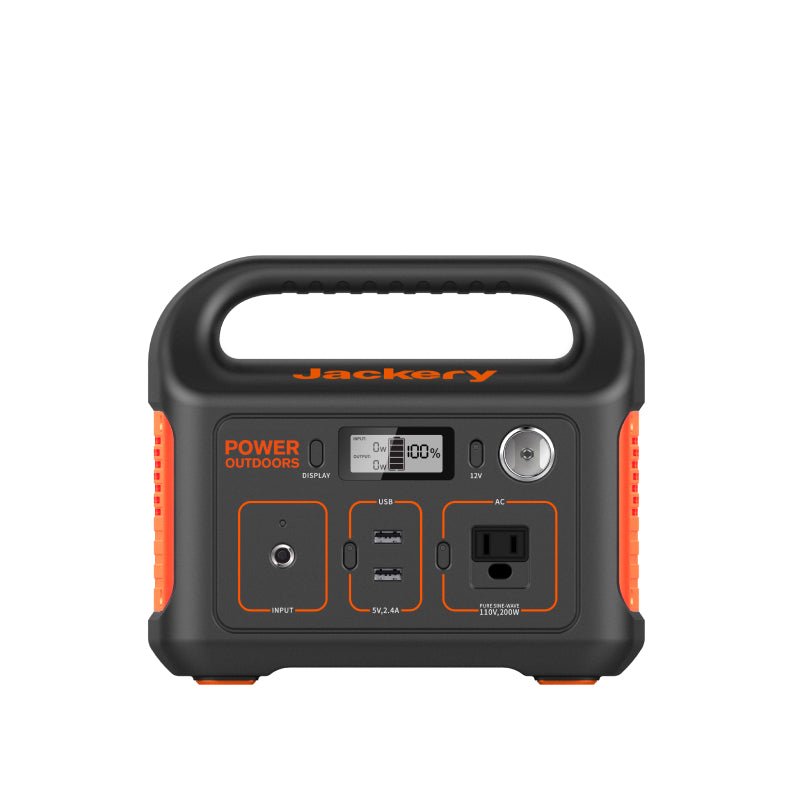 Jackery Explorer 290 Portable Power Station — 268 Wh, 200 W, Li-ion, 800 cycles, 3.6 kg, $279.
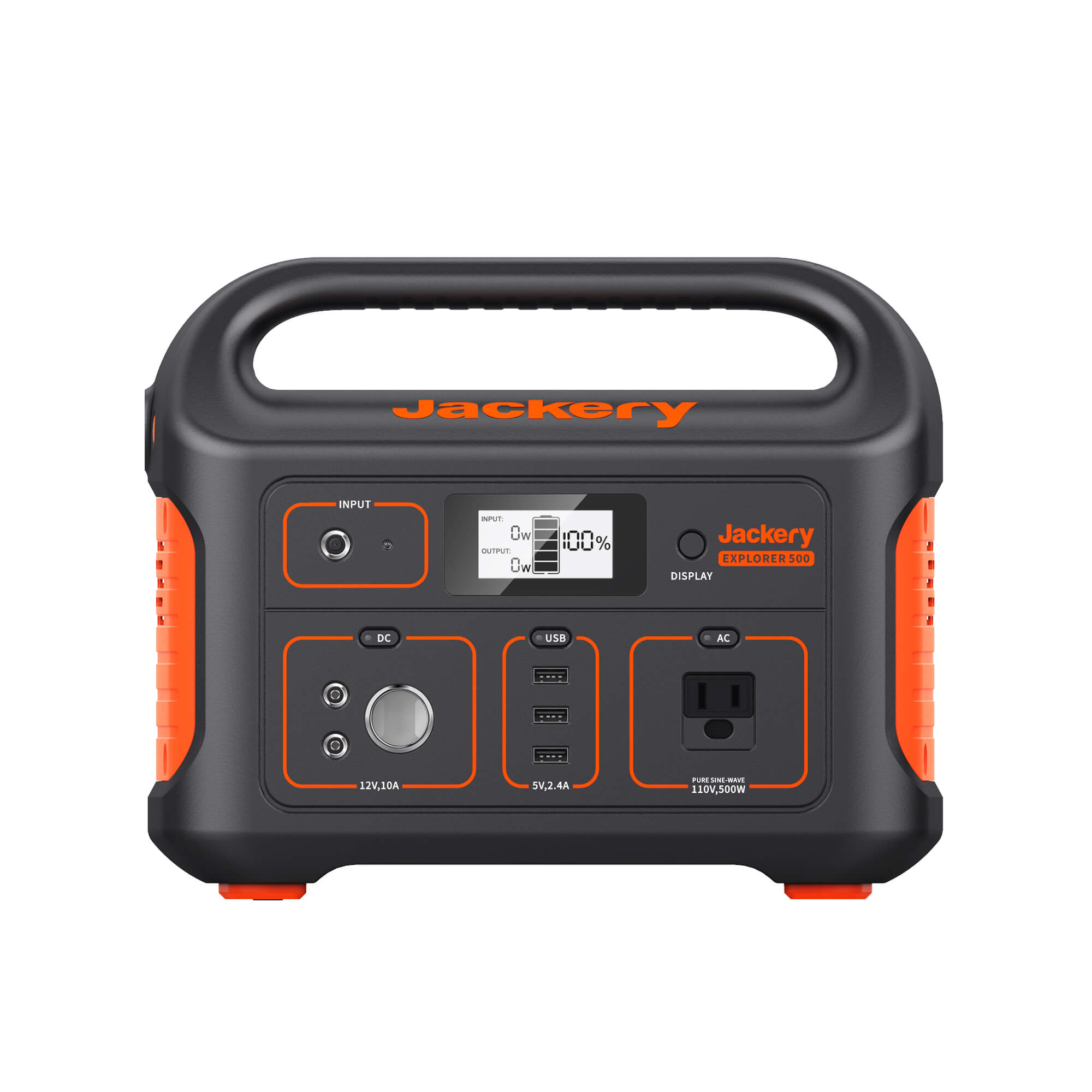 Jackery Explorer 500 Portable Power Station — 518 Wh, 500 W, Li-ion, 500 cycles, 6.0 kg, $329.
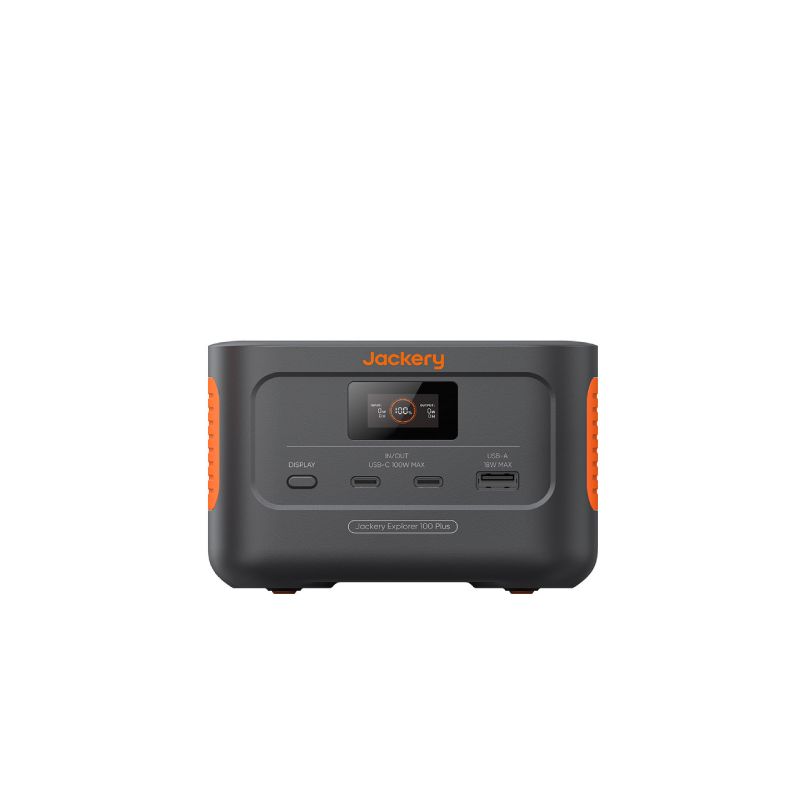 Explorer 100 Plus — 99 Wh, 128 W, LiFePO4, 1.0 kg, $149.
Frequently asked questions
Is the Jackery Explorer 240 v2 worth the extra money?+
For most buyers, yes. It adds 16 Wh of capacity, raises AC output from 200 W to 300 W, and moves from 500-cycle Li-ion to 4,000-cycle LiFePO4, which is a major durability upgrade for $30 more at current pricing.
Which one is lighter for travel?+
The original Jackery Explorer 240 is lighter at 3.0 kg versus 3.6 kg for the 240 v2. If pack weight matters more than output or cycle life, the older model still has a case.
Do both models work for the same devices?+
They overlap for small electronics, lights, routers, and low-draw gear, but the 240 v2 has more headroom because its AC output is 300 W instead of 200 W. That means fewer edge cases where a device is simply too large to run.
Editor at SolarWorld covering portable power, balcony PV and home energy storage. Specifications quoted in this guide are pulled directly from our product database; analysis and recommendations are by Nathan Cole.
Full bio & methodology →Related articles
- Buying guide · 7 min
Jackery Explorer 290 vs 100 Plus: Best Ultra-Compact 2026
Jackery Explorer 290 vs Explorer 100 Plus: compare capacity, weight, battery type, price, and charging to pick the better ultra-compact power station.
- Buying guide · 7 min
BLUETTI AC70P vs Jackery Explorer 880: Best Buy 2026
BLUETTI AC70P vs Jackery Explorer 880: 864Wh vs 880Wh, both 1000W. See the price gap, spec differences, and which one is the smarter buy.
- Buying guide · 7 min
Jackery Explorer 500 vs 550: Best Buy in 2026?
Jackery Explorer 500 and 550 have the same 518Wh capacity and 500W output. Here’s the clear winner, key differences, and who should buy each.