Short answer
For a full-size fridge averaging 150 W over 24 hours, buy a portable power station with about 5,000 Wh of rated capacity if you want a realistic one-day outage buffer from a single charge. The reason is simple: the fridge itself needs about 3,600 Wh of usable energy, and once you account for inverter losses, battery reserve, and a safety margin, the battery you buy needs to be materially larger than the fridge’s raw consumption.
The math
Here is the sizing math written out step by step using the same logic as the calculator behind these numbers.
1) Start with the fridge’s energy use
Formula:
device wattage × hours = watt-hours needed
For the reference case:
150 W × 24 h = 3,600 Wh
That 3,600 Wh is the fridge’s actual AC energy demand over a 24-hour outage.
A quick reality check: refrigerator energy use varies a lot by size, age, room temperature, door openings, and defrost cycles. The U.S. Department of Energy notes that refrigerators are one of the larger household energy users, and annual consumption on the EnergyGuide label is the best model-specific source for real-world estimates (DOE Energy Saver, ENERGY STAR refrigerator guidance). For this article, we are using the scenario you asked for: 150 W average.
2) Account for inverter losses
Portable power stations store DC power in the battery, but your fridge plugs into the AC inverter. That conversion is not lossless. A reasonable planning factor is about 10% loss, or 90% inverter efficiency, which is consistent with common inverter performance ranges published by NREL and manufacturers for consumer battery systems (NREL battery storage resources).
Formula:
required battery output = appliance energy ÷ inverter efficiency
So:
3,600 Wh ÷ 0.90 = 4,000 Wh
After inverter losses, you now need 4,000 Wh from the battery side.
3) Account for depth of discharge
Not every watt-hour printed on the box is fully usable in all conditions. Many power stations allow deep discharge, especially LiFePO4 models, but planning to use 100% of nameplate is a bad outage strategy. A practical planning assumption is 90% usable depth of discharge for sizing.
Formula:
rated capacity needed before reserve = battery-side energy ÷ usable fraction
So:
4,000 Wh ÷ 0.90 = 4,444 Wh
Now the required rated capacity is 4,444 Wh.
4) Add a safety margin
This is the part many buyers skip. Fridges do not draw a perfectly flat load. Compressor run time rises in hot kitchens, after repeated door openings, and when the fridge is restabilizing after a blackout. Battery output can also sag in cold weather. A 10% safety margin is a sensible minimum.
Formula:
final recommended capacity = adjusted capacity × safety margin
So:
4,444 Wh × 1.10 = 4,888 Wh
Rounded to a market-friendly target:
Buy about 5,000 Wh of rated capacity.
The full formula
You can write the whole thing as:
(150 W × 24 h) ÷ 0.90 ÷ 0.90 × 1.10 = 4,888 Wh
Rounded:
≈ 5,000 Wh rated capacity
That is why a 1,000 Wh or even 2,000 Wh portable power station is usually not a true 24-hour fridge backup solution on its own. If you want to run your own numbers for a different fridge or outage length, use the calculator behind these numbers.
One more point: capacity is only half the story. Your power station also needs enough inverter headroom to start the compressor. Many refrigerators run around 100-250 W once cycling normally, but startup surge can be much higher for a split second. Manufacturer manuals or labels are the best source there; if the surge spec is missing, I would not assume a marginal inverter will be fine.
Real examples from our database
Below are five real models from our full database, using only the published specs in our dataset. Runtime is calculated for this scenario as:
runtime ≈ capacity_wh × 0.90 inverter efficiency ÷ 150 W
That gives a rough best-case runtime in hours for the 150 W average fridge load. It does not include the extra reserve and safety margin used in the buying recommendation above, which is why a unit can show “12 hours” here and still be a poor choice for a full-day outage.
| Image | Product | Key spec | Runtime in this scenario | Price |
|---|---|---|---|---|
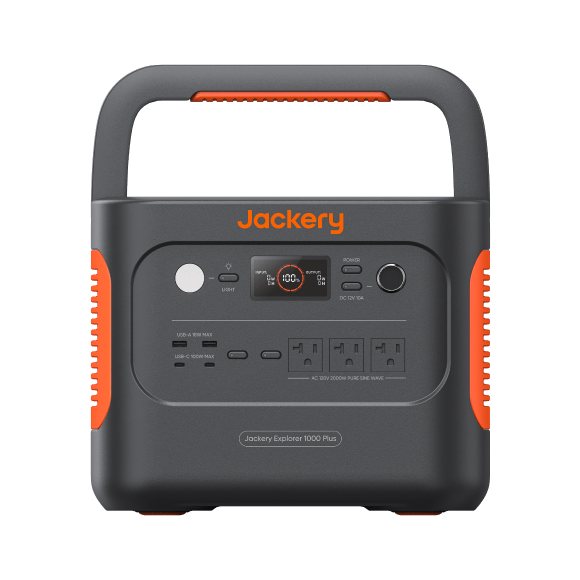 |
Jackery Portable Power Station Explorer 1000 Plus | 1264Wh, 2000W AC, LiFePO4, expandable | ~7.6 hours | $999 |
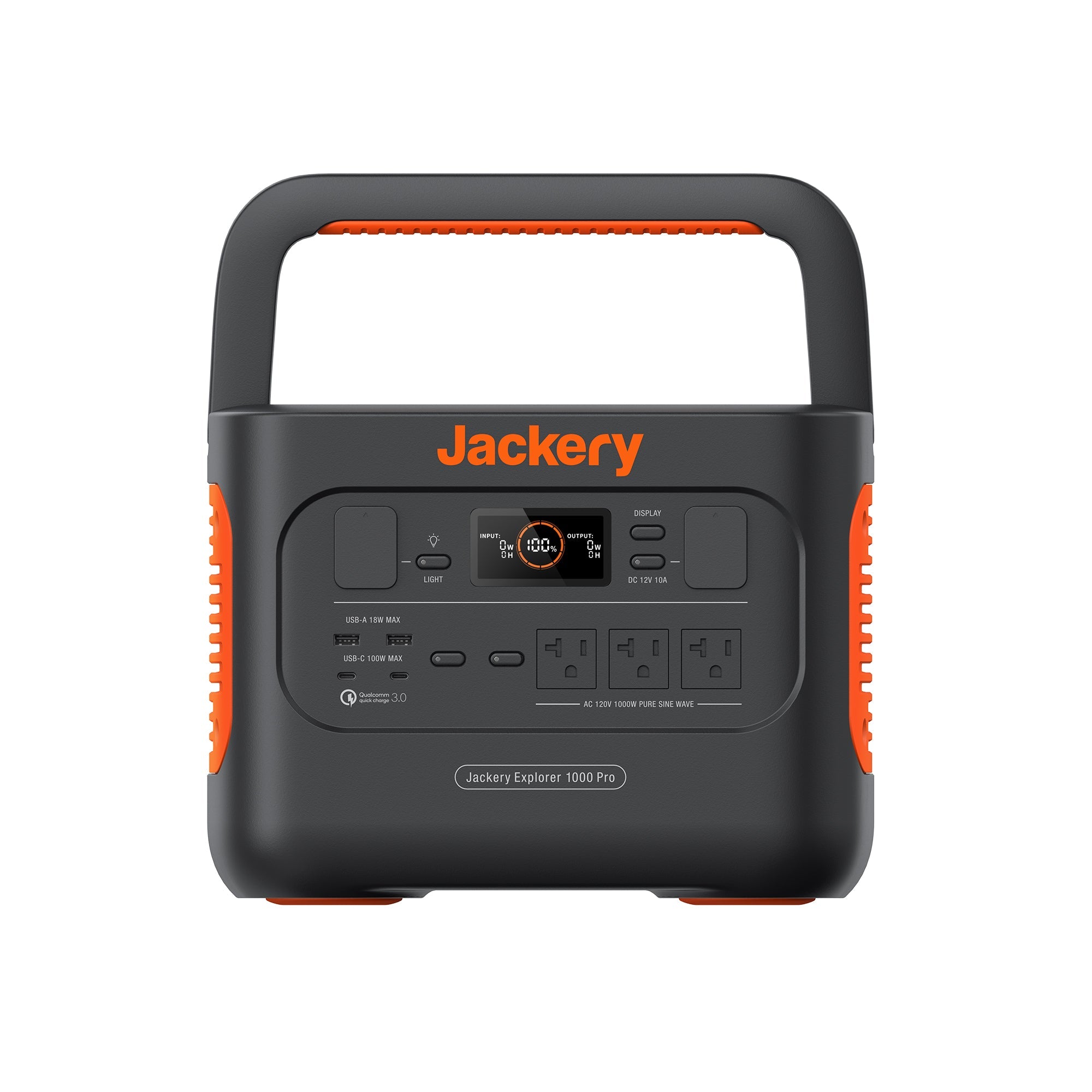 |
Jackery Explorer 1000 Pro Portable Power Station | 1002Wh, 1000W AC, Li-ion, not expandable | ~6.0 hours | $1,099 |
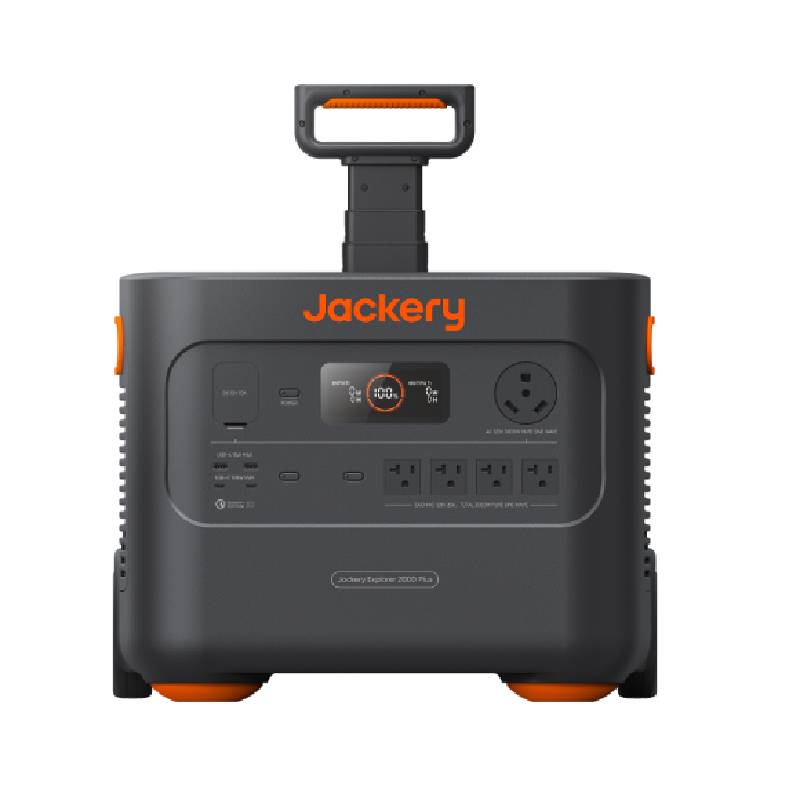 |
Jackery Portable Power Station Explorer 2000 Plus | 2042Wh, 3000W AC, lifepo4, expandable | ~12.3 hours | $899 |
 |
Apex 300+Hub D1 | 2764Wh, 3840W AC, LiFePO4, expandable | ~16.6 hours | $1,798 |
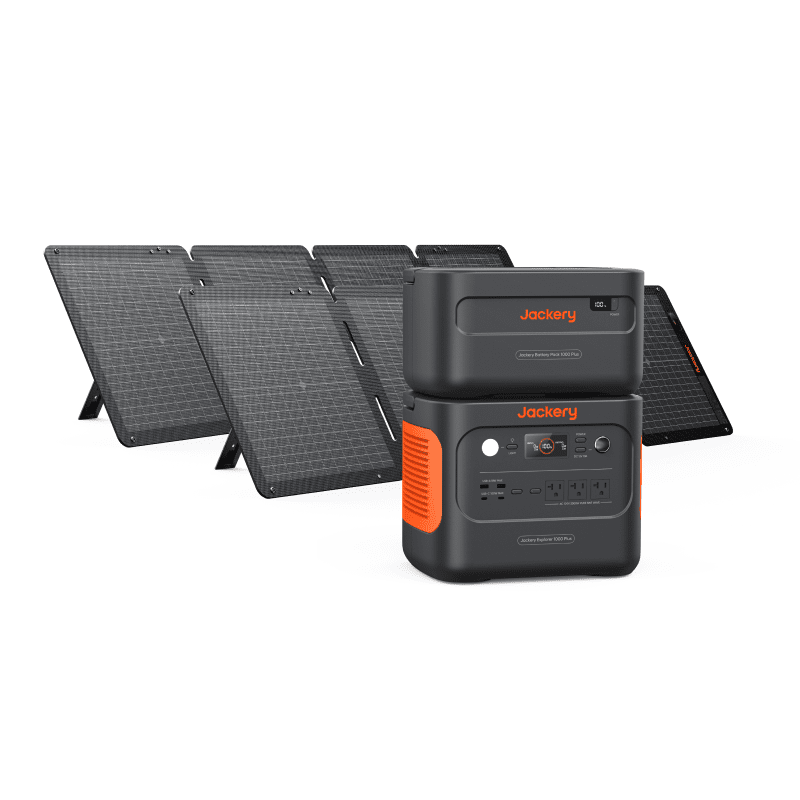 |
Jackery Solar Generator 1000 Plus | 1264Wh, 2000W AC, LiFePO4, expandable | ~7.6 hours | $2,099 |
A few takeaways from those numbers:
- The Jackery Explorer 1000 Pro Portable Power Station and Jackery Portable Power Station Explorer 1000 Plus are fine for short outages, but not for a full 24-hour fridge backup in this scenario.
- The Jackery Portable Power Station Explorer 2000 Plus gets closer, but still lands at about half a day in this load case unless you add expansion.
- The Apex 300+Hub D1 is the strongest single-unit fit in this list, but even it does not reach the full 24 hours at 150 W average without expansion.
- The Jackery Solar Generator 1000 Plus is effectively the same battery size class as the Explorer 1000 Plus here; it is not a one-day fridge solution by itself.
- The Explorer 2000 Plus Series listing in our database shows 24,000 Wh, but the product page description says “2-24 kWh of expandable capacity” and “not available for purchase.” Because that listing appears to represent a series or expanded configuration rather than a clearly defined single retail unit, I did not include it in the comparison table as a direct apples-to-apples pick.
If your goal is truly “one fridge for one full day,” none of the smaller 1 kWh-class products above is big enough on its own. You either need a larger expandable system or a smaller runtime expectation.
What goes wrong
1) Undersizing the battery
The most common mistake is matching the battery to the fridge’s raw watt-hours and stopping there. A fridge that uses 3,600 Wh in a day does not pair cleanly with a 3,600 Wh power station because inverter losses and real-world reserve eat into that number fast.
2) Surge mismatch at compressor startup
A fridge can fail to start even if the battery has plenty of stored energy. If the inverter cannot handle the compressor’s brief startup surge, the power station may trip overload protection or simply shut the AC output off.
3) Cold-weather battery performance
Battery output drops in cold conditions, and charging restrictions can be tighter still, especially with lithium chemistries. LiFePO4 is generally preferred for cycle life and stability, but winter garage outages can still reduce effective runtime versus room-temperature testing.
4) Buying for AC watts but forgetting total outage length
A 2,000W or 3,000W inverter sounds “big,” but wattage and energy are different things. A station can have plenty of AC output to start the fridge and still run out of battery halfway through the outage.
When to step up a tier
If your math lands anywhere near the edge, buy the next size up.
For this use case, I would step up a tier if any of these are true:
- Your fridge is in a hot garage or non-air-conditioned space.
- You expect more than 24 hours of outage risk.
- You want to run anything else from the same station: freezer, router, lights, phone charging, coffee maker, or microwave.
- The fridge’s real average draw may be higher than 150 W because it is older, larger, or opened often.
- The unit you are considering has no published surge spec or only modest inverter headroom.
- You want to preserve battery life by avoiding repeated deep discharges.
That is where expandable systems start to make sense. A 2 kWh class product like the Jackery Portable Power Station Explorer 2000 Plus can be a solid base if you plan to add extra battery capacity later. The Apex 300+Hub D1 also makes more sense than 1 kWh-class units if fridge backup is the main job.
If your target is “sleep well through a one-day outage with margin,” 5 kWh rated is the right buying target. If your target is “cover overnight and reassess in the morning,” 2-3 kWh can be enough. Those are very different jobs, and mixing them up is how people end up disappointed.
How we picked the products above
We filtered our full database for portable power stations with published capacity, AC output, current price, and official product URLs, then compared them against the 150 W fridge scenario using the same runtime method shown above. We favored products that are actually relevant to outage backup: enough inverter output for a refrigerator, battery chemistry suited to repeated cycling, and expansion paths where available. We did not invent missing fields; where a spec is absent in the source data, we treat it as not specified. You can read our scoring methodology for the broader test process and product evaluation framework.
Frequently asked questions
Can a 1000Wh portable power station run a full-size fridge?+
Usually only for several hours, not a full 24-hour outage. In the 150W-average scenario used here, a 1000Wh-class unit falls far short of the usable energy needed for a full day.
Why is the required battery size larger than 3,600Wh?+
Because the fridge runs on AC, so you lose some energy in the inverter, and you should leave a safety margin for compressor cycling, warmer ambient temperatures, and battery performance in real conditions. That pushes the recommended rated capacity above the fridge’s raw watt-hour use.
Do I need to worry about fridge startup surge?+
Yes. Refrigerator compressors can draw several times their running power for a brief moment at startup, so continuous wattage alone is not enough. If the power station’s inverter cannot handle that surge, the fridge may fail to start even if the battery is large enough.
Editor at SolarWorld covering portable power, balcony PV and home energy storage. Specifications quoted in this guide are pulled directly from our product database; analysis and recommendations are by Nathan Cole.
Full bio & methodology →Related articles
- Explainer · 7 min
Weekend RV battery size: 7.5 kWh is the safe target
For a 48-hour RV weekend at 120W average load, plan on about 7,500 Wh of battery capacity after losses and reserve.
- Explainer · 7 min
Laptop WFH Backup: What Size Power Station in 2026?
Buy about 700 Wh for an 8-hour laptop workday. That covers 480 Wh of use plus inverter losses, battery reserve, and a real safety margin.
- Explainer · 6 min
CPAP Overnight: What Size Power Station in 2026?
Buy about 800 Wh for a CPAP overnight. That covers a 60 W CPAP for 8 hours with inverter losses and a practical safety margin.