Short answer
For a typical overnight CPAP load, buy a portable power station with about 800 Wh of rated capacity. That number works because a reference CPAP scenario of 60 W average for 8 hours = 480 Wh turns into roughly 780–800 Wh required once you account for AC inverter losses, a realistic battery reserve, and a small safety margin using the calculator behind these numbers.
The math
Here is the sizing math written out plainly.
1) Start with the CPAP energy use
Use:
device wattage × hours
For the reference case:
60 W × 8 h = 480 Wh
That 480 Wh is the energy your CPAP needs at the machine.
A CPAP’s actual draw can vary a lot depending on pressure settings, mask leak, and especially whether the humidifier and heated hose are on. Manufacturers publish model-specific power supply ratings and manuals; for example, ResMed and Philips manuals show that therapy power can vary materially by setup, so use your machine’s label or manual if you have it.3
2) Add inverter losses if you plan to use the AC outlet
Most portable power stations store DC power in the battery, then convert it to AC through an inverter. That conversion is not lossless. The U.S. Department of Energy notes that power conversion equipment has efficiency losses, and portable stations also have internal overheads.1
A practical planning factor for a small continuous AC load like a CPAP is:
divide by 0.85
So:
480 Wh ÷ 0.85 = 565 Wh
That means you need about 565 Wh of battery output to deliver 480 Wh to the CPAP through AC.
3) Account for usable battery capacity / depth of discharge reserve
Portable power stations are usually rated by total battery capacity, not the exact amount you should plan to use to empty. Even with LiFePO4 systems, leaving some reserve helps avoid cutoffs from display error, cold-weather derating, or a machine drawing more than expected late in the night.
A simple planning step is to assume you want to use only:
90% of rated capacity
So:
565 Wh ÷ 0.90 = 628 Wh
Now we are at 628 Wh rated capacity.
4) Add a safety margin
For overnight medical-adjacent loads, I do not like sizing to the exact number. Add at least:
25% safety margin
So:
628 Wh × 1.25 = 785 Wh
Rounded:
Buy 800 Wh
Formula, all in one line
Required rated capacity = (device watts × hours ÷ inverter efficiency) ÷ usable-capacity factor × safety margin
Plugging in the reference case:
(60 × 8 ÷ 0.85) ÷ 0.90 × 1.25 = 784 Wh
Rounded recommendation:
800 Wh
That is the same logic used in the calculator behind these numbers.
What if you power the CPAP from DC instead of AC?
Some CPAPs can run from a 12 V or manufacturer-specific DC adapter. If you avoid the AC inverter, required battery capacity can be lower because you skip a chunk of conversion loss. In that case, your real-world target may land closer to the low-600-Wh class for the same 480 Wh overnight need. But adapter compatibility is model-specific, so check your CPAP maker’s approved DC cable first. If you are unsure, size for AC use.
Real examples from our database
Below are five real models from our full database that fit, exceed, or miss the 800 Wh target for this exact overnight CPAP scenario.
For runtime, I used the same reference load:
- CPAP load: 60 W average
- AC runtime estimate:
capacity_wh × 0.85 ÷ 60
That runtime figure is a useful comparison number, not a guarantee. Real results depend on humidifier use, ambient temperature, battery age, and whether the CPAP is powered through AC or a DC adapter.
| Image | Product | Key spec | Runtime in this scenario | Price |
|---|---|---|---|---|
 |
EcoFlow RIVER 3 Plus Portable Power Station | 858 Wh, 600 W AC, LiFePO4 | ~12.2 hours | $239 |
 |
RIVER 3 Max (RIVER 3 Plus + Extra Battery 300) | 858 Wh, 600 W AC, LiFePO4 | ~12.2 hours | $399 |
 |
RIVER 3 Max Plus (RIVER 3 Plus +Extra Battery 600) | 858 Wh, 600 W AC, LiFePO4 | ~12.2 hours | $469 |
 |
EcoFlow RIVER 2 Pro (700) Portable Power Station | 768 Wh, 800 W AC, LiFePO4 | ~10.9 hours | $349 |
 |
EcoFlow DELTA 3 Max Series Portable Power Station (2048Wh) | 2048 Wh, 3000 W AC, LiFePO4 | ~29.0 hours | $1,099 |
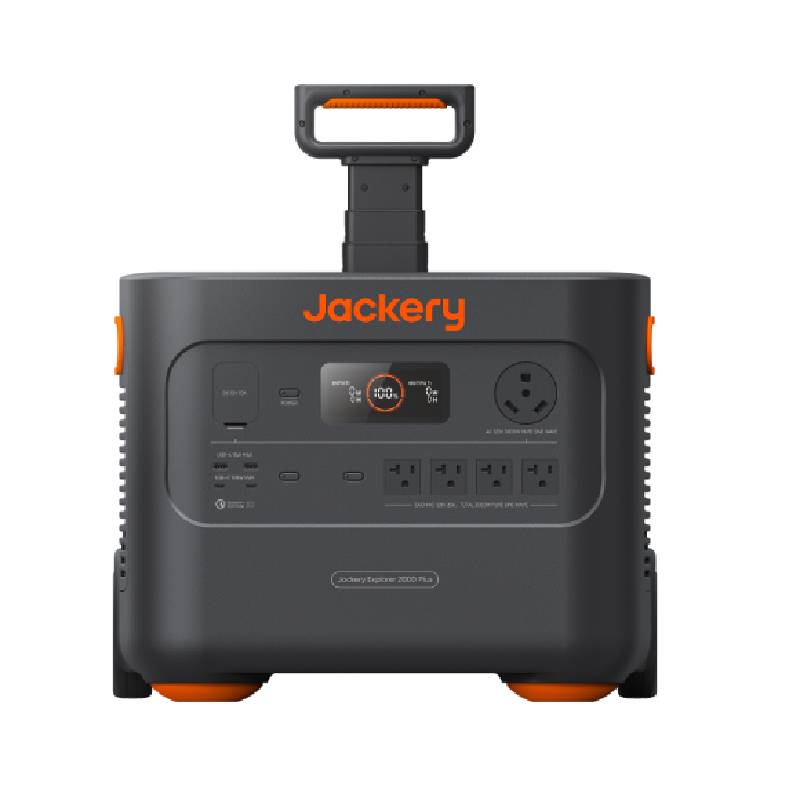 |
Jackery Portable Power Station Explorer 2000 Plus | 2042 Wh, 3000 W AC, LiFePO4, expandable to 12000 Wh | ~28.9 hours | $2,199 |
What these examples mean in practice
If you want the closest match to the math, the EcoFlow RIVER 3 Plus Portable Power Station is the cleanest fit on paper at 858 Wh. It clears the 800 Wh target without jumping into the heavy 2 kWh class.
The EcoFlow RIVER 2 Pro (700) Portable Power Station at 768 Wh is borderline but still workable for many users, especially if your CPAP averages less than 60 W or you run without heated humidification. I would treat it as the “only if you know your load is modest” option.
The EcoFlow DELTA 3 Max Series Portable Power Station (2048Wh) and Jackery Portable Power Station Explorer 2000 Plus are far larger than needed for a single overnight CPAP run. They make sense if you also want to power other loads, cover multiple nights, or build in a lot of reserve.
One note on the two bundled EcoFlow listings — RIVER 3 Max (RIVER 3 Plus + Extra Battery 300) and RIVER 3 Max Plus (RIVER 3 Plus +Extra Battery 600): the supplied dataset lists both at 858 Wh, so that is the exact value used here. I am not adding or inferring any higher capacity beyond the provided data.
What goes wrong
1) You size to the CPAP’s base draw and forget the humidifier
A CPAP that looks like a 30–60 W overnight load can jump materially if the heated humidifier or heated hose is enabled, turning a comfortable battery margin into a near-miss by morning.
2) You use the AC outlet and ignore inverter loss
If you buy a station based only on “480 Wh needed, so a 500 Wh battery is enough,” you will often come up short because the inverter and internal electronics consume part of the stored energy.
3) Cold weather cuts usable capacity
Lithium batteries, including LiFePO4, generally deliver less usable energy in low temperatures; NREL and battery manufacturers routinely note temperature effects on lithium battery performance.2 A setup that works indoors can fail in a cold vehicle or tent.
4) The port or voltage is wrong for your CPAP
Some CPAPs can run more efficiently from DC, but the cable and voltage requirements are model-specific. A generic 12 V plug is not automatically safe or compatible.
When to step up a tier
Move up from the basic 800 Wh target if any of these are true:
- You use heated humidification or a heated hose. That is the biggest reason to buy more battery.
- Your machine’s manual or power brick shows a higher draw than 60 W average. Re-run the math with your real number.
- You need more than one night without recharging. Two nights at the same reference load pushes you into roughly 1.6 kWh territory after losses and reserve.
- You will run the unit in cold conditions. Car camping in shoulder season is very different from bedroom use.
- You want battery reserve for peace of mind. For a medical sleep device, many buyers simply sleep better with a larger cushion.
- You also want to charge phones, lights, or a laptop overnight. Extra loads add up fast.
In this dataset, the practical breakpoints are pretty clear. If you want the smallest sensible match, start with the 858 Wh class. If your numbers are borderline, the 768 Wh class can work but leaves less room for error. If you want multi-night use or to run several devices, step to the 2,000 Wh class.
How we picked the products above
We filtered our full database for power stations relevant to a single overnight CPAP use case, then compared rated battery capacity, continuous AC output, battery chemistry, and current listed price. Runtime estimates were calculated from the provided capacity values using the same reference load and loss assumptions shown above so readers can compare products on one consistent basis. We did not fill in missing specs; if a field was absent from the source data, we left it as-is or marked it not specified. You can read our scoring methodology for the broader test framework we use across portable power products.
-
U.S. Department of Energy, Office of Electricity, overview of power conversion systems and efficiency losses: energy.gov. ↩
-
NREL research and battery performance resources note temperature impacts on lithium battery behavior: nrel.gov. ↩
-
Example manufacturer documentation for CPAP power requirements and operating modes: ResMed support and product manuals, resmed.com. ↩
Frequently asked questions
How many watt-hours does a CPAP need for one night?+
A common planning case is 60 W for 8 hours, which is 480 Wh of device energy. After inverter losses and a safety margin, a practical portable power station target is about 800 Wh.
Can a 500 Wh power station run a CPAP all night?+
Usually that is too small if you are running the CPAP from the AC outlet. A 500 Wh unit can fall short once inverter losses, battery reserve, and humidifier use are factored in.
Why do some CPAP users need a bigger power station?+
Heated humidifiers and heated hoses can raise average power draw a lot, and cold weather can reduce usable battery capacity. If your setup is near the edge on paper, move up to the next size class.
Editor at SolarWorld covering portable power, balcony PV and home energy storage. Specifications quoted in this guide are pulled directly from our product database; analysis and recommendations are by Nathan Cole.
Full bio & methodology →Related articles
- Explainer · 7 min
400W Solar on 12V: What Size MPPT Controller?
Use a 40A MPPT charge controller for a 400W solar array on 12V. Here’s the math, the edge cases, and 4 real controller options.
- Explainer · 7 min
RV inverter size for microwave, fridge + electronics
Buy a 3000W pure sine inverter for an RV with a microwave, fridge, and electronics. Here’s the math, runtime, and best-fit models.
- Explainer · 7 min
2 kWh/day Off-Grid Load: How Many Solar Panels in 2026?
For a 2 kWh/day off-grid load, plan on 3 x 450W-class panels. Here’s the math, the battery assumptions, and real panel picks.