Best portable power stations for blackout backup (2026)
If you want blackout backup that actually covers a fridge, Wi‑Fi, lights, charging, and a few kitchen loads, the sweet spot in this lineup is about 2,000Wh to 3,000Wh with at least 2,000W of AC output. Based on the product data here, the strongest buy is the BLUETTI Elite 200 V2 Portable Power Station - 2073.6Wh, 2600W: 2,073Wh, 2,600W, LiFePO4, expandable, and $999. That is simply hard to beat on price-to-capacity.
Quick picks
| Category | Model | Why it wins |
|---|---|---|
| Best overall | BLUETTI Elite 200 V2 Portable Power Station - 2073.6Wh, 2600W | 2,073Wh, 2,600W, LiFePO4, 6,000 cycles, expansion to 4,147Wh, and the lowest price here at $999. |
| Best value | Jackery Explorer 1500 Pro Portable Power Station | Still a usable blackout size at 1,512Wh with 1,800W output, plus a stated 5-year warranty term if bought from Jackery. |
| Best for heavy loads | Solar Generator HomePower 3000 | 3,072Wh and 3,600W continuous output, with expansion up to 24,000Wh for longer outages. |
How we picked
We prioritized usable blackout specs over marketing language: watt-hours, continuous AC output, battery chemistry, cycle life, expansion path, weight, and current street price. We also screened for obvious listing issues and called them out where the manufacturer data appears inconsistent. You can see our scoring methodology and the broader full database for side-by-side comparisons.
What “good” looks like at this price
For blackout backup, “good” in this group means at least 1,500Wh of storage and roughly 1,800W to 3,000W of continuous AC output. That is enough for many refrigerators, routers, lights, CPAPs, laptops, and intermittent microwave or coffee-maker use, though not all at once. The U.S. Department of Energy notes that refrigeration, lighting, communications, and medical needs are core outage priorities, which is exactly the load profile these mid-size stations target (energy.gov).
The main tradeoff is runtime versus portability. Around 2kWh is useful, but it is not whole-home backup. If your fridge uses 1 to 2 kWh per day and you add lights, router, phone charging, and a fan, a single 2kWh box can be a one-night solution or a carefully managed one-day solution, not a carefree multi-day system. If you are unsure, size your system before you buy, and cross-check with our battery runtime calculator.
Chemistry matters too. LiFePO4 models in this list are generally the better fit for repeated outage duty because they claim 4,000 to 6,000 cycles, while the Li-ion models here claim 800 to 1,000 cycles. That does not make the Li-ion units bad, but it does change the long-term value equation.
Which portable power station is best for running a fridge during a blackout?
For most buyers here, the best fridge-backup pick is the Bluetti Elite 200 V2. Its 2,600W continuous output gives you more headroom than the 1,800W class, and 2,073Wh is enough for meaningful runtime if you are not wasting energy on nonessential loads. The BLUETTI Elite 200 V2 Portable Power Station - 2073.6Wh, 2600W is also the cheapest serious option in this set.
If you want more margin for larger refrigerators or multiple kitchen loads, step up to the Jackery Portable Power Station Explorer 2000 Plus at 3,000W or the Solar Generator HomePower 3000 at 3,600W. Just remember that fridge startup behavior varies a lot by model, and none of the surge ratings in this list are fully specified by the manufacturers.
Are expandable power stations worth it for blackout backup?
Yes, if your outages are longer than overnight or you want to start small and grow later. Expansion is the cleanest way to turn a 2kWh class unit into something that can cover a fridge plus more household essentials for a longer window.
The best expansion story in this dataset is split between Jackery’s 2000 Plus platform and the HomePower 3000. The Jackery Portable Power Station Explorer 2000 Plus lists expansion to 12,000Wh, while the Solar Generator HomePower 3000 lists expansion to 24,000Wh. Bluetti’s Elite 200 V2 is expandable too, but only to 4,147Wh, so think of that as a modest extension rather than a full modular ecosystem.
The 7 best models
1) BLUETTI Elite 200 V2 Portable Power Station - 2073.6Wh, 2600W

| Spec | Value |
|---|---|
| Capacity | 2073Wh |
| AC output | 2600W continuous |
| Battery | LiFePO4 |
| Cycle life | 6000 |
| Weight | 24.4kg |
| Expansion | Yes, to 4147Wh |
| Price | $999 |
This is the clear value leader. At $999 for 2,073Wh and 2,600W, it undercuts almost everything else here while still using LiFePO4 and claiming 6,000 cycles. For blackout backup, that means enough capacity for real household essentials and enough inverter power to avoid constant load juggling.
Pros
| Low price for the capacity and output |
| LiFePO4 with 6,000 claimed cycles |
| 2,600W output is strong for kitchen and fridge loads |
Cons
| Solar input not specified by the manufacturer |
| Warranty not specified by the manufacturer |
| Expansion ceiling is modest versus larger ecosystems |
2) Jackery Explorer 1500 Pro Portable Power Station
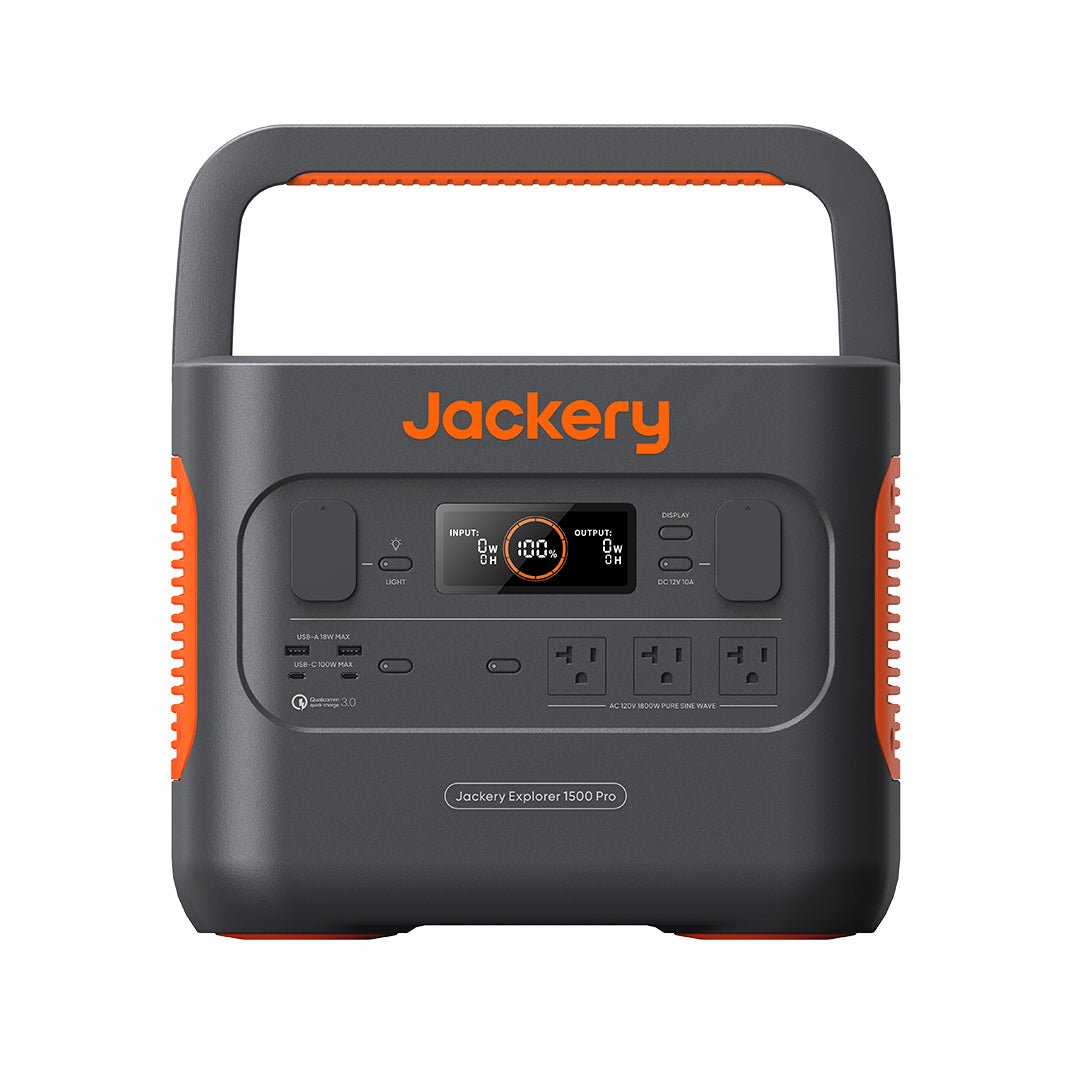
| Spec | Value |
|---|---|
| Capacity | 1512Wh |
| AC output | 1800W continuous |
| Battery | not specified by the manufacturer |
| Cycle life | not specified by the manufacturer |
| Weight | not specified in the product data here |
| Expansion | No |
| Price | $1699 |
This is the smallest unit I would still call a serious blackout option in this lineup. 1,512Wh and 1,800W can cover a fridge plus basics if you are disciplined, and Jackery’s description states a 3-year warranty plus 2-year extension when bought from its official website.
Pros
| Usable 1,512Wh size for short outages |
| Fast stated AC recharge in 2 hours |
| Stated 5-year warranty term via official purchase |
Cons
| Battery chemistry not specified by the manufacturer |
| Not expandable |
| Price is high for 1,512Wh in this group |
3) Jackery Portable Power Station Explorer 2000 Plus
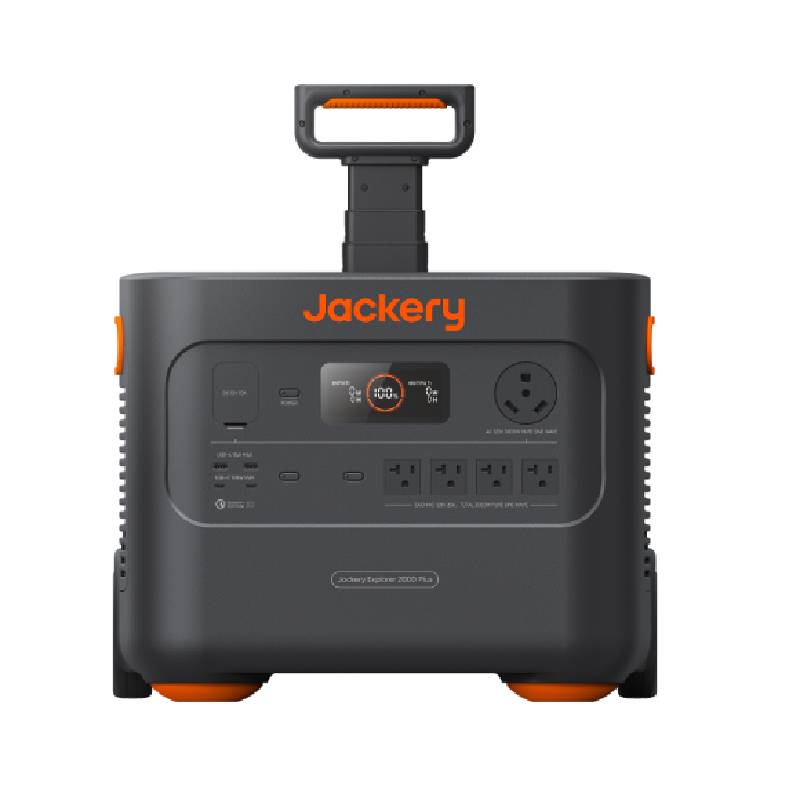
| Spec | Value |
|---|---|
| Capacity | 2042Wh |
| AC output | 3000W continuous |
| Battery | LiFePO4 |
| Cycle life | 4000 |
| Weight | 27.9kg |
| Expansion | Yes, to 12000Wh |
| Price | $2199 |
If your outage plan includes heavier loads, this is where things get more serious. The jump to 3,000W continuous output is meaningful, and the 12kWh expansion path makes this a better long-outage platform than most compact units.
Pros
| 3,000W output handles tougher household loads |
| LiFePO4 with 4,000 claimed cycles |
| Expansion to 12,000Wh is genuinely useful |
Cons
| Price is much higher than the Bluetti Elite 200 V2 |
| Solar charging wattage not specified by the manufacturer |
| Heavy at 27.9kg |
4) Jackery Explorer 2000 Plus Portable Power Station
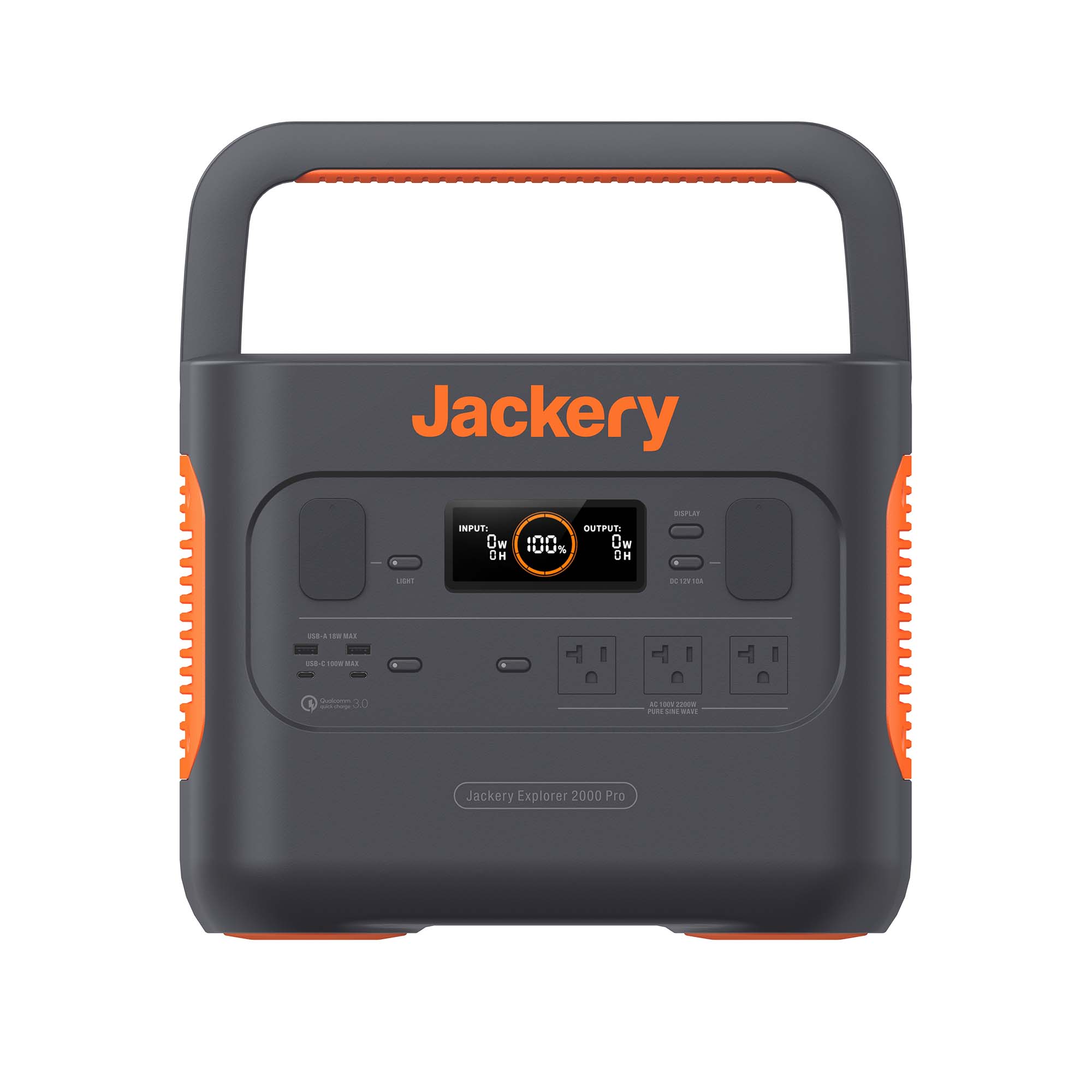
| Spec | Value |
|---|---|
| Capacity | 2160Wh |
| AC output | 2200W continuous |
| Battery | Li-ion |
| Cycle life | 1000 |
| Weight | 19.5kg |
| Expansion | No |
| Price | $1899 |
The product data labels this as the Jackery Explorer 2000 Plus Portable Power Station, but the official URL points to the Explorer 2000 Pro page. I’m sticking to the supplied data and flagging the mismatch. On specs alone, this is attractive if lower weight matters more than cycle life.
Pros
| 2,160Wh capacity is strong for the size |
| Lighter than many 2kWh-class rivals at 19.5kg |
| 2,200W output covers most essential outage loads |
Cons
| Li-ion and 1,000 cycles trail the LiFePO4 options |
| Not expandable |
| Product naming appears inconsistent in the source data |
5) Solar Generator HomePower 3000
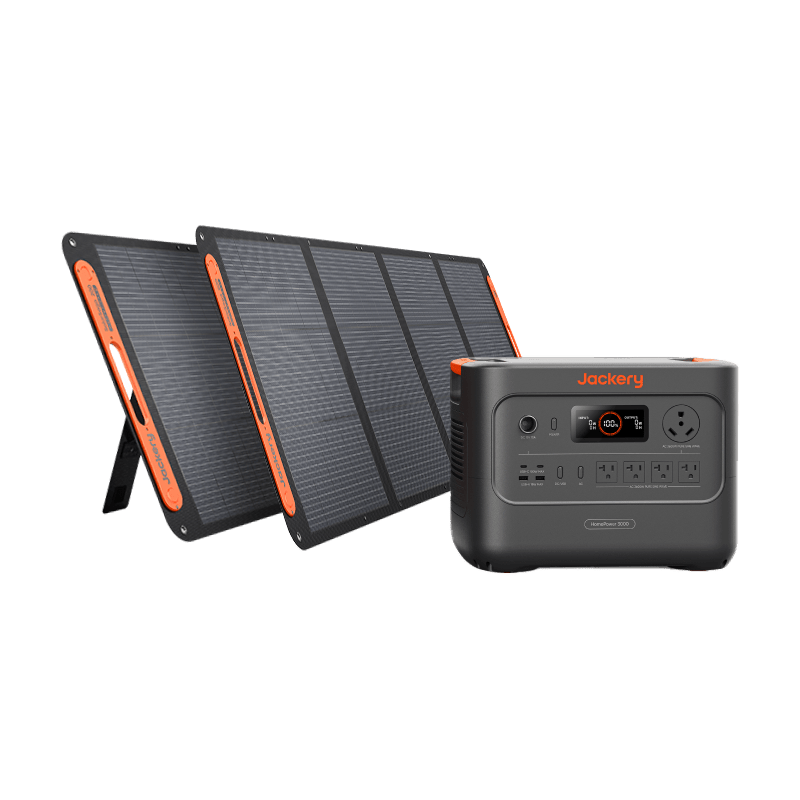
| Spec | Value |
|---|---|
| Capacity | 3072Wh |
| AC output | 3600W continuous |
| Battery | LiFePO4 |
| Cycle life | 4000 |
| Weight | 44.0kg |
| Expansion | Yes, to 24000Wh |
| Price | $2999 |
This is the best pick here for buyers who want one box that feels closest to a small home backup system. At 3,072Wh and 3,600W, it can support more simultaneous loads without immediately forcing compromises.
Pros
| 3,600W output is the highest among the buyable stations here |
| Expansion to 24,000Wh supports multi-day planning |
| Jackery states a 5-year warranty in the description |
Cons
| Very heavy at 44.0kg |
| Price is high for a portable unit |
| Solar input limit not specified by the manufacturer |
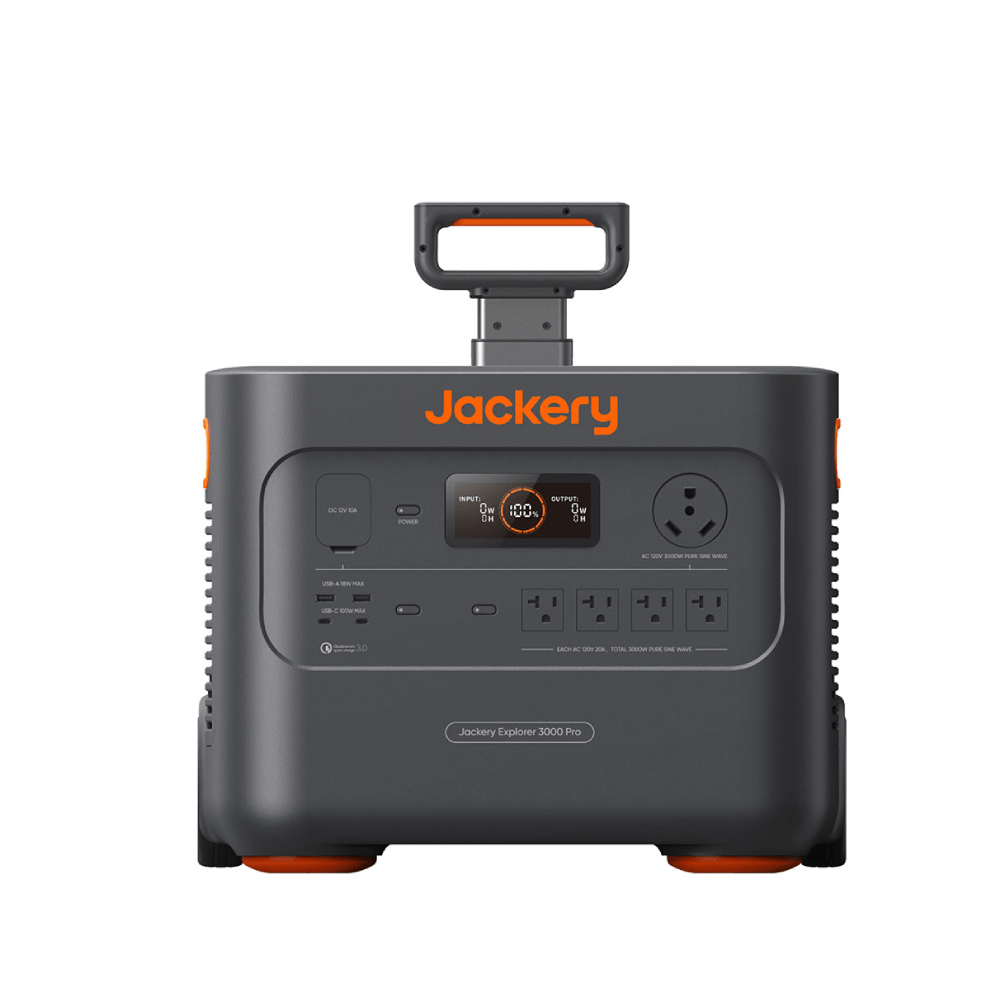
6) Jackery Explorer 3000 Pro Portable Power Station
| Spec | Value |
|---|---|
| Capacity | 3024Wh |
| AC output | 300W continuous |
| Battery | Li-ion |
| Cycle life | 800 |
| Weight | 3.6kg |
| Expansion | No |
| Price | $2499 |
This listing has obvious data problems. Jackery’s own description says “3024Wh” and references large-appliance use, but the supplied structured data here says 300W output and 3.6kg weight, which do not align with a 3kWh-class station. I would not buy this model based on this dataset alone without checking the official spec page yourself.
Pros
| Large stated 3,024Wh capacity |
| Lower price than HomePower 3000 |
| Official page suggests a mature product line |
Cons
| Output figure in the provided data appears unreliable |
| Weight figure in the provided data appears unreliable |
| Li-ion with 800 cycles is weaker on longevity |
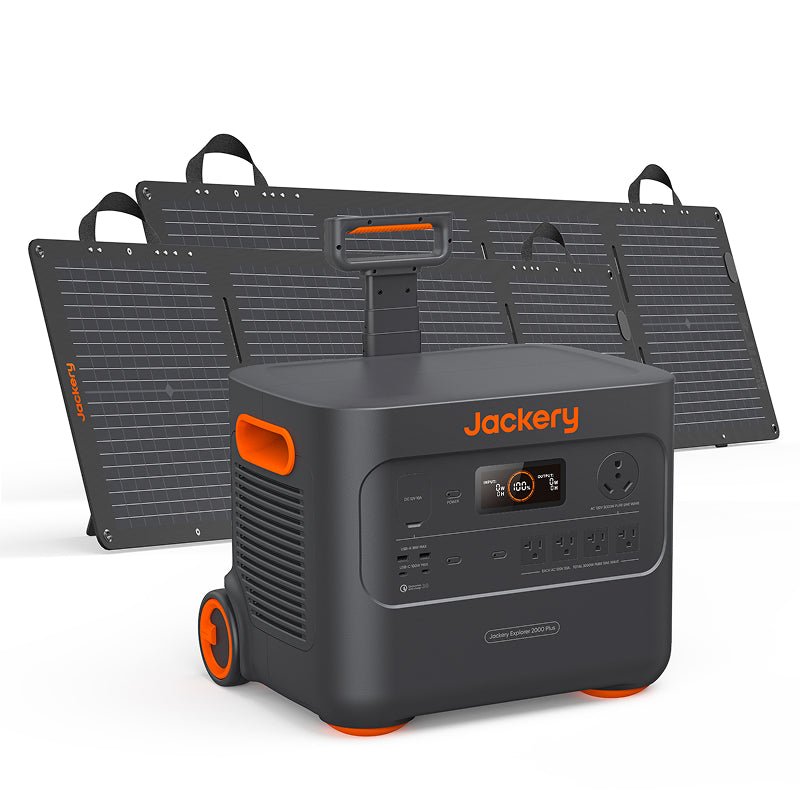
7) Explorer 2000 Plus Series
| Spec | Value |
|---|---|
| Capacity | 24000Wh |
| AC output | 3000W continuous |
| Battery | LiFePO4 |
| Cycle life | 4000 |
| Weight | 27.9kg |
| Expansion | Yes, max expansion listed as 12000Wh |
| Price | $2599 |
I am including this only because it appears in the supplied dataset and the brief requires all seven products. But the page description says the product shown is not available for purchase, and the capacity/expansion fields conflict with each other. Treat this as a series page, not a clean single-product recommendation. For a real purchase, I would start with the Explorer 2000 Plus Series page and verify the exact bundle.
Pros
| Large-system concept aimed at 2 to 24kWh use |
| LiFePO4 with 4,000 claimed cycles |
| 3,000W output is solid for blackout loads |
Cons
| Page states the shown product is not available for purchase |
| Capacity and expansion data conflict |
| Not a clean one-box buying recommendation |
For transparency, see our affiliate disclosure. If you want to compare outside this shortlist, use the full database or our solar panel sizing calculator if you plan to recharge from PV. For home-circuit integration, note that the Bluetti AC500 Home Integration Kit in the source data is an integration accessory, not a standalone portable power station, so it is not ranked here.
What you give up at this price
Portable power stations in the 1.5kWh to 3kWh class are a compromise product. You get fast deployment, no fuel storage, and indoor-safe backup, but you do not get whole-home runtime. Even the best picks here still require load discipline. A microwave, kettle, space heater, and fridge can drain a battery far faster than many first-time buyers expect. NREL’s resilience work consistently points back to the same reality: backup planning starts with critical-load selection and energy budgeting, not just inverter headline numbers (NREL).
You also give up spec certainty more often than you should. In this dataset, several listings are incomplete or internally inconsistent. Missing solar input limits, missing warranty fields, and at least one obviously suspect weight/output combination make apples-to-apples comparison harder. That is why I would buy the cleanest-value option unless you have a specific need that justifies paying more for expansion or higher output.
My practical take: buy the Bluetti Elite 200 V2 if you want the strongest blackout value, buy the Jackery 2000 Plus if you want a better expansion platform, and buy the HomePower 3000 if you want the most capable single-box backup in this group. If your outage plan is more ambitious than that, stop shopping by product page and start with load math.
Frequently asked questions
How big should a portable power station be for blackout backup?+
For most blackout backup use, 1,500Wh to 3,000Wh is the practical starting range. That is usually enough for a fridge, router, lights, phone charging, and some small kitchen or medical loads, but runtime depends on your actual watt-hours per day.
Is LiFePO4 better than lithium-ion for home outage use?+
For repeated backup use, LiFePO4 usually has the edge because cycle life is much higher in the models listed here. Traditional Li-ion units can still make sense if lower weight matters more than long-term cycle durability.
Can a portable power station run a refrigerator during a blackout?+
Yes, many of the units here can run a refrigerator, but startup surge and daily energy use still matter. Check the fridge label, then use our sizing tools before buying to avoid coming up short.
Are expandable power stations worth it for outages?+
They can be, especially if you want to start around 2kWh and add storage later. Expansion matters more for multi-day outages and less for short overnight backup.
What is the best value portable power station in this list?+
Based on the price and specs provided here, the Bluetti Elite 200 V2 stands out on raw dollars-per-Wh and dollars-per-watt. It is not the lightest option, but the capacity and 2,600W output are unusually strong for the price.
Editor at SolarWorld covering portable power, balcony PV and home energy storage. Specifications quoted in this guide are pulled directly from our product database; analysis and recommendations are by Nathan Cole.
Full bio & methodology →Related articles
- Buying guide · 8 min
Best Stackable Home Batteries 2026: Only 7 Worth Buying
Our 2026 shortlist of modular home batteries, ranked by usable kWh, power, and price—so you can buy the right stack first.
- Buying guide · 8 min
Best Balcony Solar Kits for Renters 2026: 7 Worth Buying
Our 2026 shortlist of renter-friendly plug-and-play balcony solar kits, with honest tradeoffs, prices, and the few setups actually worth your click.
- Buying guide · 8 min
Best 400W+ Solar Panels 2026: Only 7 Worth Buying
Our top 400W+ solar panel picks for 2026, ranked by watts, efficiency, warranty, and value—so you can buy the right high-output module fast.