Best portable power stations with LiFePO4 chemistry (2026)
LiFePO4 is no longer a niche battery chemistry. In 2026, it is the default pick if you care about cycle life, safety, and keeping a power station for years instead of treating it like a disposable gadget. The best buys here range from 99Wh pocket-size units at $149 to 2kWh-class backup boxes at $1,099 to $2,199.
If you want the shortest version: buy the EcoFlow DELTA 3 Max if you want the strongest value in large-capacity backup, the Jackery Explorer 240 v2 if you want a small station that still feels like a real power station, and the Jackery Explorer 2000 Plus if you need expansion headroom past 10kWh.
Quick picks
| Pick | Model | Why it wins | Price |
|---|---|---|---|
| Best overall | EcoFlow DELTA 3 Max Series Portable Power Station (2048Wh) | 2048Wh, 3000W output, 10ms auto-switch, 43-minute fast charge, and a current price that undercuts the other 2kWh-class pick here. | $1,099 |
| Best value | Jackery Explorer 240 v2 Portable Power Station | 256Wh, 300W output, 3.6kg weight, and 4,000-cycle LiFePO4 chemistry for $249. | $249 |
| Best for expandable home backup | Jackery Portable Power Station Explorer 2000 Plus | 2042Wh, 3000W output, expandable to 12,000Wh, with 120/240V expansion claims on the product page. | $2,199 |
How we picked
We prioritized usable AC output, battery capacity, price per watt-hour, stated cycle life, portability, and whether the manufacturer actually publishes the specs that matter. We also favor products with clear warranty language and realistic use cases, following our scoring methodology. For transparency on how this site makes money, read our affiliate disclosure.
What “good” looks like at this price
A good LiFePO4 portable power station in 2026 does one of two things well: either it gives you true grab-and-go portability under 4kg with enough AC output for small electronics, or it gives you around 2kWh and 3000W for serious outage backup. In this lineup, the small-unit sweet spot is roughly $239 to $249 for 256Wh to 288Wh. The large-unit sweet spot is $1,099 for about 2048Wh and 3000W. That EcoFlow price is unusually aggressive against the $2,199 Jackery 2000 Plus, though the Jackery fights back with expansion to 12,000Wh.
The main tradeoff is simple: capacity, output, and portability do not scale together. A 99Wh to 288Wh unit is fine for phones, laptops, cameras, routers, and maybe a CPAP depending on the device and settings. A 2042Wh to 2048Wh unit is where refrigerators, power tools, and longer outage coverage start to make sense. If you need help matching watt-hours to runtime, size your system before buying, or cross-check other models in our full database.
LiFePO4 chemistry matters because cycle life is usually much better than older lithium-ion formulations. The U.S. Department of Energy notes that lithium iron phosphate offers strong thermal and cycle-life characteristics in energy storage applications (DOE). Product-level cycle claims still vary, and some brands here simply do not specify them on the page, so I treat published numbers as a real advantage.
Which LiFePO4 portable power station is best for home backup?
For home backup in this list, the EcoFlow DELTA 3 Max Series Portable Power Station (2048Wh) is the best pure-value pick. It gives you 2048Wh and 3000W output for $1,099, plus a stated 10ms auto-switch and 43-minute fast charge on the product page. That is the strongest spec-per-dollar combination in this dataset.
If you need expansion beyond a single box, the Jackery Portable Power Station Explorer 2000 Plus is the better fit. It starts at 2042Wh and 3000W, but the key spec is expandability to 12,000Wh. For buyers building toward a modular backup setup, that matters more than the higher upfront price.
Which small LiFePO4 power station is actually worth buying?
The Jackery Explorer 240 v2 Portable Power Station is the small model I would buy first. It has 256Wh, 300W AC output, 4,000-cycle LiFePO4 chemistry, and a low 3.6kg carry weight for $249. That is enough to feel useful, not toy-like.
The BLUETTI Elite 30 V2 is the more output-focused alternative in the same price band. At $239, it lists 288Wh and a 600W rated power claim in the description, though the structured data here shows 980W continuous output, which conflicts with the product title and description. Because of that mismatch, I would treat its real rated AC output as needing confirmation on the official product page before checkout.
The 7 best models
EcoFlow DELTA 3 Max Series Portable Power Station (2048Wh)

The EcoFlow DELTA 3 Max Series Portable Power Station (2048Wh) is the strongest buy in this list for most people who need real backup power, not just device charging. You get 2048Wh of LiFePO4 storage, 3000W AC output, a stated 43-minute fast charge, 10ms auto-switching, and a 5-year warranty mentioned in the product description. At $1,099, it is priced far below the expandable Jackery 2000 Plus.
| Spec | Value |
|---|---|
| Capacity | 2048Wh |
| AC output | 3000W |
| Battery chemistry | LiFePO4 |
| Cycle life | not specified by the manufacturer |
| Weight | not specified by the manufacturer |
| Expandable | No |
| Price | $1,099 |
Pros
| Pros | |
|---|---|
| Excellent value | 2048Wh and 3000W for $1,099 is the best large-unit pricing here |
| Fast charging | Product page claims 43-minute recharge |
| Backup-friendly | 10ms auto-switch is useful for outage coverage |
Cons
| Cons | |
|---|---|
| Cycle life unclear | Not specified in the provided product data |
| Weight unclear | Manufacturer does not specify it here |
| No battery expansion listed | Less flexible than the Jackery 2000 Plus |
Jackery Explorer 240 v2 Portable Power Station
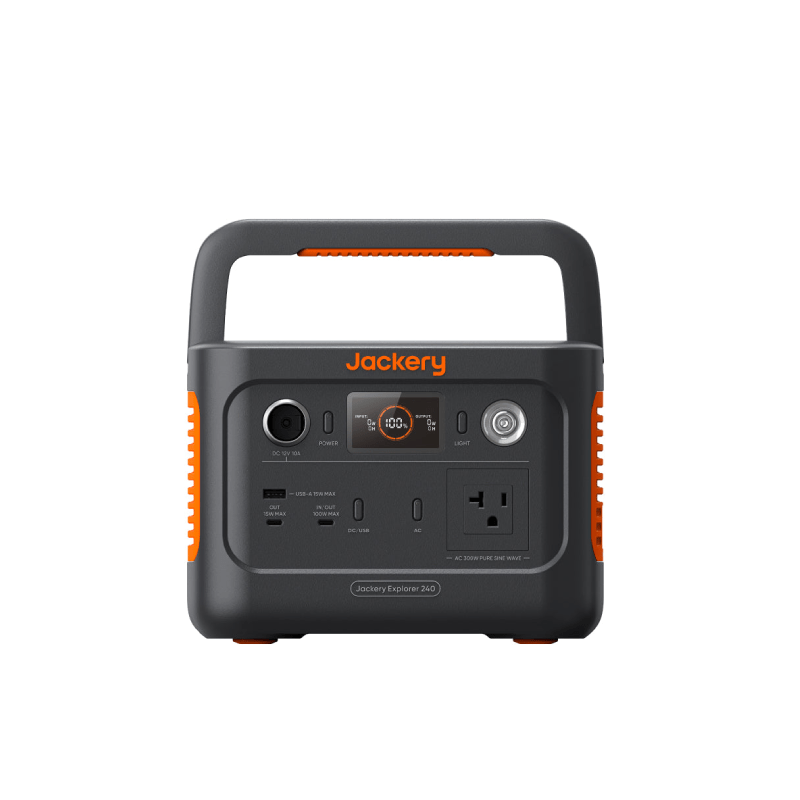
The Jackery Explorer 240 v2 Portable Power Station is the best small-format value in this lineup. At 256Wh and 300W, it clears the minimum bar for a useful camping, travel, or emergency unit. More importantly, Jackery publishes 4,000 cycles and a 3.6kg weight, which is exactly the kind of transparency I want in a sub-$300 pick.
| Spec | Value |
|---|---|
| Capacity | 256Wh |
| AC output | 300W |
| Battery chemistry | LiFePO4 |
| Cycle life | 4,000 |
| Weight | 3.6kg |
| Expandable | No |
| Price | $249 |
Pros
| Pros | |
|---|---|
| Published cycle life | 4,000 cycles is strong for this size class |
| Easy to carry | 3.6kg is manageable for daily grab-and-go use |
| Balanced specs | 256Wh and 300W suit routers, laptops, lights, and small gear |
Cons
| Cons | |
|---|---|
| Limited runtime | 256Wh is still a small battery for outages |
| Not expandable | No path to add external battery capacity |
| Solar input unclear | Max solar charging wattage not specified |
Jackery Portable Power Station Explorer 2000 Plus
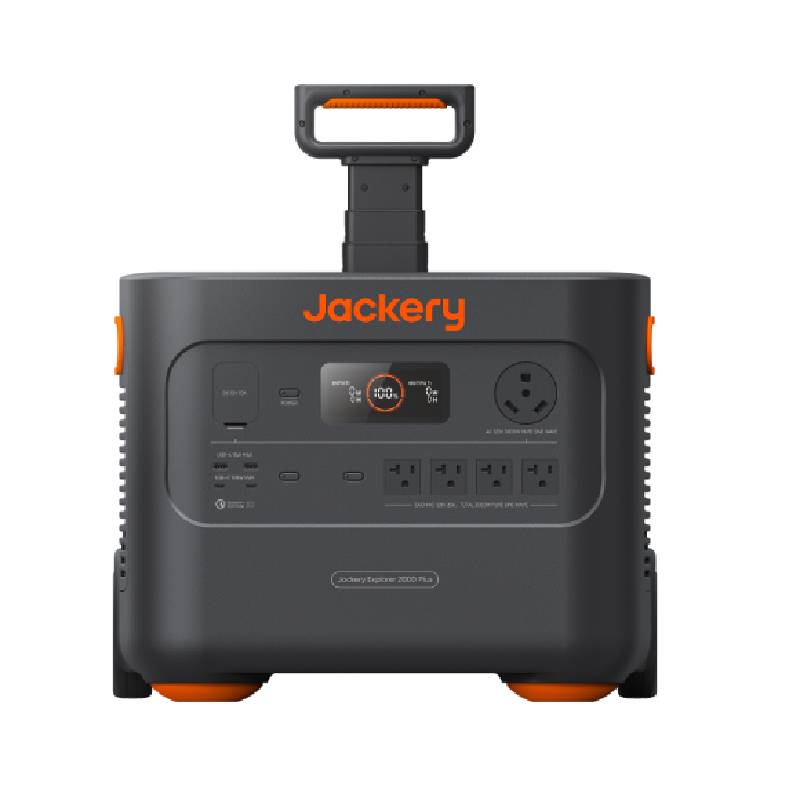
The Jackery Portable Power Station Explorer 2000 Plus is the premium pick for buyers who know they may scale up later. It starts at 2042Wh and 3000W, weighs 27.9kg, and can expand to 12,000Wh. That makes it the most flexible system in this list, though not the cheapest.
| Spec | Value |
|---|---|
| Capacity | 2042Wh |
| AC output | 3000W |
| Battery chemistry | LiFePO4 |
| Cycle life | 4,000 |
| Weight | 27.9kg |
| Expandable | Yes, up to 12,000Wh |
| Price | $2,199 |
Pros
| Pros | |
|---|---|
| Expansion headroom | Grows from 2042Wh to 12,000Wh |
| Strong output | 3000W covers many household and jobsite loads |
| Published cycle life | 4,000 cycles is solid for long-term ownership |
Cons
| Cons | |
|---|---|
| Expensive | Costs double the EcoFlow large-unit pick |
| Heavy | 27.9kg is not something most people want to carry often |
| Solar spec missing here | Max solar charging wattage not specified in the data |
BLUETTI Elite 30 V2 Portable Power Station | 600W 288Wh (Twilight Glow Purple)

The BLUETTI Elite 30 V2 Portable Power Station | 600W 288Wh (Twilight Glow Purple) is one of three color variants of the same underlying unit. It is priced at $239 and lists 288Wh capacity. The product description claims 600W rated power, 1500W lifting power, 140W PD charging, and ≤10ms UPS backup. The structured data here shows 980W continuous output, which conflicts with the title and description, so verify before purchase.
| Spec | Value |
|---|---|
| Capacity | 288Wh |
| AC output | 980W in provided data; product title/description indicate 600W rated |
| Battery chemistry | LiFePO4 |
| Cycle life | not specified by the manufacturer |
| Weight | not specified by the manufacturer |
| Expandable | No |
| Price | $239 |
Pros
| Pros | |
|---|---|
| Good small-unit capacity | 288Wh beats the 256Wh Jackery on raw storage |
| UPS feature claim | ≤10ms switch time is useful for desk gear |
| Strong USB-C claim | 140W PD is laptop-friendly |
Cons
| Cons | |
|---|---|
| Output spec conflict | Provided data and product copy do not match |
| Weight not listed | Hard to judge portability against rivals |
| Cycle life not listed | No published count in the provided data |
BLUETTI Elite 30 V2 Portable Power Station | 600W 288Wh (Glacier Blue)

The BLUETTI Elite 30 V2 Portable Power Station | 600W 288Wh (Glacier Blue) is the same hardware as the purple version in a different finish. If the blue unit is in stock and the price is the same, buy on color preference alone.
| Spec | Value |
|---|---|
| Capacity | 288Wh |
| AC output | 980W in provided data; product title/description indicate 600W rated |
| Battery chemistry | LiFePO4 |
| Cycle life | not specified by the manufacturer |
| Weight | not specified by the manufacturer |
| Expandable | No |
| Price | $239 |
Pros
| Pros | |
|---|---|
| Same price as other colors | No premium for the finish |
| Useful feature set | UPS and 140W PD claims are appealing |
| Better-than-basic capacity | 288Wh is enough for laptop and router duty |
Cons
| Cons | |
|---|---|
| Same spec ambiguity | Output numbers conflict across provided sources |
| Weight not specified | Portability remains unclear |
| No expansion | Fixed-capacity design only |
BLUETTI Elite 30 V2 Portable Power Station | 600W 288Wh (Blush Pink)

The BLUETTI Elite 30 V2 Portable Power Station | 600W 288Wh (Blush Pink) rounds out the three Elite 30 V2 variants in this dataset. Same advice as above: if you want the Elite 30 V2, buy whichever color is cheapest or ships fastest.
| Spec | Value |
|---|---|
| Capacity | 288Wh |
| AC output | 980W in provided data; product title/description indicate 600W rated |
| Battery chemistry | LiFePO4 |
| Cycle life | not specified by the manufacturer |
| Weight | not specified by the manufacturer |
| Expandable | No |
| Price | $239 |
Pros
| Pros | |
|---|---|
| Competitive price | $239 is fair for 288Wh LiFePO4 |
| Compact-use case fit | Good match for travel electronics and desk backup |
| Same electronics as the other Elite 30 V2 units | Easy choice if color matters |
Cons
| Cons | |
|---|---|
| Duplicate model entry | Not a distinct performance option from the other colors |
| Missing weight and cycle specs | Harder to compare rigorously |
| Output needs verification | Data conflict remains unresolved |
Jackery Explorer 100 Plus Portable Power Station
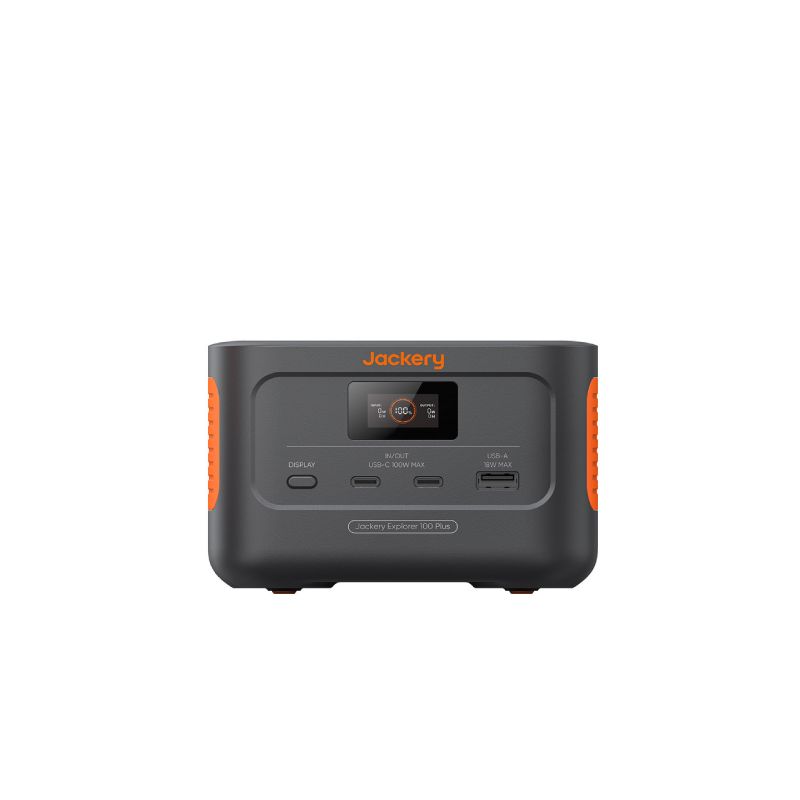
The Jackery Explorer 100 Plus Portable Power Station is the smallest serious option here at 99Wh and 128W. That makes it more of a travel battery with an AC outlet than a true outage box. Still, at 1.0kg and $149, it is easy to justify if your loads are limited to phones, cameras, drones, and ultraportable laptops.
| Spec | Value |
|---|---|
| Capacity | 99Wh |
| AC output | 128W |
| Battery chemistry | LiFePO4 |
| Cycle life | 2,000 cycles stated in description |
| Weight | 1.0kg |
| Expandable | No |
| Price | $149 |
Pros
| Pros | |
|---|---|
| Extremely portable | 1.0kg is easy to toss in a bag |
| Published cycle claim | Description states 2,000 cycles to 80% |
| Affordable entry point | Lowest-priced model in this list |
Cons
| Cons | |
|---|---|
| Very small battery | 99Wh disappears quickly under AC loads |
| Low AC ceiling | 128W rules out many appliances |
| Limited use case | Better for travel charging than backup power |
Explorer 100 Plus
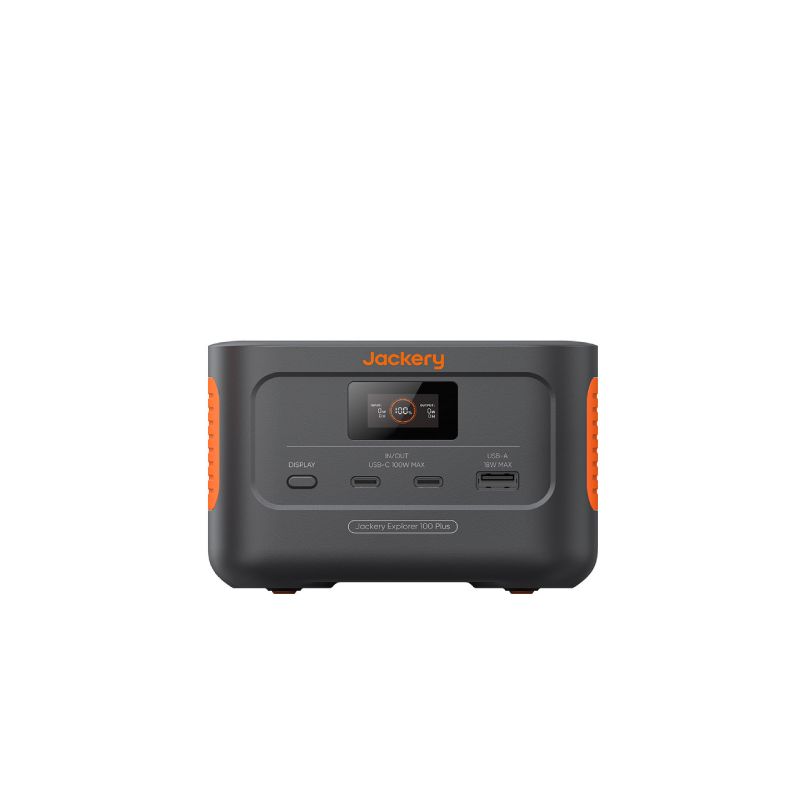
This second Explorer 100 Plus entry appears to be a duplicate listing of the same Jackery product with a different product page URL and image. The core specs match: 99Wh, 128W, 1.0kg, LiFePO4, and a description stating 2,000 cycles to 80% capacity. I would not treat it as a separate buying option unless the seller page shows a different bundle or better price.
| Spec | Value |
|---|---|
| Capacity | 99Wh |
| AC output | 128W |
| Battery chemistry | LiFePO4 |
| Cycle life | 2,000 cycles stated in description |
| Weight | 1.0kg |
| Expandable | No |
| Price | $149 |
Pros
| Pros | |
|---|---|
| Same ultra-light form factor | 1.0kg carry weight |
| Same low price | $149 remains accessible |
| Useful for flight-adjacent and travel kits | 99Wh class is easy to pack |
Cons
| Cons | |
|---|---|
| Duplicate listing | Adds little beyond the other Explorer 100 Plus entry |
| Tiny capacity | Not enough for meaningful outage coverage |
| AC power remains limited | 128W is restrictive |
What you give up at this price
Even the best LiFePO4 portable power stations here have compromises. At the low end, you are buying chemistry and portability more than runtime. A 99Wh to 288Wh unit is excellent for USB-C gear, camera batteries, routers, and short laptop sessions, but it is not a substitute for a generator or a larger home-backup battery. If you are unsure what your loads really require, use size your system and a second-pass load check with one of our other solar calculators.
At the high end, the compromise shifts from runtime to weight, cost, and clarity. The Jackery 2000 Plus is powerful and expandable, but 27.9kg is a lot to move around, and its current $2,199 price is hard to ignore next to the EcoFlow at $1,099. Some listings here also leave out key details like weight, cycle life, or solar input. That is not a small issue. Missing specs make comparison harder and reduce confidence at checkout.
The other thing you give up in this exact dataset is model diversity. Three of the seven slots are color variants of the same BLUETTI Elite 30 V2, and two are duplicate-style Jackery Explorer 100 Plus entries. If you want a wider field, browse the full database, compare how we score products through our scoring methodology, and click through to the official pages before buying if any spec looks inconsistent.
Frequently asked questions
Why choose LiFePO4 over NMC in a portable power station?+
LiFePO4 cells usually offer longer cycle life and better thermal stability than typical NMC packs, which is why they now dominate better portable power stations. The tradeoff is that LiFePO4 can be bulkier for the same energy capacity.
How much portable power station capacity do I need?+
Start with the wattage of the devices you actually plan to run, then estimate runtime from the battery's watt-hours. Our sizing tools can help you match loads and runtime before you buy.
Are portable power stations safe to use indoors?+
Yes, battery power stations are generally safe for indoor use because they do not burn fuel or produce combustion exhaust like gas generators. You still need normal ventilation around the unit and should follow the manufacturer's charging and storage guidance.
Can a portable power station run a refrigerator?+
Some can, but it depends on both the fridge's startup surge and the station's continuous AC output. In this lineup, the larger 2042Wh to 2048Wh models with 3000W output are the realistic options for that job.
What is a good cycle life for a LiFePO4 power station?+
Around 2,000 to 4,000 cycles to 80% capacity is common for good LiFePO4 products. In this list, several Jackery models explicitly state 2,000 or 4,000 cycles, while some other brands do not specify a cycle count on the product page.
Editor at SolarWorld covering portable power, balcony PV and home energy storage. Specifications quoted in this guide are pulled directly from our product database; analysis and recommendations are by Nathan Cole.
Full bio & methodology →Related articles
- Buying guide · 8 min
Best Stackable Home Batteries 2026: Only 7 Worth Buying
Our 2026 shortlist of modular home batteries, ranked by usable kWh, power, and price—so you can buy the right stack first.
- Buying guide · 8 min
Best Balcony Solar Kits for Renters 2026: 7 Worth Buying
Our 2026 shortlist of renter-friendly plug-and-play balcony solar kits, with honest tradeoffs, prices, and the few setups actually worth your click.
- Buying guide · 8 min
Best 400W+ Solar Panels 2026: Only 7 Worth Buying
Our top 400W+ solar panel picks for 2026, ranked by watts, efficiency, warranty, and value—so you can buy the right high-output module fast.