Best portable power stations for work-from-home backup (2026)
A good work-from-home backup unit needs three things: enough battery to keep your office alive for 4 to 12 hours, enough AC output to handle startup spikes, and battery chemistry that will not feel worn out after a year of weekly use. In this list, the sweet spot is roughly 1,200Wh to 2,100Wh with 1,800W to 3,000W AC output. If you want to compare more models beyond these seven, start with our full database.
Quick picks
| Pick | Model | Why it wins | Price |
|---|---|---|---|
| Best overall | BLUETTI Elite 200 V2 Portable Power Station - 2073.6Wh, 2600W | 2,073Wh, 2,600W, LiFePO4, 6,000 cycles, and a $999 price that undercuts most peers. | $999 |
| Best value | Jackery Portable Power Station Explorer 1000 Plus | 1,264Wh, 2,000W, LiFePO4, 4,000 cycles, expandable to 5,000Wh, also at $999. | $999 |
| Best for heavy home-office loads | Jackery Portable Power Station Explorer 2000 Plus | 3,000W output and 2,042Wh capacity for desktops, laser printers, and bigger backup roles. | $2,199 |
How we picked
We ranked these for actual home-office backup value: watt-hours per dollar, continuous AC output, battery chemistry, cycle life, portability, and whether the platform can expand later. We also filtered out products with unclear positioning or weak value for this use case. You can see our scoring methodology and the longer version of our scoring methodology before you buy; our editorial process and affiliate disclosure explain how we stay independent.
What “good” looks like at this price
For work-from-home backup in 2026, “good” starts around 1,000Wh. That is enough for a laptop, router, modem, monitor, and phone charging through a short outage, but not enough for carefree all-day use if you also run a desktop tower, powered speakers, task lighting, and a second display. Around 1,200Wh to 2,100Wh is the stronger zone for most buyers here, especially if you want margin for long meetings and repeated outages. If you have not added up your actual loads yet, size your system before you choose.
The best units in this list also use LiFePO4 chemistry, which is widely favored for long cycle life and thermal stability; the U.S. Department of Energy notes lithium iron phosphate as a common battery chemistry with strong safety and durability characteristics in energy storage applications (DOE). In plain terms: for backup duty you use often, LiFePO4 is the chemistry to prefer unless price or weight pushes you elsewhere.
At this tier, the main tradeoff is simple. You can get light weight, or you can get long runtime and high output, but rarely all three. A 1,000Wh class unit around 11.5 to 14.5 kg is easier to move room to room. A 2,000Wh class unit around 24.4 to 27.9 kg is much better for serious backup, but far less pleasant to carry. There is also no true 500Wh class option in this lineup, so buyers wanting ultra-small desk backup are better served by a different category page or our battery backup calculator.
Can a portable power station run a full home office during an outage?
Yes, if your office is reasonably efficient. A laptop often draws far less than a gaming desktop, and networking gear is usually modest. The problem is not the inverter on these models; several here offer 1,800W to 3,000W continuous AC output. The real limit is runtime. A 1,002Wh unit can cover a lean setup for hours, but a 2,073Wh or 2,042Wh unit gives you much more breathing room for all-day outages.
If your setup includes a desktop PC, multiple monitors, or a printer with a heating element, capacity matters more than marketing claims. Start with your actual watts and estimate runtime. NREL has repeatedly emphasized that load measurement is central to backup planning and energy management (NREL). For a quick estimate, use size your system or browse our solar panel calculator if you also plan to recharge with PV later.
Is 1000Wh enough for work-from-home backup?
Sometimes. For a laptop-based office, 1000Wh is a workable minimum. The Jackery Explorer 1000 Pro Portable Power Station sits right at 1002Wh, and that can cover the basics during a short to medium outage. But if you work from a desktop or need the confidence to run all day without micromanaging loads, 1000Wh is the floor, not the target.
That is why the stronger picks here cluster above 1,200Wh. The Jackery Portable Power Station Explorer 1000 Plus gives you 1,264Wh at the same current price as the Bluetti Elite 200 V2, while the BLUETTI Elite 200 V2 Portable Power Station - 2073.6Wh, 2600W roughly doubles the practical buffer for long outage days.
Are expandable power stations worth it for home-office backup?
Usually, yes. Expandability lets you buy a sane starter size now and add battery later if outages get longer or your office grows. That matters more for backup than for occasional camping use. In this list, the Jackery Portable Power Station Explorer 1000 Plus expands to 5,000Wh, the Bluetti Elite 200 V2 to 4,147Wh, and the Jackery Portable Power Station Explorer 2000 Plus to 12,000Wh.
The catch is cost. Expansion is great if you know you may need it. If you do not, a larger base unit can be the better buy. For office-only backup, many people are better off buying enough battery upfront and skipping the future accessory path.
The 7 best models
BLUETTI Elite 200 V2 Portable Power Station - 2073.6Wh, 2600W

This is the best overall buy for most home-office backup shoppers. You get 2,073Wh, 2,600W continuous output, LiFePO4 chemistry, and a stated 6,000-cycle life for $999. That is a very strong numbers package for the money.
| Spec | Value |
|---|---|
| Capacity | 2073Wh |
| AC output | 2600W |
| Battery | LiFePO4 |
| Cycle life | 6000 |
| Weight | 24.4 kg |
| Expandable | Yes, to 4147Wh |
| Price | $999 |
Pros - 2,073Wh is enough for serious all-day office backup - 2,600W output covers demanding desktop setups - 6,000-cycle LiFePO4 spec is excellent on paper
Cons - 24.4 kg is not light - Warranty not specified by the manufacturer - Max solar input not specified by the manufacturer
Jackery Portable Power Station Explorer 1000 Plus
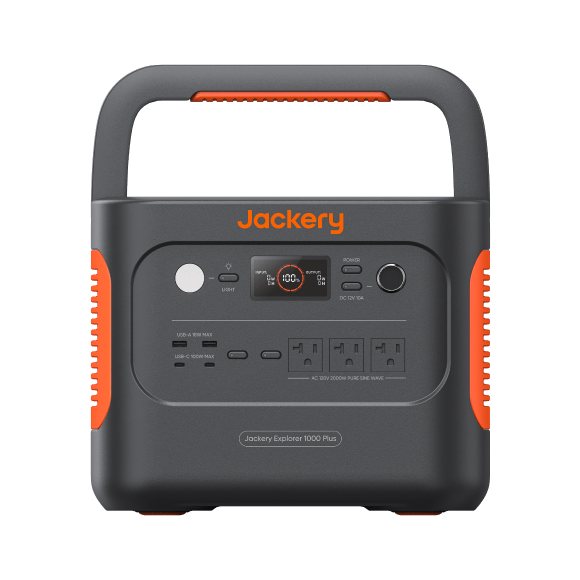
At $999, this is the best value if you want a lighter unit than the Bluetti without dropping to an older chemistry. You get 1,264Wh, 2,000W output, LiFePO4, 4,000 cycles, and expansion to 5,000Wh.
| Spec | Value |
|---|---|
| Capacity | 1264Wh |
| AC output | 2000W |
| Battery | LiFePO4 |
| Cycle life | 4000 |
| Weight | 14.5 kg |
| Expandable | Yes, to 5000Wh |
| Price | $999 |
Pros - Strong 2,000W output for a 14.5 kg unit - LiFePO4 with 4,000-cycle rating - Expansion path to 5,000Wh adds flexibility
Cons - Runtime is much lower than 2kWh-class models - Warranty not specified by the manufacturer - Solar charging max not specified by the manufacturer
Jackery Explorer 1500 Pro Portable Power Station
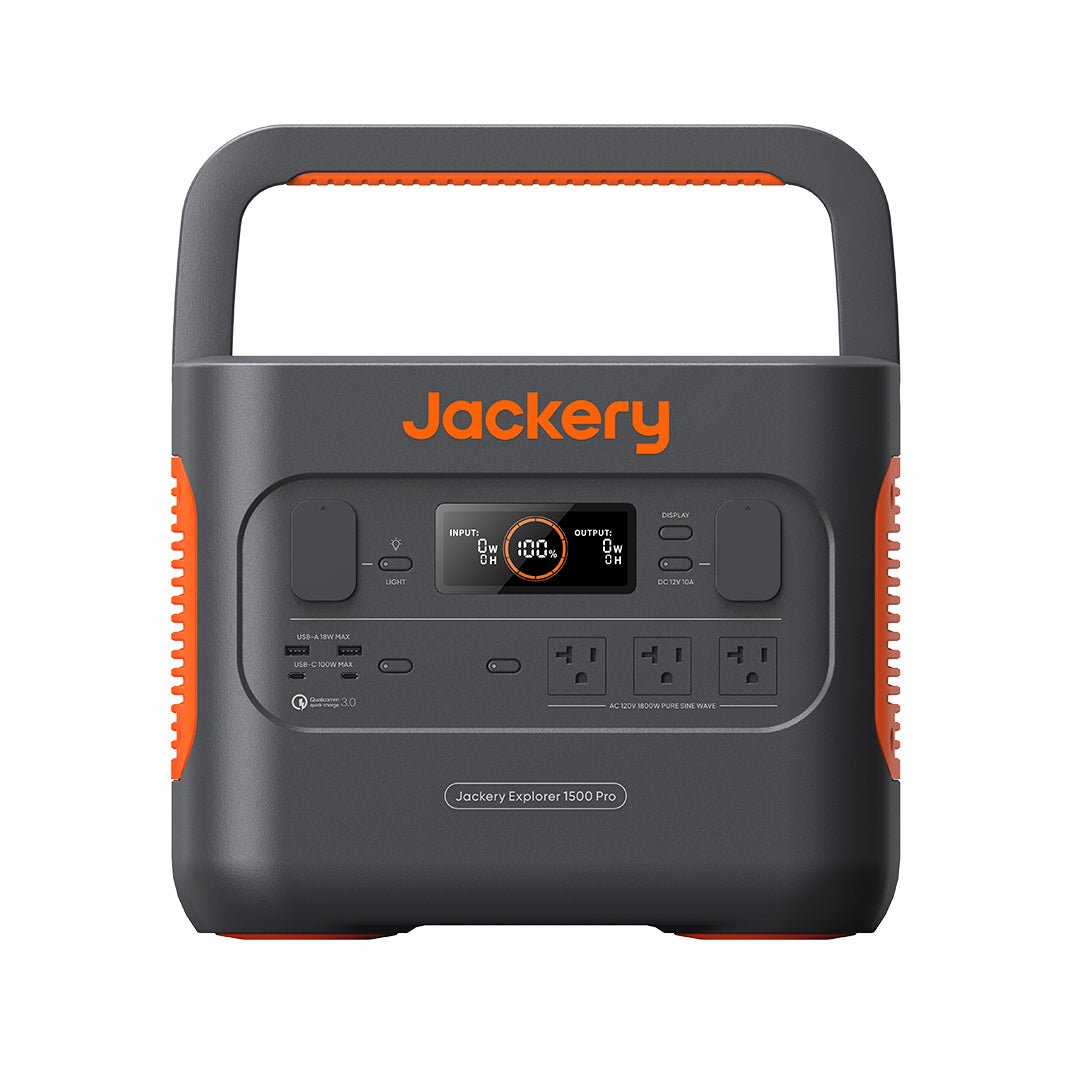
The 1500 Pro sits in an awkward middle ground. 1,512Wh and 1,800W output are useful numbers, and Jackery claims 2-hour AC recharging, but at $1,699 it is expensive relative to better-value LiFePO4 options in this list.
| Spec | Value |
|---|---|
| Capacity | 1512Wh |
| AC output | 1800W |
| Battery | not specified by the manufacturer |
| Cycle life | not specified by the manufacturer |
| Weight | not specified by the manufacturer |
| Expandable | No |
| Price | $1699 |
Pros - 1,512Wh is a solid office-backup size - 1,800W output covers most office gear - Jackery states 2-hour AC recharging
Cons - Poor value against $999 rivals here - Battery chemistry not specified by the manufacturer - No expansion option
Jackery Explorer 1000 Pro Portable Power Station
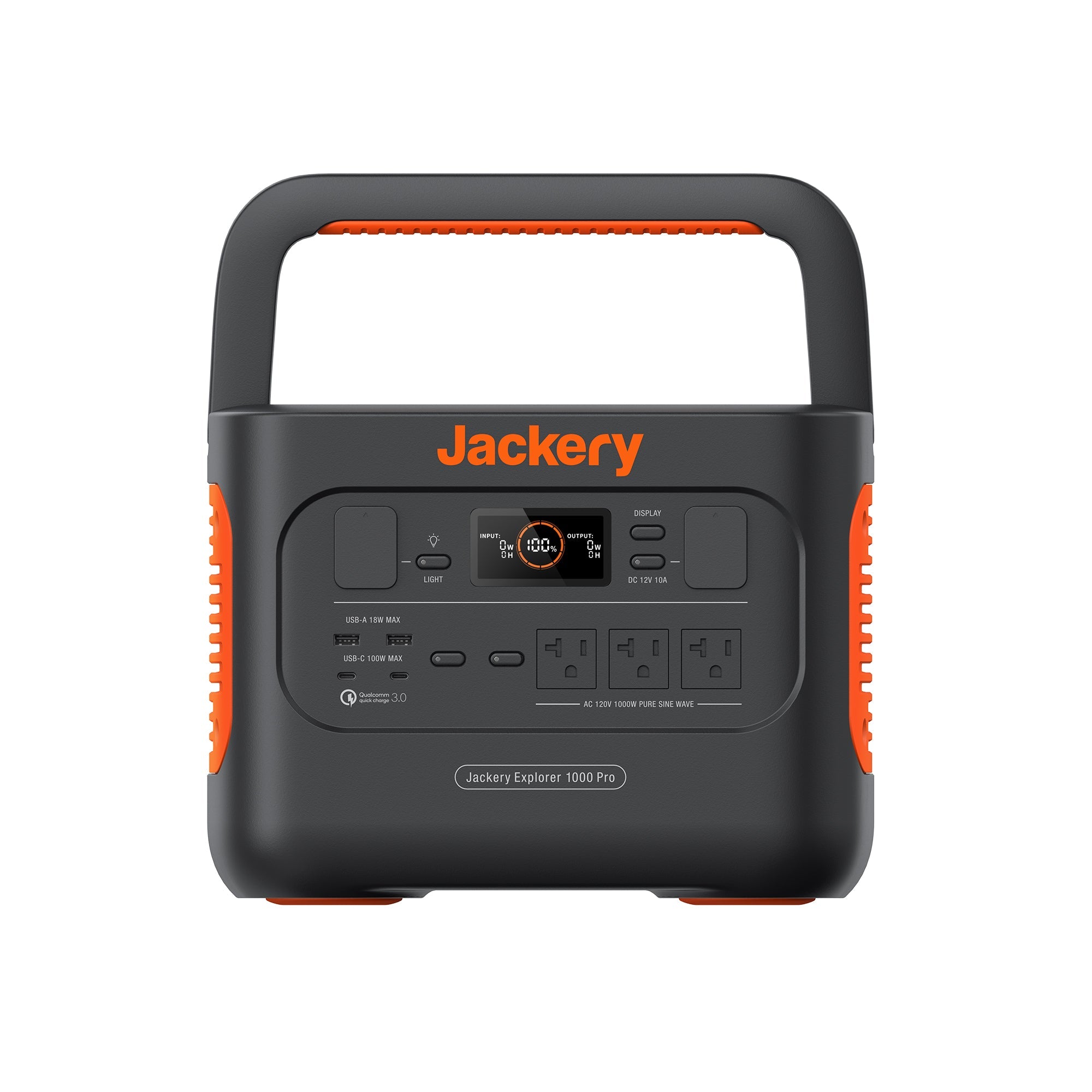
This is the light, simple pick for short outages and laptop-first offices. It offers 1,002Wh, 1,000W output, 11.5 kg weight, and a quick 1.8-hour AC recharge. But the older Li-ion chemistry and 1,000-cycle rating are weaker than the LiFePO4 competition.
| Spec | Value |
|---|---|
| Capacity | 1002Wh |
| AC output | 1000W |
| Battery | Li-ion |
| Cycle life | 1000 |
| Weight | 11.5 kg |
| Expandable | No |
| Price | $1099 |
Pros - Light at 11.5 kg - Fast AC recharge at 1.8 hours - Good fit for laptop-and-router backup
Cons - Only 1,000W continuous output - 1,000-cycle life trails LiFePO4 rivals - No expansion path
Jackery Portable Power Station Explorer 2000 Plus
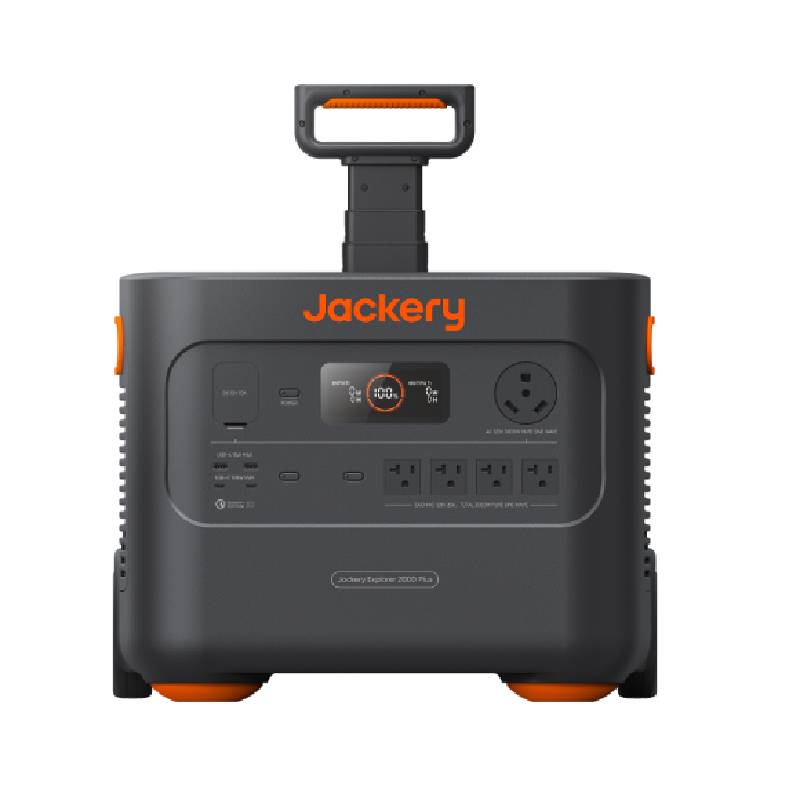
If your office load is heavy, this is the serious option. You get 2,042Wh, 3,000W output, LiFePO4 chemistry, and expansion to 12,000Wh. For desktop creators, home labs, or mixed office-plus-fridge backup, that extra inverter headroom matters.
| Spec | Value |
|---|---|
| Capacity | 2042Wh |
| AC output | 3000W |
| Battery | LiFePO4 |
| Cycle life | 4000 |
| Weight | 27.9 kg |
| Expandable | Yes, to 12000Wh |
| Price | $2199 |
Pros - 3,000W output handles demanding loads - 2,042Wh capacity is strong for outage days - Expansion to 12,000Wh is unusually flexible
Cons - Expensive for office-only use - Heavy at 27.9 kg - Solar charging max not specified by the manufacturer
Jackery Solar Generator 1000 Plus
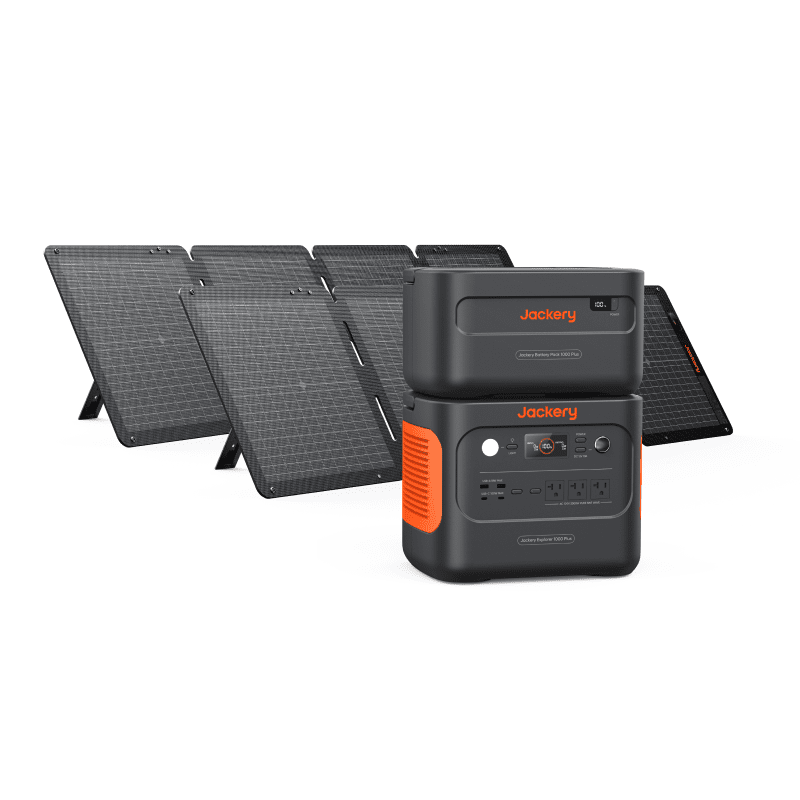
This is basically the Explorer 1000 Plus in bundle form. Core specs are the same: 1,264Wh, 2,000W, LiFePO4, 4,000 cycles, 14.5 kg, and expansion to 5,000Wh. The problem is price. At $2,099, it is hard to justify for buyers who only need outage backup and can add panels later.
| Spec | Value |
|---|---|
| Capacity | 1264Wh |
| AC output | 2000W |
| Battery | LiFePO4 |
| Cycle life | 4000 |
| Weight | 14.5 kg |
| Expandable | Yes, to 5000Wh |
| Price | $2099 |
Pros - Same solid core platform as the 1000 Plus - LiFePO4 chemistry with 4,000 cycles - Good option if you want a bundled solar setup now
Cons - Much pricier than the base unit - Panel details not specified in the provided data - Not the best value for office-only backup
Explorer 2000 Plus Series
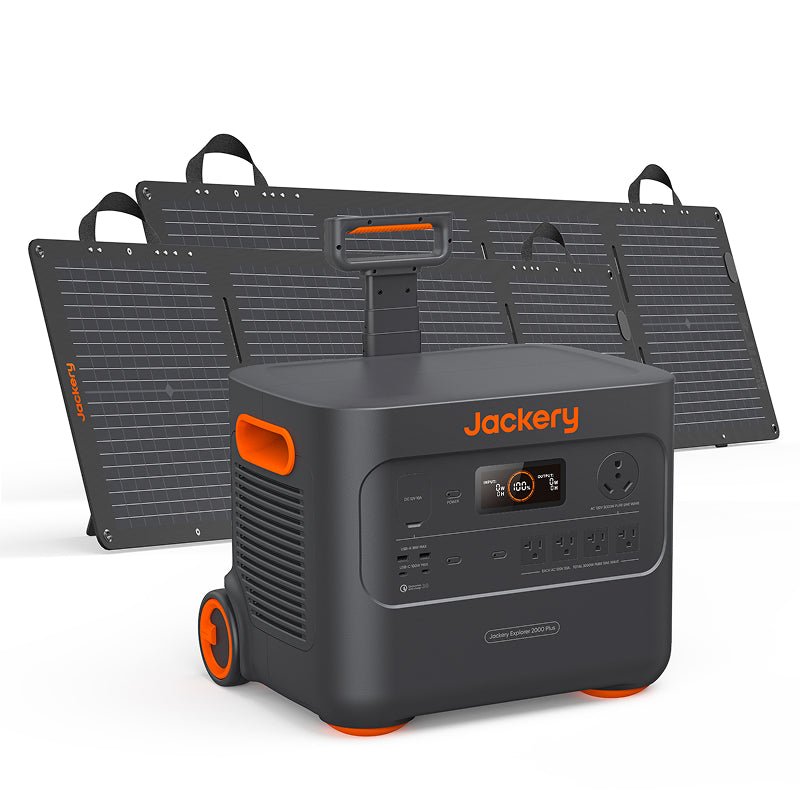
This one is more platform page than straightforward single product. The listing says 2-24kWh expandable capacity and also says the product shown is not available for purchase. For work-from-home buyers, that makes it harder to recommend than the standard 2000 Plus unless you specifically want to research the broader ecosystem.
| Spec | Value |
|---|---|
| Capacity | 24000Wh listed on page |
| AC output | 3000W |
| Battery | LiFePO4 |
| Cycle life | 4000 |
| Weight | 27.9 kg |
| Expandable | Yes, to 12000Wh |
| Price | $2599 |
Pros - Broad expandable ecosystem - 3,000W output class is useful for home backup - LiFePO4 with 4,000-cycle rating
Cons - Listing says not available for purchase - Capacity presentation is confusing - Poor fit for a simple office-backup buy
For quick cross-checking, the direct product pages above are Jackery Explorer 1500 Pro Portable Power Station, Jackery Solar Generator 1000 Plus, and Explorer 2000 Plus Series. If you want broader category context, also see our portable power station hub and the rest of our editorial testing pages.
What you give up at this price
Even the best picks here are still compromises. First, portability drops fast once you move into the genuinely useful 2kWh class. The Bluetti Elite 200 V2 is 24.4 kg, and the Jackery Explorer 2000 Plus is 27.9 kg. That is manageable for occasional moves, not something most people want to carry up stairs every week. If easy grab-and-go handling matters more than long runtime, the lighter 1kWh-class units make more sense.
Second, published specs are incomplete on several models. Solar input limits, warranty details, and in one case even battery chemistry are not consistently specified in the provided manufacturer data. That does not make those products bad, but it does make direct comparison harder. For buyers spending $1,000 to $2,200, missing details are a real downside.
Third, the best value in this list is concentrated in just two models: the Bluetti Elite 200 V2 and the Jackery Explorer 1000 Plus. Several other options are still decent products, but they are harder to defend on price alone. My short version: buy bigger if outages are common, buy LiFePO4 if longevity matters, and do not pay bundle pricing unless you know you want the included solar hardware from day one.
Frequently asked questions
How big should a portable power station be for work-from-home backup?+
For most home-office setups, 1,000Wh to 2,000Wh is the practical range. That is usually enough for a laptop, monitor, router, phone charging, and some intermittent extras for several hours; use our sizing tools before buying.
Is LiFePO4 better than Li-ion for backup use?+
For frequent backup duty, LiFePO4 is usually the better fit because it tends to offer much longer cycle life. In this lineup, the LiFePO4 models generally make more sense than the older Li-ion option if longevity matters.
Can a portable power station run a full home office all day?+
Sometimes, yes, but it depends on your actual load. A low-draw setup can stretch much longer than a desktop workstation with multiple monitors, so check wattage first instead of buying by capacity alone.
Are expandable power stations worth it for home backup?+
They can be, especially if you want to start around 1-2kWh and add capacity later. For buyers who may grow into longer outages, expandable models are easier to justify than fixed-capacity units.
Should I buy a solar generator bundle for work-from-home backup?+
Only if you know you want panels included now. For most work-from-home buyers, the base power station is the better value because the solar bundle often costs much more for the same core battery and inverter.
Editor at SolarWorld covering portable power, balcony PV and home energy storage. Specifications quoted in this guide are pulled directly from our product database; analysis and recommendations are by Nathan Cole.
Full bio & methodology →Related articles
- Buying guide · 8 min
Best Stackable Home Batteries 2026: Only 7 Worth Buying
Our 2026 shortlist of modular home batteries, ranked by usable kWh, power, and price—so you can buy the right stack first.
- Buying guide · 8 min
Best Balcony Solar Kits for Renters 2026: 7 Worth Buying
Our 2026 shortlist of renter-friendly plug-and-play balcony solar kits, with honest tradeoffs, prices, and the few setups actually worth your click.
- Buying guide · 8 min
Best 400W+ Solar Panels 2026: Only 7 Worth Buying
Our top 400W+ solar panel picks for 2026, ranked by watts, efficiency, warranty, and value—so you can buy the right high-output module fast.