Best portable power stations for camping (2026)
You do not need 2,000Wh for every campsite. For most campers, the real sweet spot is 240Wh to 716Wh: enough for phones, lights, cameras, laptops, and in some cases a CPAP or small cooler, without dragging a 25 kg box out of the car. This list focuses on seven models in the current dataset, with blunt tradeoffs and direct links into our full database.
Quick picks
| Pick | Model | Why it wins | Price |
|---|---|---|---|
| Best overall | Jackery Explorer 240 v2 Portable Power Station | 256Wh, 300W output, LiFePO4 chemistry, and 4,000-cycle life at $249 is the cleanest camping balance here. | $249 |
| Best value | Jackery Explorer 240 Portable Power Station | 240Wh for $219 is a simple low-cost pick for lights, phones, drones, and basic weekend use. | $219 |
| Best for car camping with real appliances | BLUETTI PS72 Portable Power Station | 700W 716Wh | 716Wh and 700W output at $329 gives you much more headroom for coolers, CPAPs, and longer trips. | $329 |
How we picked
We ranked these models on four things that matter at a campsite: usable watt-hours, continuous AC output, battery chemistry and cycle life, and carry weight relative to price. We also penalized missing specs, because if a manufacturer does not publish a field, you should treat that as uncertainty. You can see our scoring methodology and our separate affiliate disclosure before you click out.
What “good” looks like at this price
For camping in 2026, “good” depends on the trip style. At roughly $150 to $250, a solid unit is around 100Wh to 256Wh with enough output for phones, lights, camera batteries, and a laptop. Around $250 to $350, the bar moves to 500Wh to 716Wh and 500W to 700W output, which is where portable power stations start to feel genuinely useful for car camping. Above that, you are paying for capacity and appliance support, but weight rises fast.
The biggest tradeoff is not brand. It is energy versus portability. A 99Wh pack at 1.0 kg is easy to toss in a day bag. A 518Wh unit at 6.0 kg is still reasonable for car camping. A 2,073Wh unit at 24.4 kg is effectively a mobile battery cart, not something you casually carry from parking lot to tent pad. If you are unsure what your loads add up to, size your system first, or use a broader battery runtime calculator before buying.
Battery chemistry also matters more than many shoppers realize. In this lineup, the best LiFePO4 options are dramatically ahead on cycle life: 4,000 cycles for the Jackery Explorer 240 v2 and 6,000 cycles for the BLUETTI Elite 200 V2, versus 500 to 800 cycles on several older lithium-ion Jackery models. For reference on battery durability and system performance testing, NREL publishes battery and storage research through the National Renewable Energy Laboratory. If you camp a few weekends a year, older lithium-ion can still be fine. If you use the station weekly, LiFePO4 is the safer long-term buy.
The 7 best models
Jackery Explorer 240 v2 Portable Power Station
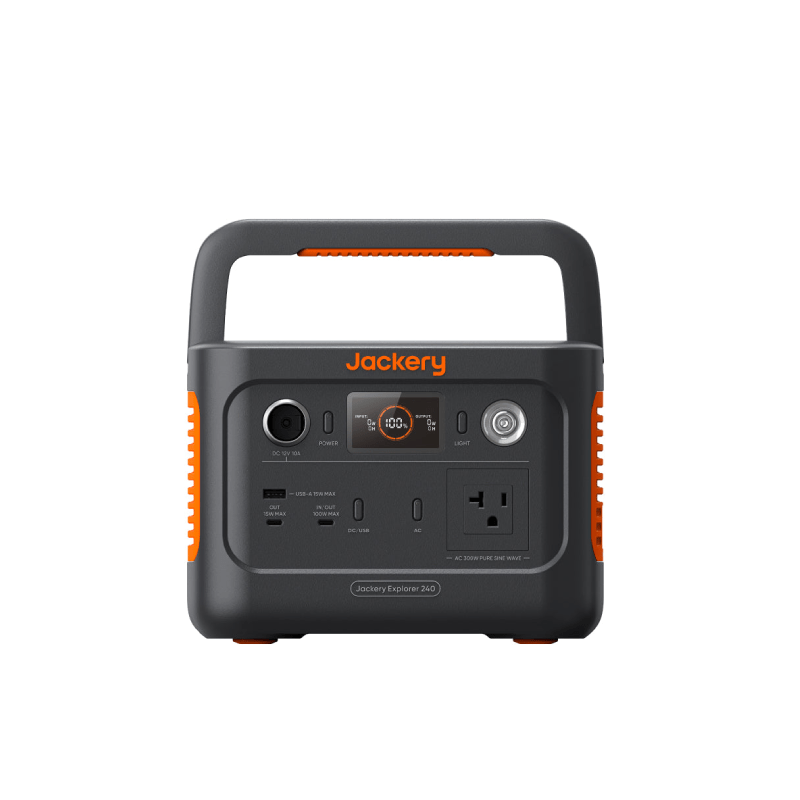
The Jackery Explorer 240 v2 Portable Power Station is the best all-around camping pick in this group. You get 256Wh, 300W continuous AC output, LiFePO4 chemistry, and a rated 4,000 cycles at 3.6 kg for $249. That is a much stronger spec mix than the older 240 and 290 models.
| Spec | Value |
|---|---|
| Capacity | 256Wh |
| AC output | 300W continuous |
| Battery | LiFePO4 |
| Cycle life | 4,000 |
| Weight | 3.6 kg |
| Price | $249 |
This is the one I would buy for most solo or couple camping trips where the goal is reliable small-load power, not running a microwave or induction cooktop. The manufacturer description also mentions one-hour charging and a 5-year warranty, but warranty years are not separately structured in the dataset, so I am not treating that as a scored spec.
Pros
| Pros |
|---|
| 300W output is better than the older 200W Jackery minis |
| LiFePO4 and 4,000 cycles are excellent at this size |
| Still light enough at 3.6 kg for real portability |
Cons
| Cons |
|---|
| 256Wh is still too small for multi-day cooler duty |
| Solar input limit not specified by the manufacturer |
| Expandable battery support is not available |
BLUETTI PS72 Portable Power Station | 700W 716Wh

The BLUETTI PS72 Portable Power Station | 700W 716Wh is the best value for campers who need real runtime. At $329, it matches the price of the Jackery 500 while giving you 716Wh instead of 518Wh, plus 700W instead of 500W.
| Spec | Value |
|---|---|
| Capacity | 716Wh |
| AC output | 700W continuous |
| Battery | not specified by the manufacturer |
| Cycle life | not specified by the manufacturer |
| Weight | not specified by the manufacturer |
| Price | $329 |
The missing chemistry, cycle life, and weight data keep it from taking the overall crown. Still, on raw capacity-per-dollar, this is one of the strongest camping buys in the set. If your trips involve a CPAP, a powered cooler, or charging several devices across a weekend, this is where the list starts to make practical sense.
Pros
| Pros |
|---|
| 716Wh is a major step up from the 500Wh class |
| 700W output covers many camping appliances and chargers |
| $329 pricing is aggressive for this capacity |
Cons
| Cons |
|---|
| Battery chemistry not specified by the manufacturer |
| Cycle life not specified by the manufacturer |
| Weight not specified by the manufacturer |
Jackery Explorer 500 Portable Power Station
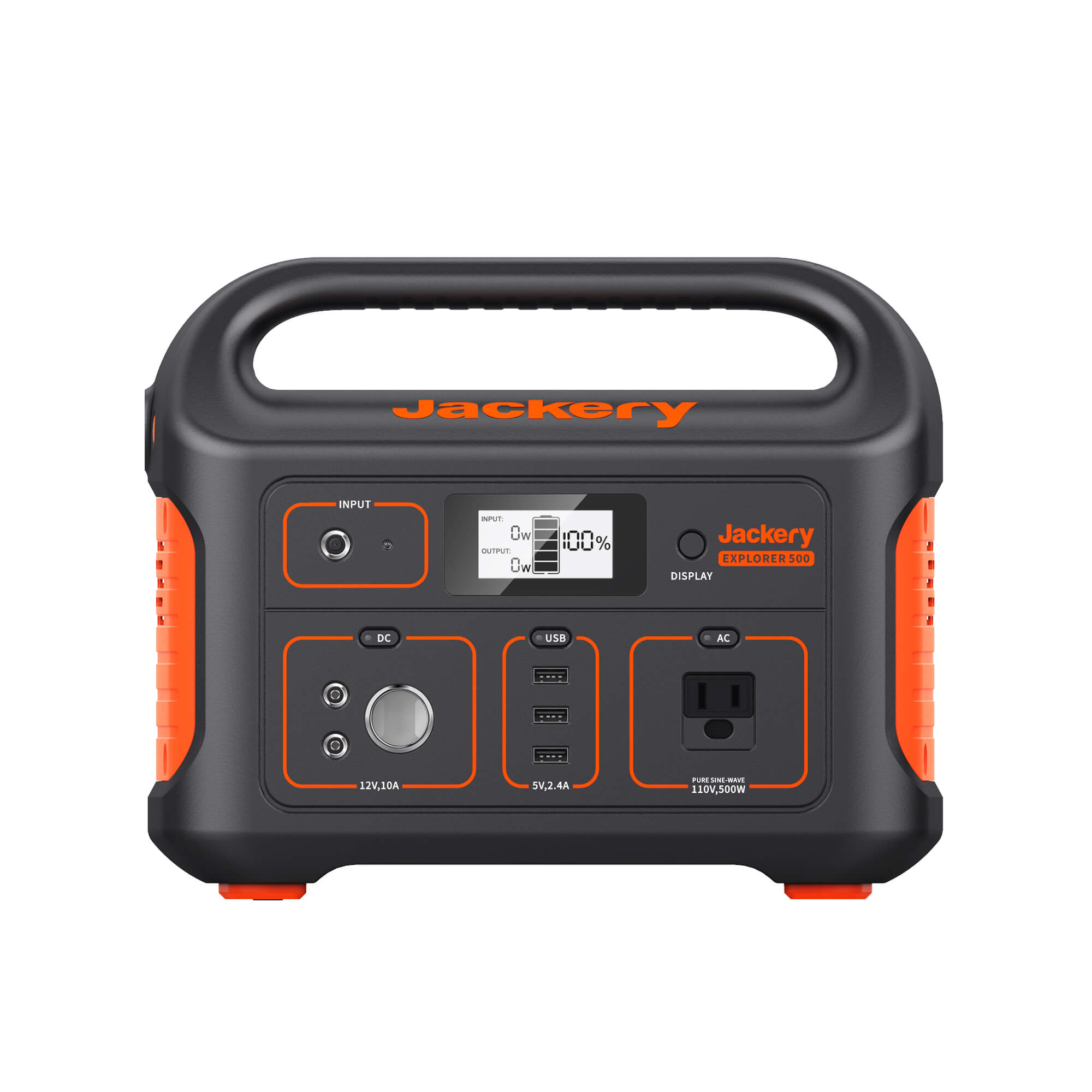
The Jackery Explorer 500 Portable Power Station remains a straightforward mid-size camping option: 518Wh, 500W output, 6.0 kg, and $329. The problem is that the PS72 undercuts it on value.
| Spec | Value |
|---|---|
| Capacity | 518Wh |
| AC output | 500W continuous |
| Battery | Li-ion |
| Cycle life | 500 |
| Weight | 6.0 kg |
| Price | $329 |
It is still a decent fit for buyers who prefer the Jackery ecosystem or want a known simple form factor for weekend car camping. Just be aware that this is older battery tech with a much shorter stated cycle life than the best LiFePO4 options.
Pros
| Pros |
|---|
| 518Wh is enough for a useful weekend load mix |
| 500W output can handle more than the mini stations |
| 6.0 kg is manageable for car camping |
Cons
| Cons |
|---|
| Only 500 rated cycles |
| Costs the same as the larger 716Wh PS72 |
| Solar input limit not specified by the manufacturer |
Jackery Explorer 240 Portable Power Station
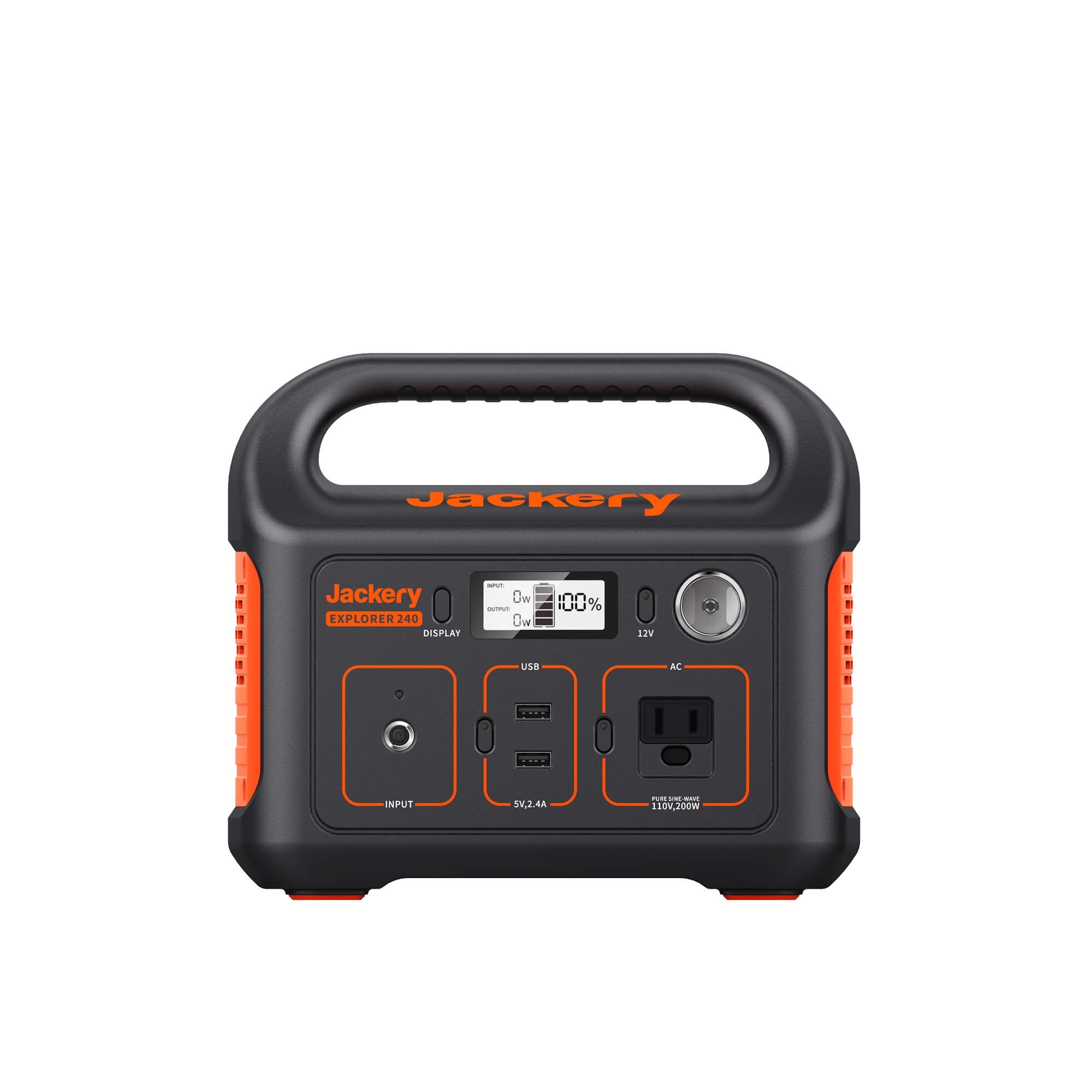
The Jackery Explorer 240 Portable Power Station is the budget camping pick if your loads are basic and your expectations are realistic. You get 240Wh and 200W output for $219 at 3.0 kg.
| Spec | Value |
|---|---|
| Capacity | 240Wh |
| AC output | 200W continuous |
| Battery | Li-ion |
| Cycle life | 500 |
| Weight | 3.0 kg |
| Price | $219 |
This is enough for phones, headlamps, camera batteries, a drone pack or two, and maybe some laptop time. It is not the one to buy if you expect appliance flexibility. For a closer look at the unit itself, see the product page for the Jackery Explorer 240 Portable Power Station.
Pros
| Pros |
|---|
| Low entry price for a recognizable camping power station |
| 3.0 kg carry weight is easy to manage |
| 240Wh is enough for light weekend electronics |
Cons
| Cons |
|---|
| 200W output is restrictive |
| Older lithium-ion chemistry with 500 cycles |
| No expansion option |
Jackery Explorer 290 Portable Power Station
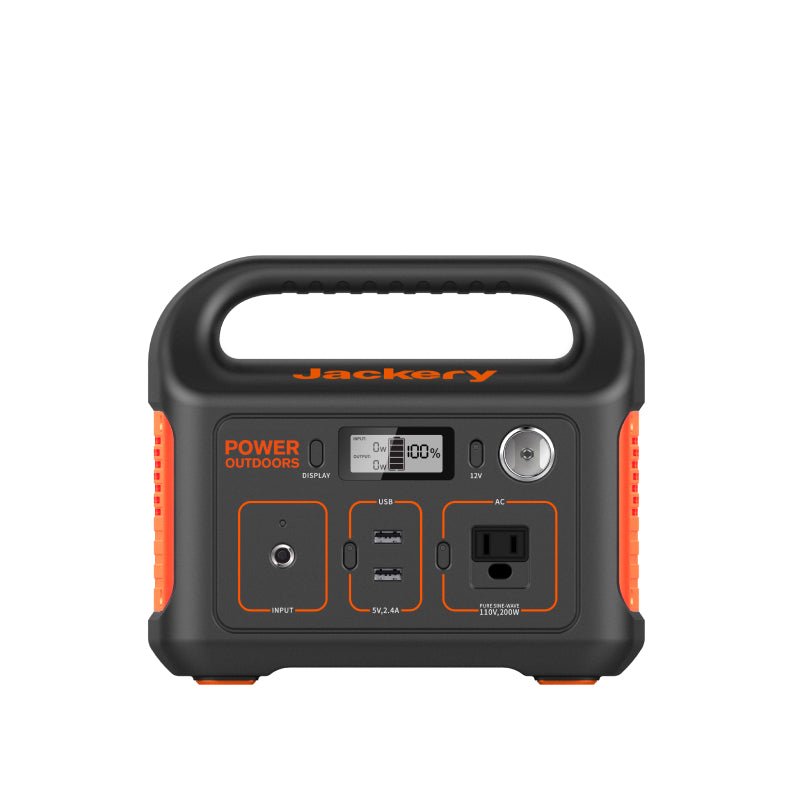
The Jackery Explorer 290 Portable Power Station adds a little more capacity than the 240 and improves rated cycle life to 800, but it still stays at 200W output and costs $279.
| Spec | Value |
|---|---|
| Capacity | 268Wh |
| AC output | 200W continuous |
| Battery | Li-ion |
| Cycle life | 800 |
| Weight | 3.6 kg |
| Price | $279 |
The issue is simple: the 240 v2 is cheaper, more powerful, and far better on cycle life. That makes the 290 hard to recommend unless this specific model is discounted below current listed pricing. You can compare it directly on the Jackery Explorer 290 Portable Power Station page.
Pros
| Pros |
|---|
| 268Wh is a modest bump over the basic 240Wh class |
| 800 cycles is better than some older Jackery units |
| Still compact at 3.6 kg |
Cons
| Cons |
|---|
| 200W output is still limiting |
| Costs more than the better 240 v2 |
| Li-ion chemistry trails LiFePO4 on longevity |
Explorer 100 Plus
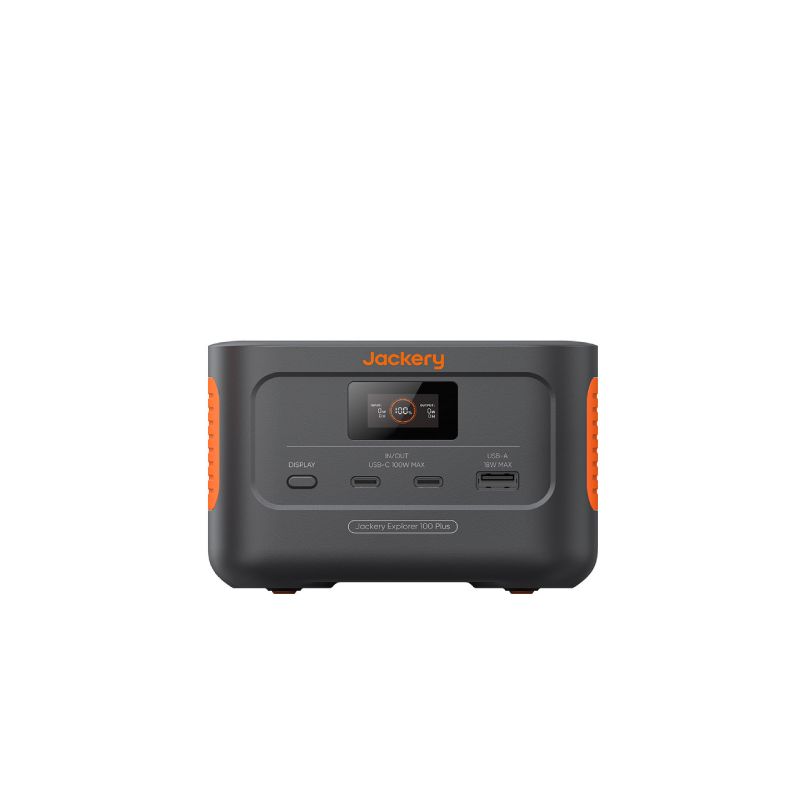
The Explorer 100 Plus is not a full camping power station for most people. It is a compact DC-first travel battery with 99Wh capacity, 128W output, LiFePO4 chemistry, and 1.0 kg weight for $149.
| Spec | Value |
|---|---|
| Capacity | 99Wh |
| AC output | 128W continuous |
| Battery | LiFePO4 |
| Cycle life | 0 in structured data; manufacturer description states 2,000 cycles |
| Weight | 1.0 kg |
| Price | $149 |
I would buy this only for ultralight car-camping support, airline-friendly style use, or as a backup battery for phones, cameras, GPS units, and USB-C laptops. The structured cycle-life field is listed as 0, but the manufacturer description says 2,000 cycles to 80% capacity; because the payload conflicts, treat that spec with caution.
Pros
| Pros |
|---|
| Very light at 1.0 kg |
| LiFePO4 chemistry is a plus at this size |
| Good fit for phones, cameras, and USB-C charging |
Cons
| Cons |
|---|
| 99Wh is too small for most overnight appliance loads |
| 128W output is limited |
| Cycle-life data is inconsistent in the source payload |
BLUETTI Elite 200 V2 Portable Power Station - 2073.6Wh, 2600W

The BLUETTI Elite 200 V2 Portable Power Station - 2073.6Wh, 2600W is the overkill pick for camping. It gives you 2,073Wh, 2,600W output, LiFePO4 chemistry, 6,000 cycles, and expansion to 4,147Wh for $799.
| Spec | Value |
|---|---|
| Capacity | 2,073Wh |
| AC output | 2,600W continuous |
| Battery | LiFePO4 |
| Cycle life | 6,000 |
| Weight | 24.4 kg |
| Price | $799 |
For basecamp setups, van use, group trips, or long off-grid weekends, it is a serious machine. For ordinary tent camping, it is too heavy and too expensive to be the default recommendation. If you are comparing larger systems, also browse our portable power stations category and a separate solar panel calculator to estimate recharge needs.
Pros
| Pros |
|---|
| Huge 2,073Wh capacity for long runtimes |
| 2,600W output can run demanding appliances |
| LiFePO4 and 6,000 cycles are excellent |
Cons
| Cons |
|---|
| 24.4 kg is very heavy for camping use |
| $799 is far above the sweet spot for most buyers |
| More power than many campers actually need |
What you give up at this price
Even the best camping power stations in this list have limits. The small and mid-size units mostly top out between 200W and 700W of continuous AC output. That means many resistive heating loads are still off the table, and runtimes on compressor coolers or CPAPs depend heavily on actual duty cycle, ambient temperature, and inverter losses. The U.S. Department of Energy’s guidance on appliance energy use is a good reminder that wattage and runtime both matter, not just battery size: DOE energy saver resources.
You also give up certainty on some models because the source data is incomplete. The BLUETTI PS72 looks excellent on paper for capacity per dollar, but the manufacturer data in this payload does not specify chemistry, cycle life, or weight. That is not a deal-breaker, but it does reduce confidence. On the other side, some older Jackery models are fully specified but clearly behind newer LiFePO4 options on longevity.
The simple rule: buy the smallest unit that covers your actual loads with margin. If your real use is phones, lights, and camera batteries, the 240 v2 or even the Explorer 100 Plus may be enough. If you need cooler or CPAP support, move up to the PS72 or larger. Before you spend, use size your system, compare the numbers in the full database, and check our scoring methodology so you know exactly why each pick landed where it did.
Frequently asked questions
What size portable power station is best for camping?+
For most weekend camping, 200Wh to 700Wh is the practical range. Around 200Wh handles phones, lights, and small electronics, while 500Wh to 700Wh is better if you also want to run a CPAP, laptop charging, or a small cooler for part of the trip.
Is LiFePO4 better than lithium-ion for camping power stations?+
Usually yes for frequent use, because LiFePO4 packs tend to offer much longer cycle life and better thermal stability. Standard lithium-ion units can still make sense if they are lighter or cheaper for occasional trips.
Can a portable power station run a camping fridge?+
Some can, but not all. In this lineup, the safer starting point is around 500W to 700W AC output with 500Wh or more of capacity, and actual runtime still depends on the fridge's duty cycle and ambient temperature.
Are bigger power stations always better for camping?+
No. A 2kWh class unit can be useful for car camping or group trips, but the extra weight is substantial. For many campers, a lighter 200Wh to 700Wh model is the better balance of portability and usable energy.
How do I estimate the right battery capacity for a camping trip?+
Add up your device watt-hours for a day, then multiply by the number of days and include conversion losses. If you want a quick estimate, use our sizing tools before buying so you do not overpay for capacity you will not use.
Editor at SolarWorld covering portable power, balcony PV and home energy storage. Specifications quoted in this guide are pulled directly from our product database; analysis and recommendations are by Nathan Cole.
Full bio & methodology →Related articles
- Buying guide · 8 min
Best Balcony Solar Kits for Renters 2026: 7 Worth Buying
Our 2026 shortlist of renter-friendly plug-and-play balcony solar kits, with honest tradeoffs, prices, and the few setups actually worth your click.
- Buying guide · 8 min
Best 400W+ Solar Panels 2026: Only 7 Worth Buying
Our top 400W+ solar panel picks for 2026, ranked by watts, efficiency, warranty, and value—so you can buy the right high-output module fast.
- Buying guide · 10 min
Best Home Battery Storage 2026: Only 7 Worth Buying
Our 2026 picks for whole-home backup batteries, with real kWh, kW, cycle-life and price tradeoffs so you can choose faster.