Best portable power stations under $5000 (2026)
If you have up to $5,000 to spend, the smart buys are not the most expensive boxes on the page. In this dataset, the sweet spot is clear: 3,072Wh, 3,000W, LiFePO4, and modular expansion. That gets you into real home-backup territory without crossing into whole-home battery pricing. For smaller needs, spending far less makes more sense.
Quick picks
| Pick | Model | Why it stands out | Price |
|---|---|---|---|
| Best overall | BLUETTI AC300+2*B300K | Home Battery Backup | 3,072Wh, 3,000W, LiFePO4, expandable, and the lowest price among the serious AC300 bundles. | $2,999 |
| Best value | Jackery Explorer 240 Portable Power Station | $219 for basic charging and emergency light-duty use; far cheaper than overbuying a home-backup unit. | $219 |
| Best for home-circuit backup | BLUETTI AC300+B300+Home integration Kit (120V) | Same 3,072Wh/3,000W AC300 platform, but bundled for cleaner connection to selected home loads. | $3,218 |
How we picked
We prioritized usable watt-hours, continuous AC output, battery chemistry, cycle life, expandability, and bundle value using our scoring methodology. For this list, we only considered products in the provided dataset priced under $5,000, and we favored complete power stations over accessories or odd listings with conflicting specs. Read more about how we test and our affiliate disclosure.
What “good” looks like at this price
Under $5,000, “good” should mean at least one of two things: either a real home-backup-capable system around 3kWh and 3kW, or a much cheaper compact unit that does a narrow job well. In this lineup, the strongest options are the Bluetti AC300 bundles: 3,072Wh capacity, 3,000W continuous output, LiFePO4 chemistry, 3,500-cycle life, and expansion up to 12,288Wh. That is enough for refrigerators, routers, lights, laptops, and many kitchen or power-tool loads one at a time, though runtime depends entirely on your actual watt draw. If you need help, size your system before you buy.
The key tradeoff is portability versus capability. A 240Wh Jackery is genuinely portable. A modular 3kWh home-backup setup is “portable” mostly in the marketing sense: useful in outages, cabins, and RV setups, but not something most people want to hand-carry around a campsite every day. For outage planning, the U.S. Department of Energy’s backup-power guidance is a good reality check on load prioritization and fuel-free resilience planning (DOE).
One more point: there are no true 5,000Wh all-in-one mainstream portable stations in this dataset that I’d recommend as straightforward apples-to-apples buys. The closest route to bigger storage here is modular expansion, not a single self-contained unit.
Are home integration kits worth it?
Yes, if your goal is backup for selected household circuits rather than a battery you wheel into a room and plug into directly. A home integration kit gives the system a cleaner role during outages: you can support critical loads without extension cords everywhere. That is the biggest reason the BLUETTI AC300+B300+Home integration Kit (120V) and BLUETTI AC300+2*B300K+Home integration Kit (120V) | Home Battery Backup make sense despite their higher bundle prices.
The catch is that integration hardware adds cost and usually makes most sense if you already know which circuits matter. If you only want to run a fridge, router, and a few chargers, the plain station may be the better buy. If you are building a backup plan around transfer equipment, also review local code and installation requirements; the National Electrical Code is the baseline reference for safe residential electrical work (NFPA 70 / NEC overview).
Is solar included, and does it change the value?
Yes, in some bundles, and it changes the math a lot. The BLUETTI AC300+B300+PV350 | Home Battery Backup includes one PV350 panel, while the BLUETTI AC300+B300+2*PV350 | Home Battery Backup includes two. If you were already planning to buy solar separately, those bundles can be more compelling than the base station plus battery alone.
That said, included panels do not automatically make a bundle the best value. Portable solar is useful, but panel output in the field depends on season, tilt, temperature, and irradiance. For a reality-based estimate, PVGIS is one of the better public tools for solar yield modeling (PVGIS). If you want to compare these options against more models, browse our full database or use our solar panel calculator.
The 7 best models
BLUETTI AC300+2*B300K | Home Battery Backup

This is the best buy here for most people who actually need backup power, not just gadget charging. At $2,999, it gives you the same 3,072Wh capacity and 3,000W continuous output as the pricier AC300 bundles, plus LiFePO4 chemistry and expansion up to 12,288Wh. That combination is the practical center of this list.
| Spec | Value |
|---|---|
| Capacity | 3,072Wh |
| AC output | 3,000W continuous |
| Battery chemistry | LiFePO4 |
| Cycle life | 3,500 cycles |
| Expandability | Yes, up to 12,288Wh |
| Weight | 21.6 kg |
| Price | $2,999 |
Pros
| Pros |
|---|
| Lowest-priced serious 3,072Wh / 3,000W option here |
| LiFePO4 and 3,500 cycles suit frequent use |
| Expandable to 12,288Wh for larger backup plans |
Cons
| Cons |
|---|
| Warranty length not specified by the manufacturer |
| Solar charging spec not specified in the data field |
| Still bulky for true grab-and-go portability |
BLUETTI AC300+B300+Home integration Kit (120V)

If your end goal is cleaner outage backup for home circuits, this bundle is easier to justify than a plain station. The hardware is built around the same AC300 platform, and the included integration kit is the reason to pay more than the base bundle.
| Spec | Value |
|---|---|
| Capacity | 3,072Wh |
| AC output | 3,000W continuous |
| Battery chemistry | LiFePO4 |
| Cycle life | 3,500 cycles |
| Expandability | Yes, up to 12,288Wh |
| Weight | 21.6 kg |
| Price | $3,218 |
Pros
| Pros |
|---|
| Home integration bundle is practical for outage use |
| Same strong 3,072Wh / 3,000W core as other AC300 kits |
| Expandable platform leaves room to grow |
Cons
| Cons |
|---|
| More expensive than the plain AC300+2*B300K bundle |
| Installation complexity is higher than plug-and-play use |
| Warranty length not specified by the manufacturer |
BLUETTI AC300+B300+PV350 | Home Battery Backup

This is the best Bluetti pick if you know you want solar in the box. The included PV350 panel makes the bundle more self-sufficient for off-grid charging and extended outages, though you should still compare the panel value against buying components separately.
| Spec | Value |
|---|---|
| Capacity | 3,072Wh |
| AC output | 3,000W continuous |
| Battery chemistry | LiFePO4 |
| Cycle life | 3,500 cycles |
| Expandability | Yes, up to 12,288Wh |
| Weight | 21.6 kg |
| Price | $3,298 |
Pros
| Pros |
|---|
| Includes a PV350 solar panel in the bundle |
| 3,000W output is enough for many household essentials |
| LiFePO4 chemistry is better suited to regular cycling |
Cons
| Cons |
|---|
| Pricier than the non-solar AC300 bundle |
| Max solar charging field is not specified by the manufacturer here |
| Still a modular system, not a simple one-piece unit |
BLUETTI AC300+B300+2*PV350 | Home Battery Backup

For buyers planning longer off-grid use, this is the most solar-heavy complete bundle in the list. You are paying $4,047 for the same core AC300 specs plus two PV350 panels, which can make sense for cabins, RV stays, or outage recovery where recharge speed matters more than lowest upfront cost.
| Spec | Value |
|---|---|
| Capacity | 3,072Wh |
| AC output | 3,000W continuous |
| Battery chemistry | LiFePO4 |
| Cycle life | 3,500 cycles |
| Expandability | Yes, up to 12,288Wh |
| Weight | 21.6 kg |
| Price | $4,047 |
Pros
| Pros |
|---|
| Includes two PV350 panels for stronger solar-ready value |
| Same expandable AC300 platform as the top picks |
| Still under the $5,000 ceiling with room to spare |
Cons
| Cons |
|---|
| High price relative to the plain AC300 bundles |
| Solar performance will vary heavily with conditions |
| Warranty length not specified by the manufacturer |
BLUETTI AC300+2*B300K+Home integration Kit (120V) | Home Battery Backup

This is the premium home-backup pick in the current data. It combines the lower-priced B300K-based AC300 setup with a 120V home integration kit, which makes it more compelling than buying random accessories later.
| Spec | Value |
|---|---|
| Capacity | 3,072Wh |
| AC output | 3,000W continuous |
| Battery chemistry | LiFePO4 |
| Cycle life | 3,500 cycles |
| Expandability | Yes, up to 12,288Wh |
| Weight | 21.6 kg |
| Price | $3,699 |
Pros
| Pros |
|---|
| Better suited to home-circuit backup than a plain station |
| Strong value versus many fixed home batteries |
| Expandable if your backup needs grow later |
Cons
| Cons |
|---|
| Costs $700 more than the non-integration B300K bundle |
| Not ideal if you only need occasional portable use |
| Warranty and surge output not specified by the manufacturer |
Jackery Explorer 240 Portable Power Station
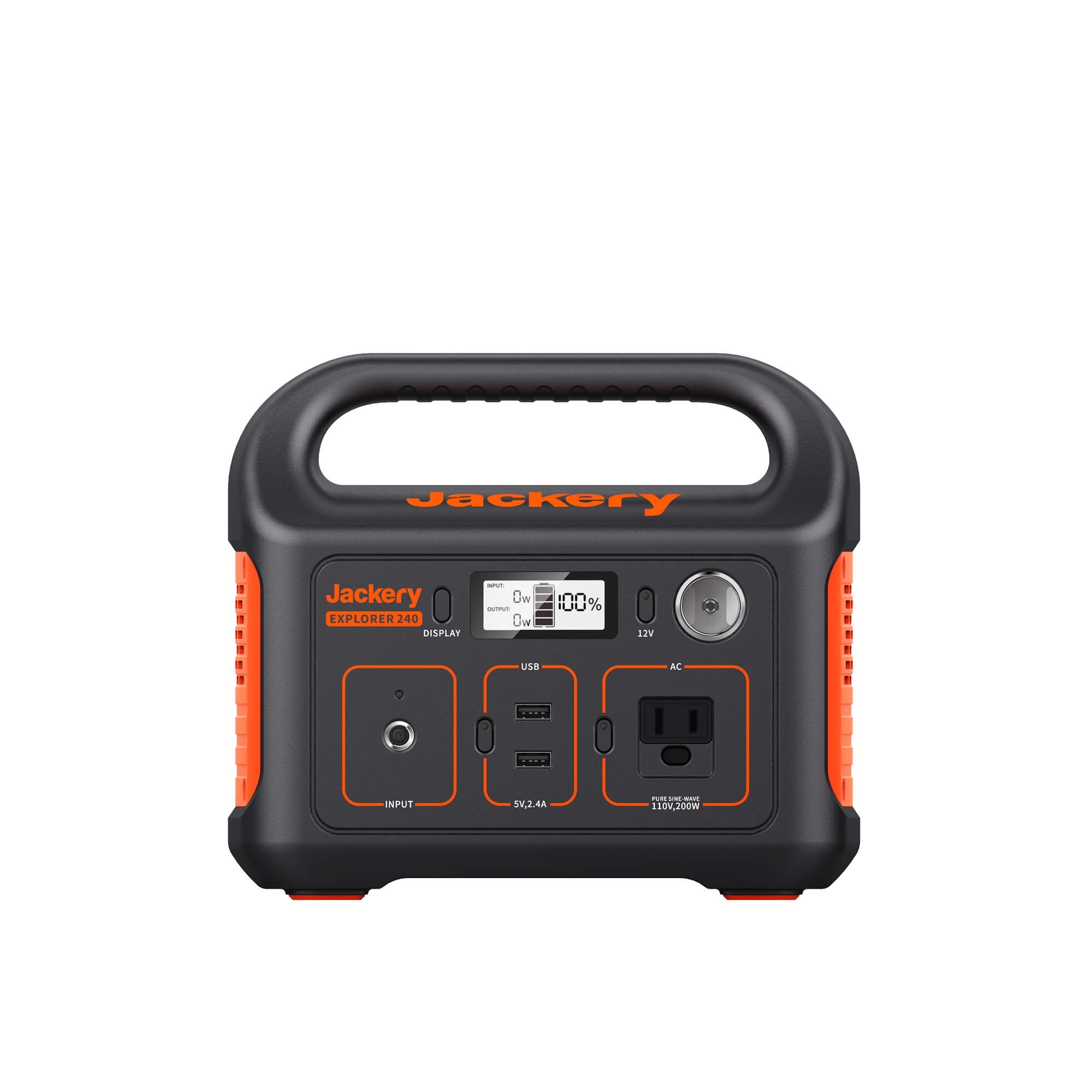
This is the cheap, sensible pick for people who do not need a 3kWh backup box. At 240Wh and 200W continuous output, it is for phones, laptops, camera gear, modems, lights, and maybe a CPAP depending on actual draw and runtime needs. It is not a home-backup substitute.
| Spec | Value |
|---|---|
| Capacity | 240Wh |
| AC output | 200W continuous |
| Battery chemistry | Li-ion |
| Cycle life | 500 cycles |
| Expandability | No |
| Weight | 3.0 kg |
| Price | $219 |
Pros
| Pros |
|---|
| Very affordable for basic emergency power |
| Lightweight at 3.0 kg |
| Simpler fit for camping and device charging |
Cons
| Cons |
|---|
| 200W output is extremely limiting |
| Older Li-ion chemistry and 500-cycle rating lag far behind LFP rivals |
| No expansion path for larger needs |
Jackery Explorer 290 Portable Power Station
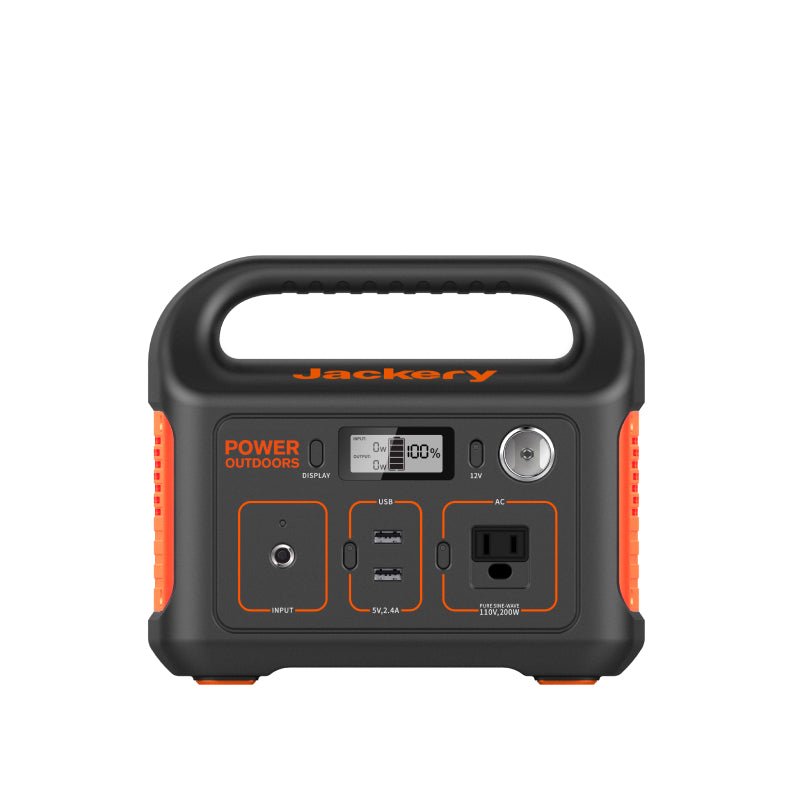
The Explorer 290 is a small step up from the 240, with 268Wh capacity and the same 200W continuous output. The extra energy and 800-cycle rating are nice, but the value case depends on whether that modest bump is worth the added cost to you.
| Spec | Value |
|---|---|
| Capacity | 268Wh |
| AC output | 200W continuous |
| Battery chemistry | Li-ion |
| Cycle life | 800 cycles |
| Expandability | No |
| Weight | 3.6 kg |
| Price | $279 |
Pros
| Pros |
|---|
| Slightly more capacity than the Explorer 240 |
| 800-cycle rating is better than the 240’s 500 cycles |
| Still compact and easy to carry |
Cons
| Cons |
|---|
| Output remains capped at 200W |
| Price jump is noticeable for a small capacity gain |
| Not competitive with larger backup systems for outage use |
What you give up at this price
Even at $3,000 to $5,000, you are not automatically getting whole-home backup. In this dataset, the serious options top out at 3,072Wh and 3,000W in the core AC300 bundles, with expansion available later. That is enough for critical loads, but not enough to run an all-electric house normally through a long outage. Air conditioning, electric dryers, ovens, and multiple large loads at once are where portable systems hit their limits fast. If you are unsure, use size your system and our battery runtime calculator before buying.
You also give up simplicity. The best values here are modular systems, not neat all-in-one cubes. That means more pieces, more shipping boxes, and more setup friction. Several listings also leave important fields blank, including warranty years and some charging specs, so you need to read the manufacturer page carefully rather than assume every detail is fully disclosed. One listing in the raw data, BLUETTI B300S Expansion Battery | 3,072Wh, appears to contain conflicting structured data versus description text, which is why I did not rank it as a top buy here. The same goes for accessory-style entries like the AC500 Home Integration Kit: useful in the right setup, but not standalone recommendations for most shoppers.
Finally, under-$5,000 shopping can tempt you into overspending on bundle extras you may never use. Included solar can be valuable, but only if you will actually deploy panels. Home integration kits are worth paying for, but only if you want selected-circuit backup. For most buyers, the plain BLUETTI AC300+2*B300K | Home Battery Backup is the cleanest buy, while the Jackery Explorer 240 Portable Power Station is the right answer if your real need is small, cheap, and portable.
Frequently asked questions
What size portable power station should I buy under $5000?+
For backup use, start with your actual loads, not your budget. In this lineup, the serious home-backup options cluster around 3,072Wh and 3,000W, while the smaller Jackery models are better for light camping, charging, and small electronics.
Is LiFePO4 better than Li-ion for a portable power station?+
For most buyers spending this much, yes. LiFePO4 usually offers much longer cycle life than older Li-ion chemistries, which matters if you plan to use the station regularly rather than leave it in a closet for rare outages.
Can a portable power station under $5000 run a refrigerator?+
Many 3,000W-class models can run a standard refrigerator, but runtime depends on the fridge's actual energy use and startup surge. Use our sizing tools before buying so you do not overestimate what a battery can do in a long outage.
Are solar panels included with these portable power stations?+
Some bundles here include panels and some do not. That changes value a lot, so check the exact bundle contents rather than assuming every model at this price includes solar charging hardware.
Is a home integration kit worth paying extra for?+
If you want cleaner backup for selected household circuits, yes. A home integration kit can make outage use much more practical than running extension cords across the house, but it also adds cost and installation complexity.
Editor at SolarWorld covering portable power, balcony PV and home energy storage. Specifications quoted in this guide are pulled directly from our product database; analysis and recommendations are by Nathan Cole.
Full bio & methodology →Related articles
- Buying guide · 8 min
Best Balcony Solar Kits for Renters 2026: 7 Worth Buying
Our 2026 shortlist of renter-friendly plug-and-play balcony solar kits, with honest tradeoffs, prices, and the few setups actually worth your click.
- Buying guide · 8 min
Best 400W+ Solar Panels 2026: Only 7 Worth Buying
Our top 400W+ solar panel picks for 2026, ranked by watts, efficiency, warranty, and value—so you can buy the right high-output module fast.
- Buying guide · 10 min
Best Home Battery Storage 2026: Only 7 Worth Buying
Our 2026 picks for whole-home backup batteries, with real kWh, kW, cycle-life and price tradeoffs so you can choose faster.