Best portable power stations under $300 (2026)
Quick picks
| Category | Model | Why it wins | Price |
|---|---|---|---|
| Best overall | Jackery Explorer 240 v2 Portable Power Station | 256Wh, 300W AC, LiFePO4, 4,000 cycles. Best balance of lifespan, output, and price. | $249 |
| Best value | EcoFlow RIVER 2 Portable Power Station | 268Wh and 300W AC for $189. Hard to beat on raw dollars per Wh. | $189 |
| Best for high-output devices | EcoFlow RIVER 3 (230) Portable Power Station | 600W AC output at $229, which is unusually high below $300. | $229 |
How we picked
We filtered the current market to models priced at $300 or less, then prioritized four things: usable watt-hours, continuous AC output, battery chemistry, and cycle life. From there, we looked for obvious value gaps and weak spots buyers should know before clicking. You can see our scoring methodology and the longer version of how we test, and our revenue model is explained in our affiliate disclosure.
What “good” looks like at this price
Under $300, “good” usually means about 230Wh to 288Wh of capacity, 300W AC output, and LiFePO4 chemistry with roughly 3,000 to 4,000 cycles. That is enough for phones, tablets, camera batteries, Wi-Fi gear, laptops, fans, lights, and some low-draw medical or camping loads. It is not enough for serious backup power. The U.S. Department of Energy notes that appliance energy use adds up quickly, especially for heat-producing devices and larger household loads (DOE Energy Saver).
The big split in this bracket is simple: you can get more output, more battery longevity, or a bundled solar panel, but usually not all three at once. If you want the longest service life, LiFePO4 is the safer bet. If you want to run fussier AC devices, output matters more than capacity. If you want the most runtime for the dollar, compare watt-hours first, then check the inverter size second. If you need help matching a unit to your gear, size your system before buying, or browse the full database to compare more models.
The 7 best models
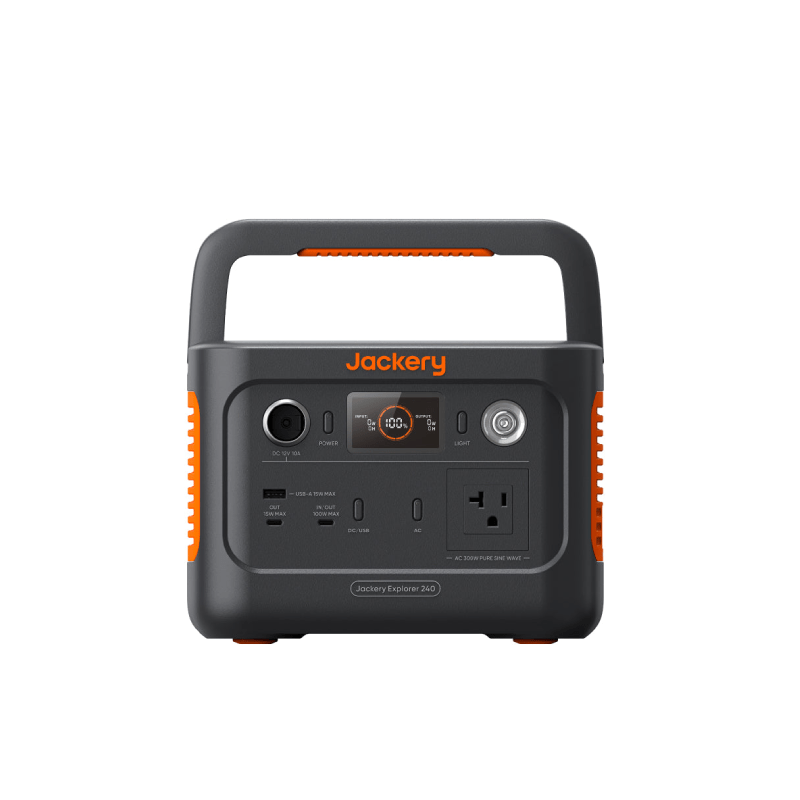
Jackery Explorer 240 v2 Portable Power Station
| Spec | Value |
|---|---|
| Capacity | 256Wh |
| AC output | 300W |
| Battery chemistry | LiFePO4 |
| Cycle life | 4,000 |
| Weight | 3.6 kg |
| Price | $249 |
| Warranty | not specified by the manufacturer in the structured data |
This is the most balanced pick here. The Jackery Explorer 240 v2 Portable Power Station gives you 256Wh and 300W AC, which is the practical sweet spot for sub-$300 stations, but its real edge is the 4,000-cycle LiFePO4 pack. That is the best cycle-life figure in this lineup.
Pros
| Pros |
|---|
| 4,000-cycle LiFePO4 battery is excellent at this price |
| 300W AC output covers more gear than older 200W units |
| Still fairly light at 3.6 kg |
Cons
| Cons |
|---|
| Capacity is only mid-pack at 256Wh |
| Solar input limit not specified by the manufacturer |
| Price is good, not bargain-basement |
EcoFlow RIVER 2 Portable Power Station

| Spec | Value |
|---|---|
| Capacity | 268Wh |
| AC output | 300W |
| Battery chemistry | LiFePO4 |
| Cycle life | 3,000 |
| Weight | 3.5 kg |
| Price | $189 |
| Warranty | not specified by the manufacturer in the structured data |
At $189, this is the cleanest value play. You get 268Wh, 300W AC, and a 3,000-cycle LiFePO4 battery for less than several weaker Jackery units. If your goal is “spend the least, still get a real power station,” this is the one to start with.
Pros
| Pros |
|---|
| Very strong price-to-capacity ratio |
| 300W AC output is enough for most small electronics |
| LiFePO4 chemistry adds long-term value |
Cons
| Cons |
|---|
| No bundled panel at this price |
| Not enough capacity for meaningful home backup |
| Surge rating not specified by the manufacturer |
EcoFlow RIVER 3 (230) Portable Power Station

| Spec | Value |
|---|---|
| Capacity | 230Wh |
| AC output | 600W |
| Battery chemistry | LiFePO4 |
| Cycle life | 3,000 |
| Weight | 3.4 kg |
| Price | $229 |
| Warranty | not specified by the manufacturer in the structured data |
This is the output king of the group. The EcoFlow RIVER 3 (230) Portable Power Station delivers 600W AC output at just $229. That is a big deal if you need to power devices that would trip a 200W or 300W inverter. The tradeoff is runtime: 230Wh goes fast at higher loads.
Pros
| Pros |
|---|
| 600W AC output is exceptional below $300 |
| LiFePO4 battery with 3,000 cycles |
| Light enough for regular grab-and-go use |
Cons
| Cons |
|---|
| 230Wh capacity is modest for a 600W inverter |
| Higher-output use will drain it quickly |
| Description references expandability, but structured data marks it non-expandable |
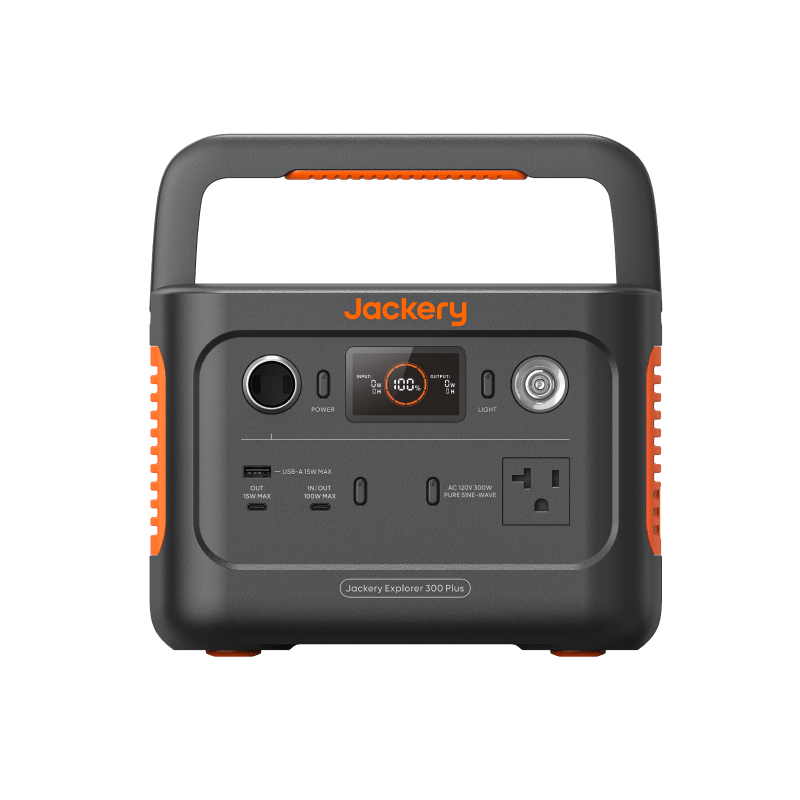
Jackery Explorer 300 Plus Portable Power Station
| Spec | Value |
|---|---|
| Capacity | 288Wh |
| AC output | 300W |
| Battery chemistry | LiFePO4 |
| Cycle life | 3,000 |
| Weight | 3.75 kg |
| Price | $299.99 |
| Warranty | not specified by the manufacturer in the structured data |
If you want the biggest battery in a mainstream sub-$300 Jackery, this is it. The Jackery Explorer 300 Plus Portable Power Station gives you 288Wh, which is near the top of this field, plus a 300W inverter and LiFePO4 chemistry. The downside is obvious: it uses the full budget.
Pros
| Pros |
|---|
| 288Wh is among the highest capacities under $300 here |
| 300W AC output is the right minimum for broad usefulness |
| LiFePO4 with 3,000 cycles is solid |
Cons
| Cons |
|---|
| At $299.99, there is almost no price cushion |
| Not lighter than cheaper alternatives |
| No manufacturer-specified solar max in the data |
EcoFlow RIVER 3 + 45W Solar Panel

| Spec | Value |
|---|---|
| Capacity | 245Wh |
| AC output | 300W |
| Battery chemistry | LiFePO4 |
| Cycle life | 3,000 |
| Weight | 3.4 kg |
| Price | $259 |
| Included extra | 45W solar panel |
This is the only clear solar bundle in the group. The EcoFlow RIVER 3 + 45W Solar Panel is not the best raw-value power station by itself, but if you want a starter off-grid kit without buying a panel separately, it makes sense.
Pros
| Pros |
|---|
| Includes a 45W solar panel in the listed price |
| 245Wh and 300W are enough for light camping loads |
| LiFePO4 battery with 3,000 cycles |
Cons
| Cons |
|---|
| Battery-only value is weaker than the cheapest standalone units |
| 45W panel means slow solar recovery in poor sun |
| Bundle weight for the panel is not specified by the manufacturer |
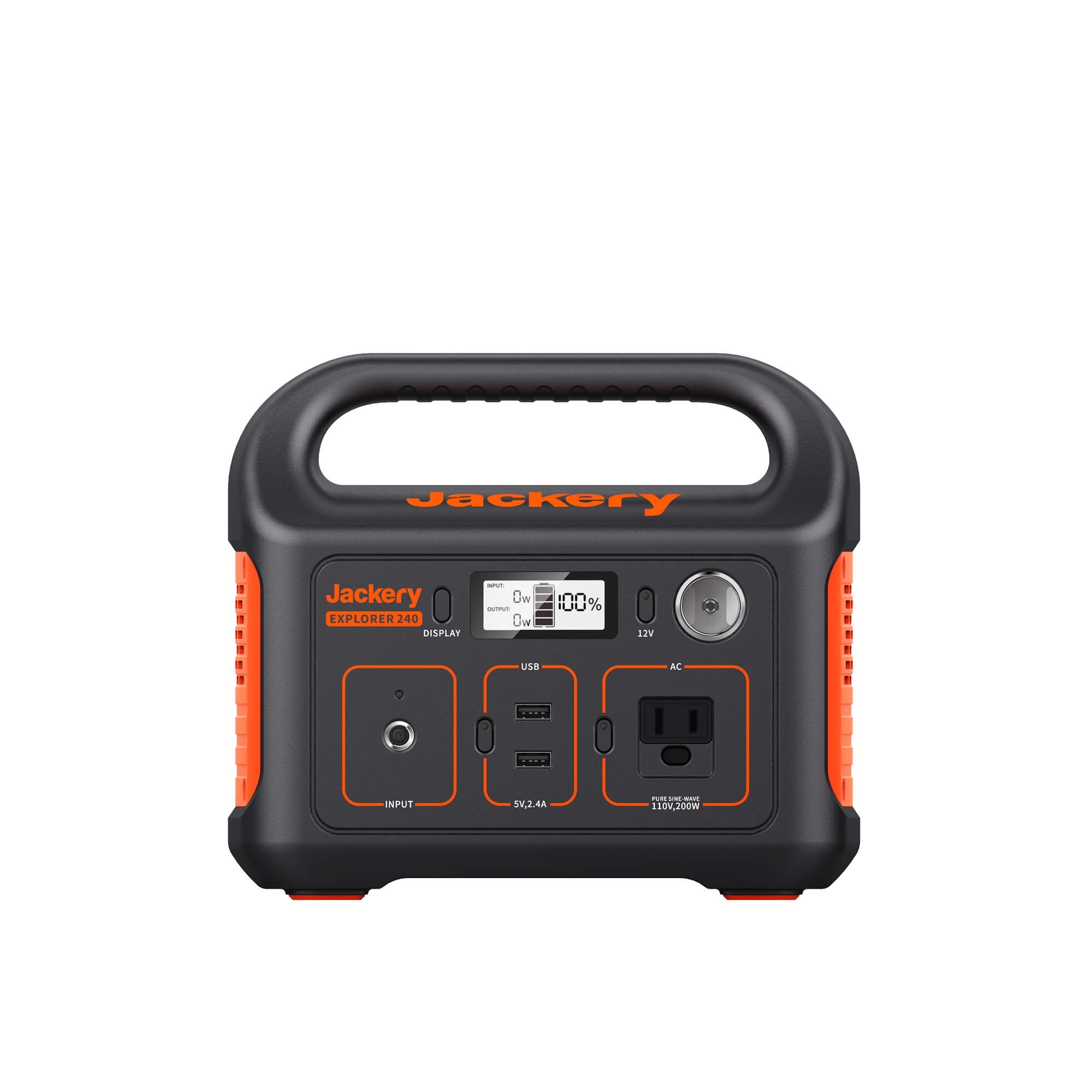
Jackery Explorer 240 Portable Power Station
| Spec | Value |
|---|---|
| Capacity | 240Wh |
| AC output | 200W |
| Battery chemistry | Li-ion |
| Cycle life | 500 |
| Weight | 3.0 kg |
| Price | $219 |
| Warranty | not specified by the manufacturer |
The Jackery Explorer 240 Portable Power Station is still a usable small station, but it is now outclassed by newer LiFePO4 units. A 200W inverter and 500-cycle lithium-ion battery are both behind the current sub-$300 standard.
Pros
| Pros |
|---|
| Light at 3.0 kg |
| 240Wh is enough for phones, lights, and laptops |
| Simple, proven small-station format |
Cons
| Cons |
|---|
| Only 200W AC output |
| 500-cycle Li-ion battery is weak by 2026 standards |
| Priced too close to better LiFePO4 competitors |
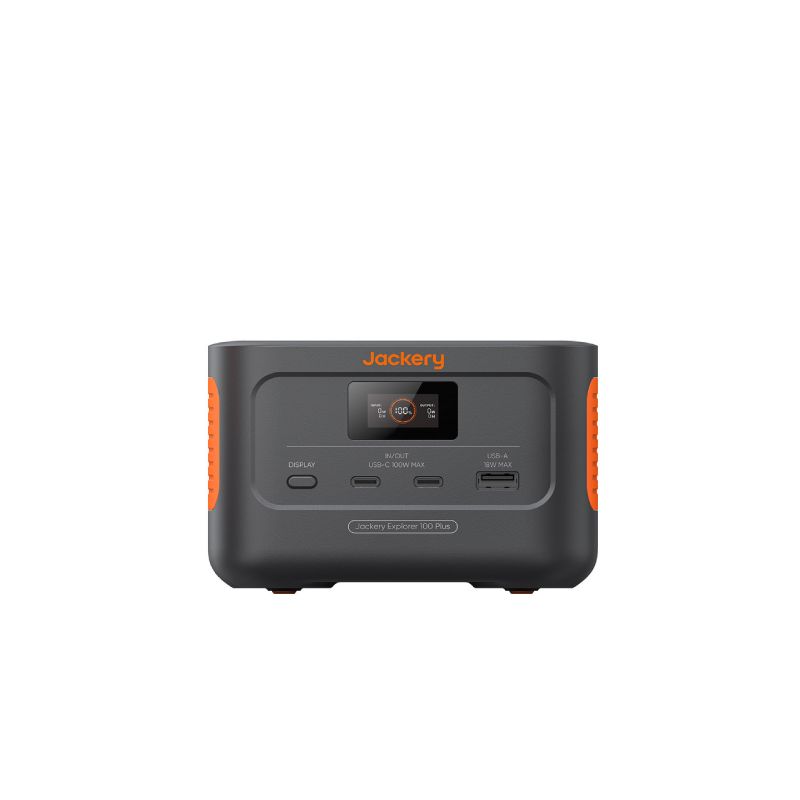
Jackery Explorer 100 Plus Portable Power Station
| Spec | Value |
|---|---|
| Capacity | 99Wh |
| AC output | 128W |
| Battery chemistry | LiFePO4 |
| Cycle life | 0 in the structured data; manufacturer description says 2,000 cycles |
| Weight | 1.0 kg |
| Price | $149 |
| Warranty | not specified by the manufacturer in the structured data |
This is the niche pick: ultralight travel and personal electronics. The Jackery Explorer 100 Plus Portable Power Station weighs just 1.0 kg, which is excellent. But 99Wh is a very small battery, so this is closer to a premium charging hub than a true backup station. Note that the structured data lists cycle life as 0, while the manufacturer description says 2,000 cycles; that conflict is why I would verify the current product page before purchase.
Pros
| Pros |
|---|
| Very light at 1.0 kg |
| Good fit for phones, cameras, drones, and USB-C travel gear |
| Lowest entry price in this list |
Cons
| Cons |
|---|
| 99Wh is too small for most overnight backup needs |
| 128W AC output is very limited |
| Cycle-life data is inconsistent across the provided source fields |
For buyers comparing older Jackery models, the Jackery Explorer 290 Portable Power Station sits awkwardly between the Explorer 240 and newer 300W LiFePO4 units: 268Wh, 200W AC, 800 cycles, and $279. It is not a top-7 pick for me because the inverter is still just 200W and the price is too close to stronger options. Likewise, the structured data for EcoFlow RIVER 3 Plus shows 858Wh at $239 and 4.7 kg, but that conflicts sharply with the product family description and broader market reality; I would not recommend it here without verification from the manufacturer.
What you give up at this price
First, you give up runtime. A 230Wh to 288Wh station is useful, but it is still small. Real-world delivered AC energy is lower than the headline battery number because inverter losses and internal overhead eat part of the pack. NREL and DOE both publish broad guidance showing that conversion losses and appliance draw matter in real use, which is why a “300W” station does not mean “runs 300W for a full hour” in practice (NREL, DOE). Use a sizing tool before you buy: size your system and check expected runtimes with your actual loads. You can also use our broader solar calculator hub for related planning.
Second, you usually give up headroom. Most good picks here top out at 300W AC, and even the 600W EcoFlow has only 230Wh of battery. That means this category is best for electronics, not resistive heat or serious kitchen loads. If you are shopping for outage backup, compare these against larger units in our portable power station category and review the full database before locking in a cheap model that cannot run what you need.
Third, you often give up clean, complete product data. In this lineup alone, several fields are missing, solar input limits are often not specified, warranty data is incomplete in the structured feed, and one product has conflicting cycle-life info. That is why I lean toward models with the clearest core value proposition: the Explorer 240 v2 for balance, RIVER 2 for value, and RIVER 3 (230) for output.
Frequently asked questions
What size portable power station can you realistically get for under $300?+
In this price range, most solid options land around 230Wh to 288Wh, with one very small 99Wh class model for pocketable use. That is enough for phones, laptops, lights, routers, and some small appliances, but not for long runtimes on heaters, kettles, or full-size kitchen gear.
Is LiFePO4 worth prioritizing under $300?+
Yes. In the current sub-$300 market, LiFePO4 usually gives much longer cycle life than older lithium-ion packs, which matters if you plan to use the station often. If two models are close in price, the LiFePO4 unit is usually the better long-term buy.
Can a portable power station under $300 run a CPAP?+
Sometimes, but it depends on the CPAP's watt draw, whether you use the humidifier, and whether you can run from DC instead of AC. A 230Wh to 288Wh unit may cover one night for some setups, but you should use actual device wattage and runtime estimates before buying.
Are solar panels included with portable power stations under $300?+
Usually no. In this lineup, one bundle includes a 45W solar panel, while the rest are sold as power stations only. Always check the listing carefully because many product photos show panels that are not part of the base package.
What is the best portable power station under $300 overall?+
For most buyers, the Jackery Explorer 240 v2 is the strongest all-around pick because it combines 256Wh, 300W AC output, LiFePO4 chemistry, and a 4,000-cycle rating at $249. If you want the most AC output per dollar, EcoFlow's RIVER 3 (230) is the standout.
Editor at SolarWorld covering portable power, balcony PV and home energy storage. Specifications quoted in this guide are pulled directly from our product database; analysis and recommendations are by Nathan Cole.
Full bio & methodology →Related articles
- Buying guide · 8 min
Best 400W+ Solar Panels 2026: Only 7 Worth Buying
Our top 400W+ solar panel picks for 2026, ranked by watts, efficiency, warranty, and value—so you can buy the right high-output module fast.
- Buying guide · 10 min
Best Home Battery Storage 2026: Only 7 Worth Buying
Our 2026 picks for whole-home backup batteries, with real kWh, kW, cycle-life and price tradeoffs so you can choose faster.
- Buying guide · 8 min
Best Bluetooth Solar Charge Controllers 2026: 7 Picks
Our 2026 shortlist of Bluetooth-enabled solar charge controllers, with real specs, clear tradeoffs, and the few models actually worth your click.