Best portable power stations under $2000 (2026)
Quick picks
| Pick | Model | Why it stands out | Price |
|---|---|---|---|
| Best overall | BLUETTI AC70P Portable Power Station | 1000W 864Wh | 864Wh and 1000W is the best all-around balance here for outage backup, camping, and appliance use. | $649 |
| Best value | BLUETTI PS72 Portable Power Station | 700W 716Wh | 716Wh for $329 is the standout dollar-per-Wh buy in this lineup. | $329 |
| Best for ultralight grab-and-go | Jackery Explorer 240 v2 Portable Power Station | 256Wh, 300W, LiFePO4, and 3.6 kg makes it the most sensible small unit here. | $249 |
How we picked
We prioritized current street price, watt-hours, continuous AC output, battery chemistry, published cycle life, and whether the specs are complete enough to trust. For the details behind that process, read our scoring methodology and our affiliate disclosure. We also cross-check manufacturer claims against product pages and broader energy-use references such as the U.S. Department of Energy’s home electricity guidance here.
What “good” looks like at this price
Under $2000 is a huge budget ceiling for portable power, but this specific lineup actually clusters far lower, from $149 to $999. In practical terms, “good” here means you’re buying enough battery to matter. For most people, that starts around 500Wh and 500W. Below that, these units are best treated as device chargers, router backups, or light-duty camping boxes. Around 700 to 900Wh with 700 to 1000W output is where a portable power station starts feeling genuinely useful for outages, tailgating, van use, and small appliances.
The key tradeoff is simple: capacity is runtime, inverter wattage is what you can run right now, and chemistry affects long-term durability. A 240Wh unit with a 200W inverter can keep phones, cameras, and a laptop alive; it will not behave like a home backup system. A 864Wh unit with 1000W output can run a lot more loads, but it is larger and pricier. If you’re not sure what size you need, size your system first, then sanity-check runtimes with our other solar battery runtime calculator.
One more reality check: several products in this dataset have incomplete manufacturer specs. Where weight, cycle life, chemistry, or solar input are missing, I say so plainly. If you want to compare beyond this shortlist, start with the full database.
The 7 best models
BLUETTI AC70P Portable Power Station | 1000W 864Wh

If you want one pick that covers the broadest range of real use, this is it. At 864Wh and 1000W continuous output, the AC70P sits in the sweet spot where a power station stops being a gadget and starts being useful backup. That’s enough headroom for laptops, routers, lights, fans, many TVs, and some small kitchen or outdoor loads, as long as you stay inside the inverter limit.
The catch is missing spec transparency in this payload. Battery chemistry, cycle life, weight, warranty, and solar input are not specified by the manufacturer here, so I won’t guess. Even with that limitation, the raw capacity-to-price ratio is strong at $649, and it is the most balanced model in this list.
| Spec | Value |
|---|---|
| Capacity | 864Wh |
| AC output | 1000W continuous |
| Battery chemistry | not specified by the manufacturer |
| Cycle life | not specified by the manufacturer |
| Weight | not specified by the manufacturer |
| Price | $649 |
Pros
| 864Wh is enough for meaningful overnight backup |
| 1000W continuous output covers many common household loads |
| Strong balance of capacity and price |
Cons
| Weight is not specified by the manufacturer |
| Cycle life is not specified by the manufacturer |
| Less transparent spec sheet than the best Jackery small models |
BLUETTI PS72 Portable Power Station | 700W 716Wh

This is the value pick. At $329 for 716Wh and 700W, the numbers are unusually good in this dataset. If your goal is maximum stored energy per dollar without stepping into the near-$650 tier, the PS72 is hard to ignore.
The tradeoff is, again, incomplete data. Chemistry, cycle life, weight, warranty, and solar input are not specified by the manufacturer in the payload. That means I like the value, but I’d still compare it against the BLUETTI PS72 Portable Power Station | 700W 716Wh listing and your own use case before buying.
| Spec | Value |
|---|---|
| Capacity | 716Wh |
| AC output | 700W continuous |
| Battery chemistry | not specified by the manufacturer |
| Cycle life | not specified by the manufacturer |
| Weight | not specified by the manufacturer |
| Price | $329 |
Pros
| Excellent watt-hour value at current price |
| 700W output is enough for many small appliances |
| Big step up from 200 to 300Wh class units |
Cons
| Battery chemistry is not specified by the manufacturer |
| Weight is not specified by the manufacturer |
| Less published detail than I want before a blind buy |
Jackery Explorer 240 v2 Portable Power Station
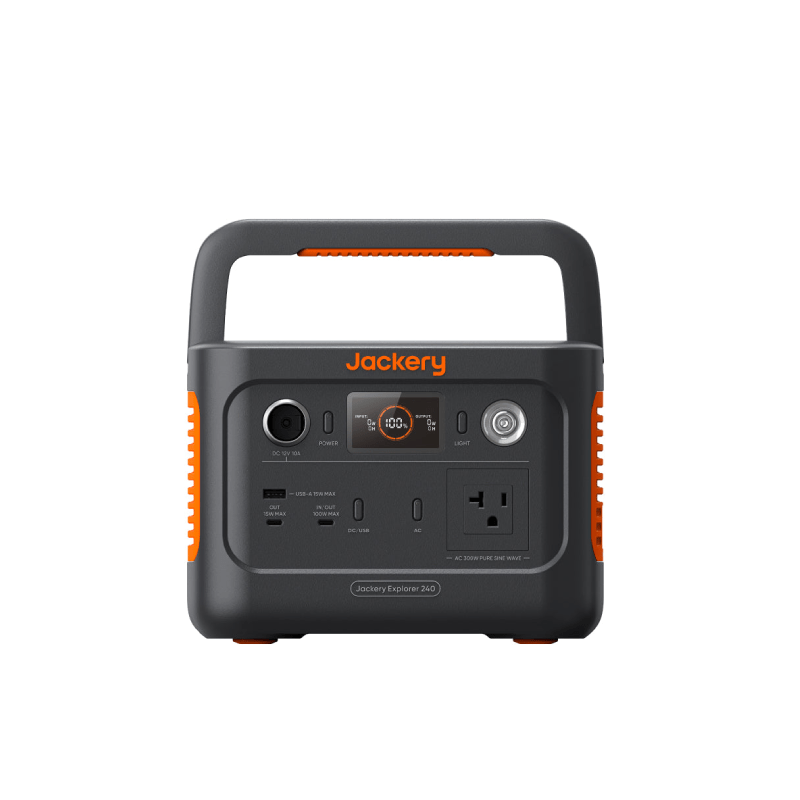
For a compact unit, this is the smartest Jackery in the list. You get 256Wh, 300W continuous output, LiFePO4 chemistry, 4,000 cycles, and 3.6 kg weight for $249. That combination is much more future-proof than the older small lithium-ion boxes.
This is the model I’d buy for road trips, a work bag, camera charging, drone batteries, router backup, or a minimalist emergency kit. It is also one of the few products here with a clearly stated long cycle life. If you want the product page in our catalog, see the Jackery Explorer 240 v2 Portable Power Station.
| Spec | Value |
|---|---|
| Capacity | 256Wh |
| AC output | 300W continuous |
| Battery chemistry | LiFePO4 |
| Cycle life | 4,000 |
| Weight | 3.6 kg |
| Price | $249 |
Pros
| LiFePO4 chemistry with 4,000-cycle rating |
| Very portable at 3.6 kg |
| 300W output is solid for a small unit |
Cons
| 256Wh is still limited for appliance runtime |
| No expansion option |
| Solar input is not specified by the manufacturer here |
Jackery Explorer 500 Portable Power Station
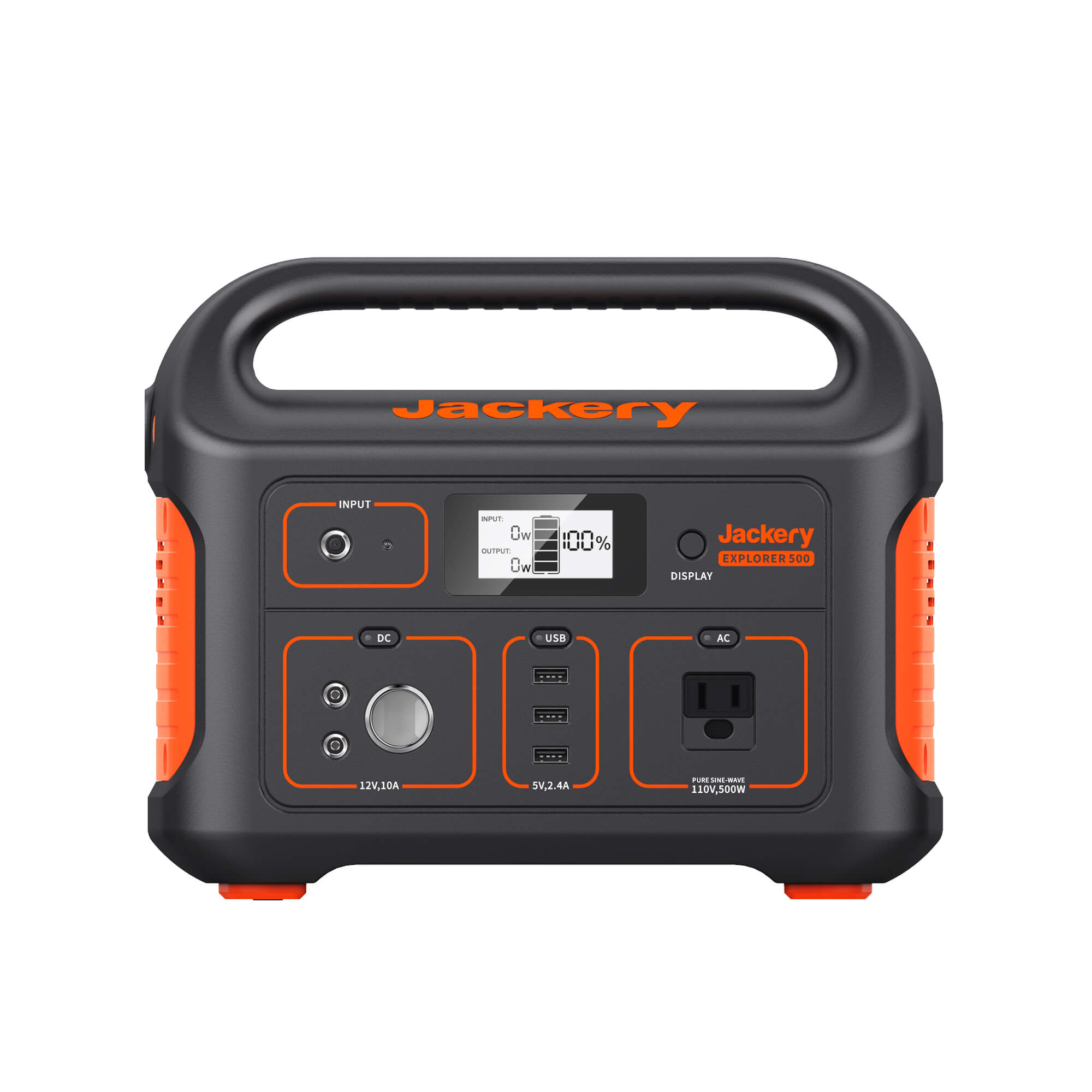
The Explorer 500 is an older-style mid-size power station, but the basic numbers still work: 518Wh, 500W output, 6.0 kg, and $329. For camping and occasional outage use, that is still a reasonable package.
The issue is battery chemistry and longevity. This is a Li-ion model rated for 500 cycles, which is much lower than the better LiFePO4 options now on the market. If you only use it occasionally, that may not matter. If you plan to cycle it often, it does. You can compare it directly in our database at Jackery Explorer 500 Portable Power Station.
| Spec | Value |
|---|---|
| Capacity | 518Wh |
| AC output | 500W continuous |
| Battery chemistry | Li-ion |
| Cycle life | 500 |
| Weight | 6.0 kg |
| Price | $329 |
Pros
| Useful mid-size 518Wh capacity |
| 500W inverter covers many campsite loads |
| Simple, established form factor |
Cons
| Older Li-ion chemistry, not LiFePO4 |
| 500-cycle rating is modest by 2026 standards |
| Heavier than the small Jackery units |
Elite 30 V2+60W Solar

This is the better of the two Elite 30 bundle deals on pure value. You get a 288Wh LiFePO4 station plus a 60W solar panel bundle for $349. The product description also mentions 600W rated power and 1500W lifting power, but the structured data field lists 980W continuous AC output. Because those two figures conflict, I am sticking to the payload value for comparison and flagging the inconsistency.
As a use case, this works for light camping, charging electronics, and basic backup where panel convenience matters more than raw battery size. Just keep expectations realistic: 288Wh is still a small battery, even if the inverter is relatively stout for the class. For comparison, see Elite 30 V2+60W Solar.
| Spec | Value |
|---|---|
| Capacity | 288Wh |
| AC output | 980W continuous (per payload) |
| Battery chemistry | LiFePO4 |
| Cycle life | not specified clearly; payload shows 0 |
| Weight | not specified by the manufacturer |
| Price | $349 |
Pros
| Includes a 60W solar panel bundle |
| LiFePO4 chemistry |
| Compact capacity for travel and device charging |
Cons
| Very small battery for the price if you ignore the panel |
| AC power figures are inconsistent across the listing |
| Weight and cycle life are not specified clearly |
Elite 30 V2+100W Solar

Same core power station as the 60W bundle, but with a larger included panel and a higher price. At $439, the case for this version depends entirely on whether you value the bigger solar bundle enough to justify the extra $90.
I would only take this over the 60W bundle if you know you will use the panel regularly. Otherwise, the money is better spent moving up to a larger battery class. You can compare the product page in our catalog at Elite 30 V2+100W Solar.
| Spec | Value |
|---|---|
| Capacity | 288Wh |
| AC output | 980W continuous (per payload) |
| Battery chemistry | LiFePO4 |
| Cycle life | not specified clearly; payload shows 0 |
| Weight | not specified by the manufacturer |
| Price | $439 |
Pros
| Includes a larger 100W solar panel bundle |
| LiFePO4 battery chemistry |
| Good fit for light off-grid charging kits |
Cons
| Still only 288Wh of storage |
| Higher price than the 60W bundle |
| Published power details are inconsistent |
Jackery Explorer 290 Portable Power Station
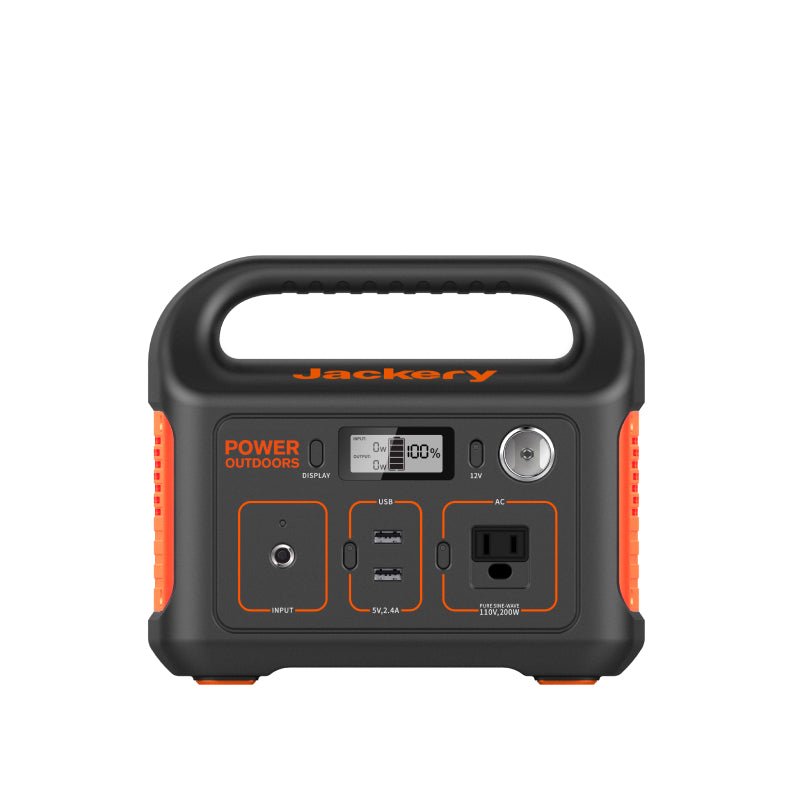
The Explorer 290 is still usable, but it is hard to recommend strongly in 2026 unless you find a steep sale. It gives you 268Wh, 200W output, Li-ion chemistry, 800 cycles, and 3.6 kg weight for $279. That is not terrible. It is just boxed in by better options above and below it.
Against the 240 v2, you get only a small capacity bump while giving up LiFePO4 and 300W output. Against the Explorer 500 or PS72, you are paying too much for too little battery. If you want the listing, see Jackery Explorer 290 Portable Power Station.
| Spec | Value |
|---|---|
| Capacity | 268Wh |
| AC output | 200W continuous |
| Battery chemistry | Li-ion |
| Cycle life | 800 |
| Weight | 3.6 kg |
| Price | $279 |
Pros
| Compact and easy to carry |
| 268Wh is enough for basic electronics |
| Published weight and cycle life are available |
Cons
| Only 200W continuous AC output |
| Older Li-ion chemistry |
| Poor value next to newer rivals |
Jackery Explorer 240 Portable Power Station
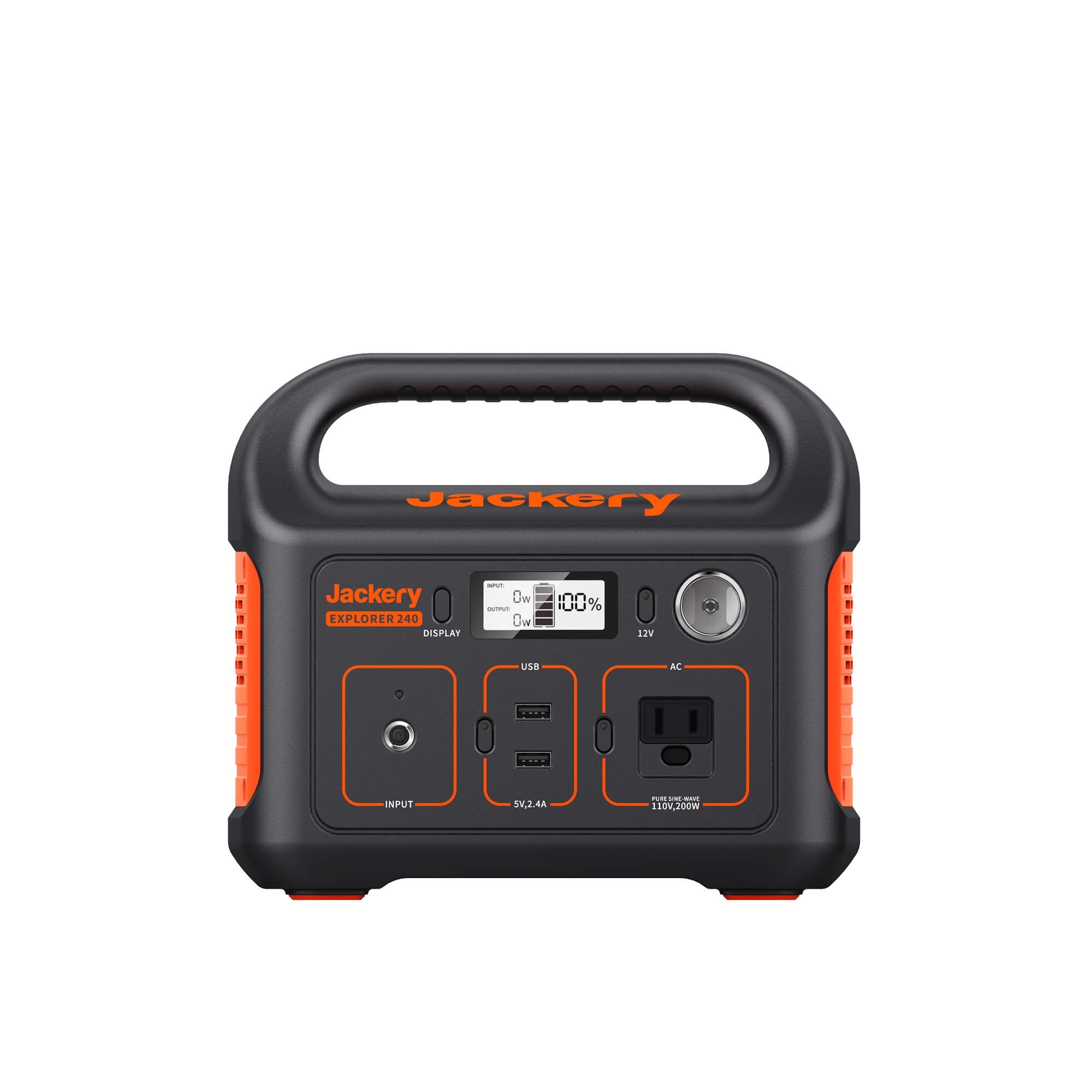
This is the budget legacy pick, and only that. At 240Wh, 200W, 3.0 kg, and $219, it is fine for phones, tablets, cameras, and maybe a laptop plus a few small accessories. That’s about where the praise stops.
The problem is not that it is small. The problem is that the Jackery Explorer 240 Portable Power Station sits too close in price to the much better 240 v2. The v2 brings LiFePO4, 300W output, and 4,000 cycles. This older model is Li-ion with 500 cycles. Unless the price gap widens dramatically, I would skip it.
| Spec | Value |
|---|---|
| Capacity | 240Wh |
| AC output | 200W continuous |
| Battery chemistry | Li-ion |
| Cycle life | 500 |
| Weight | 3.0 kg |
| Price | $219 |
Pros
| Light at 3.0 kg |
| Low entry price |
| Simple option for tiny loads |
Cons
| Only 200W output |
| 500-cycle Li-ion battery is dated |
| Too close in price to the better 240 v2 |
What you give up at this price
Even with a budget ceiling of $2000, this lineup does not include true whole-home backup gear. None of these models are expandable, and none in the provided data are positioned as serious multi-kWh systems. You are buying portable convenience, not a home battery replacement. That means runtime is the first hard limit. For example, an 864Wh station will deliver less usable AC energy than its nameplate capacity after inverter losses, and NREL and DOE both emphasize matching storage to actual appliance consumption rather than headline battery size alone; see DOE’s appliance energy guidance here.
You also give up spec certainty on several models. The Bluetti options here often look attractive on raw price and capacity, but multiple entries omit weight, chemistry, cycle life, or other key details in the provided manufacturer data. That does not make them bad products. It does mean you should treat them more cautiously than the better-documented Jackery entries. If you want a cleaner side-by-side before buying, compare this shortlist against our full database and, if you’re trying to offset charging with panels, use our solar panel sizing calculator.
The final compromise is longevity versus upfront cost. The strongest small-unit buy here is the 240 v2 because LiFePO4 and 4,000 cycles matter. Older Li-ion models can still be fine for occasional camping or emergency use, but if you plan to cycle the battery often, the chemistry gap becomes real. That’s the main reason some “cheap” options stop looking cheap over time.
Frequently asked questions
What size portable power station should I buy under $2000?+
For phones, laptops, lights, and routers, roughly 200 to 500Wh is usually enough. For CPAPs, small coolers, or longer outage backup, 700 to 900Wh is a more practical floor; use our sizing calculator before you buy.
Is LiFePO4 worth it on a portable power station?+
Usually yes, especially if you expect frequent cycling. LiFePO4 packs typically last far more charge cycles than older lithium-ion designs, though the exact cycle count still depends on the manufacturer and model.
Can I run a fridge with a portable power station under $2000?+
Some models here can handle a small fridge if the startup surge and running wattage fit within the inverter limits. Runtime is the bigger constraint, so check both the appliance label and the station's usable watt-hours.
Are bundle deals with solar panels a good value?+
They can be, but only if the included panel size matches how you plan to recharge. A low-cost bundle is less useful if the panel is too small to refill the battery in a reasonable amount of sun.
Where can I compare more portable power stations?+
Use our full database to compare capacity, output, chemistry, and price across many models. It's the fastest way to sanity-check a deal before you click buy.
Editor at SolarWorld covering portable power, balcony PV and home energy storage. Specifications quoted in this guide are pulled directly from our product database; analysis and recommendations are by Nathan Cole.
Full bio & methodology →Related articles
- Buying guide · 8 min
Best 400W+ Solar Panels 2026: Only 7 Worth Buying
Our top 400W+ solar panel picks for 2026, ranked by watts, efficiency, warranty, and value—so you can buy the right high-output module fast.
- Buying guide · 10 min
Best Home Battery Storage 2026: Only 7 Worth Buying
Our 2026 picks for whole-home backup batteries, with real kWh, kW, cycle-life and price tradeoffs so you can choose faster.
- Buying guide · 8 min
Best Bluetooth Solar Charge Controllers 2026: 7 Picks
Our 2026 shortlist of Bluetooth-enabled solar charge controllers, with real specs, clear tradeoffs, and the few models actually worth your click.