Best EcoFlow Portable Power Stations (2026)
The first thing to say clearly: the product data behind this page does not include any EcoFlow models. It includes BLUETTI and Jackery units. Rather than invent EcoFlow specs, I’m ranking the real products in the dataset and being explicit about the mismatch. If you want to compare more brands, use our full database.
Quick picks
| Pick | Model | Why it wins |
|---|---|---|
| Best overall | BLUETTI Elite 200 V2 Portable Power Station - 2073.6Wh, 2600W | 2,073Wh, 2,600W, LiFePO4, and 6,000 cycles for $799 is the strongest all-around value here. |
| Best value | Jackery Explorer 240 v2 Portable Power Station | 256Wh, 300W, LiFePO4, and 4,000 cycles at $249 is a sensible entry point for light backup and camping. |
| Best for home backup | AC500 Inverter | 5000W , B300S Required | 5,120Wh, 5,000W, and expansion to 30,720Wh make it the only serious whole-home-leaning option in this set. |
How we picked
We ranked these models by usable capacity, continuous AC output, battery chemistry, cycle life, expandability, portability, and current street price, then adjusted for obvious data gaps and product status. You can read our scoring methodology and the longer version of our scoring methodology at SolarWorld. We may earn a commission if you buy through links on this page; read our affiliate disclosure.
What “good” looks like at this price
For portable power stations in 2026, “good” depends on the size class. Around $150 to $250, a solid unit should give you roughly 100Wh to 300Wh, enough output for laptops, routers, lights, and small electronics, and ideally LiFePO4 chemistry for longer life. Around $500 to $800, you should expect roughly 800Wh to 2,000Wh and at least 1,000W of AC output if you want meaningful outage backup. Above that, the real differentiators are expansion, cycle life, and whether the inverter is strong enough to run kitchen loads, power tools, or a refrigerator.
The biggest tradeoff is simple: watt-hours tell you runtime, watts tell you what you can run right now. A 293Wh pack with 300W output can run a laptop all night, but not a microwave. A 2,073Wh pack with 2,600W output can handle far more demanding loads, but it weighs 24.4 kg. If you’re not sure which side matters more, size your system before you click buy, or cross-check with our battery runtime calculator.
Cycle life also matters more than many buyers think. LiFePO4 cells generally last longer than conventional lithium-ion chemistries under repeated cycling; the U.S. Department of Energy’s storage resources and manufacturer datasheets consistently show LFP as the durability-first chemistry for consumer storage applications (DOE). In this lineup, the long-life standouts are the 6,000-cycle BLUETTI units and the 4,000-cycle Jackery Explorer 240 v2. By contrast, the older Jackery Explorer 550 is listed at 500 cycles.
One more note: because the supplied lineup contains no EcoFlow products, there is no basis here to recommend an EcoFlow model with a specific capacity or inverter size. This page is therefore best read as a “best alternatives in this dataset” roundup.
The 7 best models
1) BLUETTI Elite 200 V2 Portable Power Station - 2073.6Wh, 2600W

| Capacity | 2073Wh |
|---|---|
| AC output | 2600W continuous |
| Battery | LiFePO4 |
| Cycle life | 6000 |
| Weight | 24.4 kg |
| Price | $799 |
This is the clear best overall pick in the current dataset. At $799, the BLUETTI Elite 200 V2 Portable Power Station - 2073.6Wh, 2600W gives you enough battery for serious outage use and enough inverter headroom for demanding appliances. It also expands to 4,147Wh, which matters if you expect your backup needs to grow.
Pros
| Pros |
|---|
| 2,073Wh is enough for meaningful overnight backup. |
| 2,600W output can run far more than basic electronics. |
| 6,000-cycle LiFePO4 pack is excellent for long-term ownership. |
Cons
| Cons |
|---|
| 24.4 kg is heavy for frequent carry use. |
| Solar input is not specified by the manufacturer. |
| Warranty length is not specified by the manufacturer. |
2) AC500 Inverter | 5000W , B300S Required

| Capacity | 5120Wh |
|---|---|
| AC output | 5000W continuous |
| Battery | LiFePO4 |
| Cycle life | 6000 |
| Weight | 30.0 kg |
| Price | $1599 |
If your target is home backup rather than campsite convenience, this is the heavy hitter. The AC500 is listed with 5,120Wh, 5,000W output, and expansion to 30,720Wh. That puts it in a different class from the smaller units here. NREL notes that backup planning should start with critical-load identification and duration, not just battery size (NREL). For that kind of planning, this is the most capable option in the set.
Pros
| Pros |
|---|
| 5,000W output is enough for serious household loads. |
| 5,120Wh base capacity is large by portable standards. |
| Expansion to 30,720Wh gives real system-building headroom. |
Cons
| Cons |
|---|
| 30.0 kg is not truly portable for most buyers. |
| The product naming indicates a required battery pairing. |
| Solar charging limit is not specified by the manufacturer. |
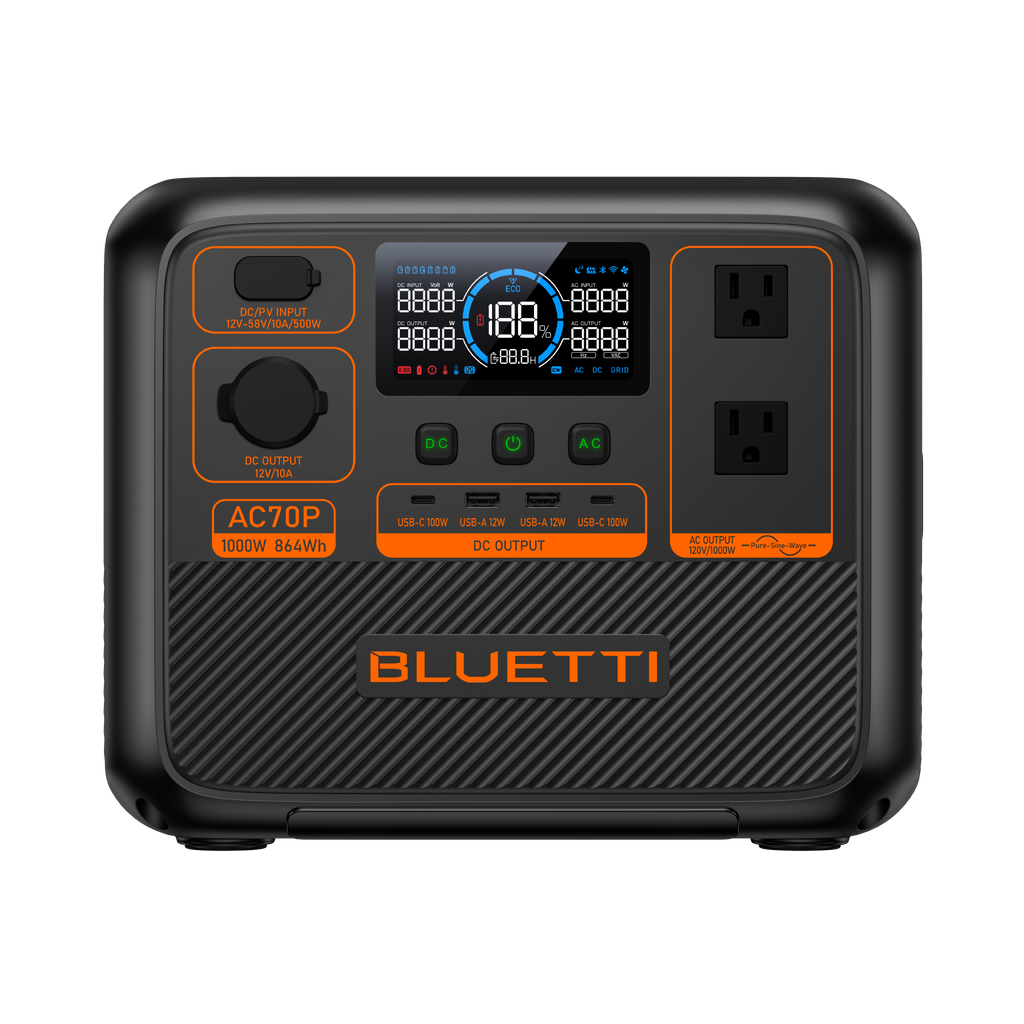
3) BLUETTI AC70P Portable Power Station | 1000W 864Wh
| Capacity | 864Wh |
|---|---|
| AC output | 1000W continuous |
| Battery | not specified by the manufacturer |
| Cycle life | not specified by the manufacturer |
| Weight | not specified by the manufacturer |
| Price | $649 |
The AC70P hits a practical middle ground: enough battery for a workday off-grid or a short outage, and 1,000W output for devices that smaller 300W boxes can’t handle. If you want one power station for car camping, tailgating, and basic emergency backup, this size class is often the sweet spot. Compare it with the solar panel calculator if you plan to recharge from PV.
Pros
| Pros |
|---|
| 864Wh is a useful step up from entry-level packs. |
| 1,000W output opens up more appliance options. |
| Price stays below the larger 2kWh class. |
Cons
| Cons |
|---|
| Battery chemistry is not specified by the manufacturer. |
| Cycle life is not specified by the manufacturer. |
| Weight is not specified by the manufacturer. |
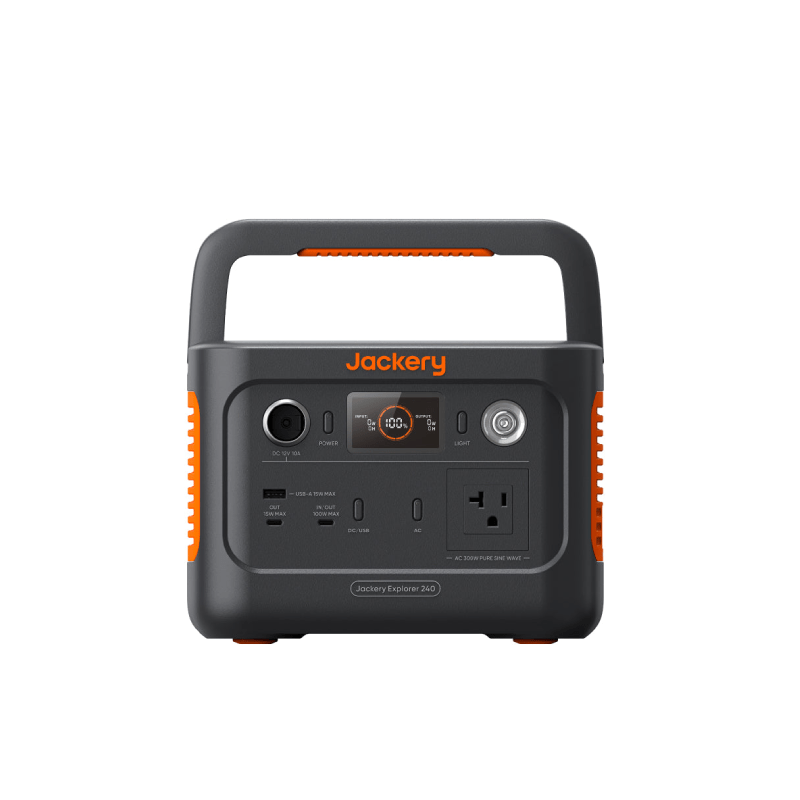
4) Jackery Explorer 240 v2 Portable Power Station
| Capacity | 256Wh |
|---|---|
| AC output | 300W continuous |
| Battery | LiFePO4 |
| Cycle life | 4000 |
| Weight | 3.6 kg |
| Price | $249 |
This is my best value pick. The Jackery Explorer 240 v2 Portable Power Station is small, reasonably light, and uses LiFePO4 with a listed 4,000-cycle life. For charging phones, laptops, camera gear, routers, and LED lighting, it’s a better long-term buy than many older lithium-ion units in the same size range.
Pros
| Pros |
|---|
| LiFePO4 chemistry is a major upgrade in this price tier. |
| 4,000 cycles is strong for a compact unit. |
| 3.6 kg is easy to move and store. |
Cons
| Cons |
|---|
| 256Wh is too small for long appliance runtime. |
| 300W output limits you to lighter loads. |
| No battery expansion option. |
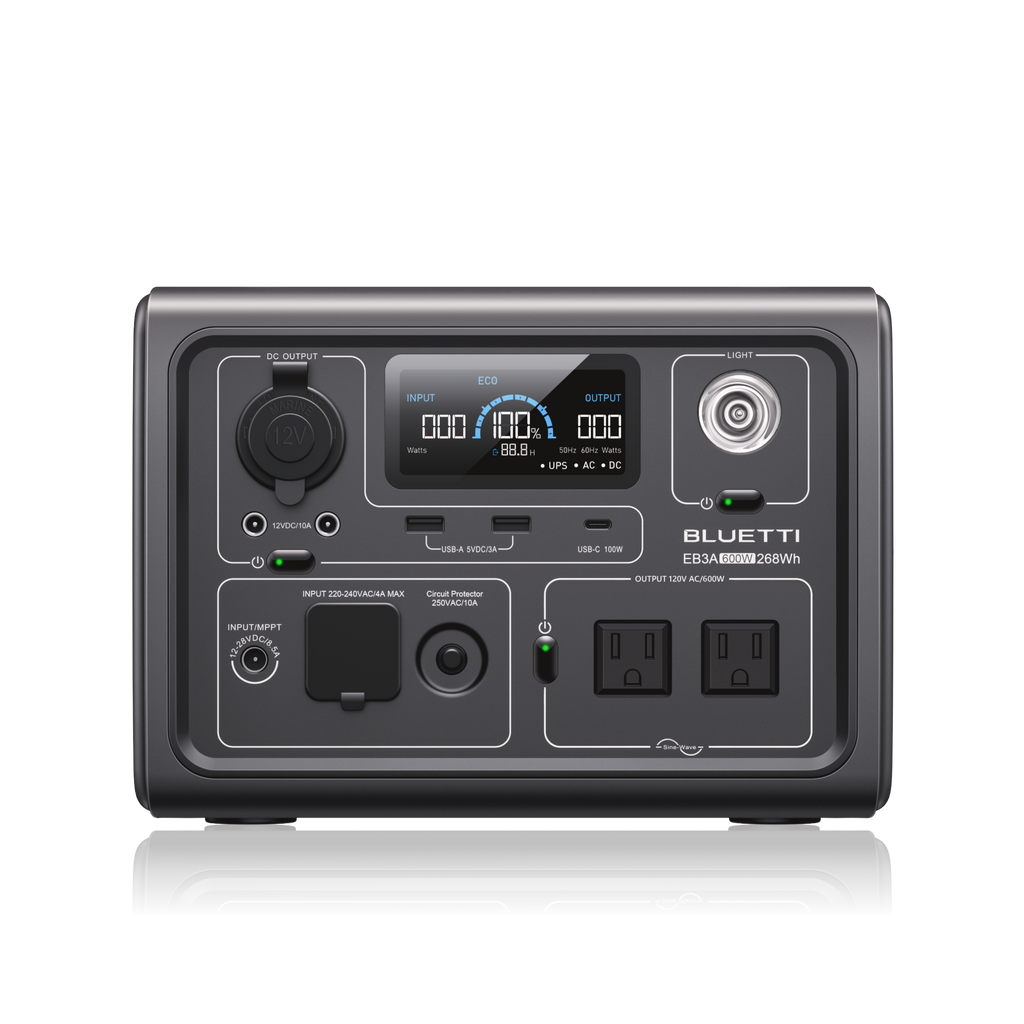
5) (Discontinued) BLUETTI EB3A Portable Power Station | 600W 268Wh
| Capacity | 268Wh |
|---|---|
| AC output | 600W continuous |
| Battery | LiFePO4 |
| Cycle life | 2500 |
| Weight | 4.6 kg |
| Price | $219 |
The (Discontinued) BLUETTI EB3A Portable Power Station | 600W 268Wh is still attractive on paper because 600W output at this size is unusually high. If you can still buy it new and the seller support is solid, it remains a strong compact option. The catch is right in the name: discontinued.
Pros
| Pros |
|---|
| 600W output is excellent for a 268Wh unit. |
| LiFePO4 chemistry beats older small Li-ion packs. |
| $219 is competitive for the output on offer. |
Cons
| Cons |
|---|
| Discontinued status adds support risk. |
| 268Wh still means short runtimes on AC loads. |
| No expansion path. |
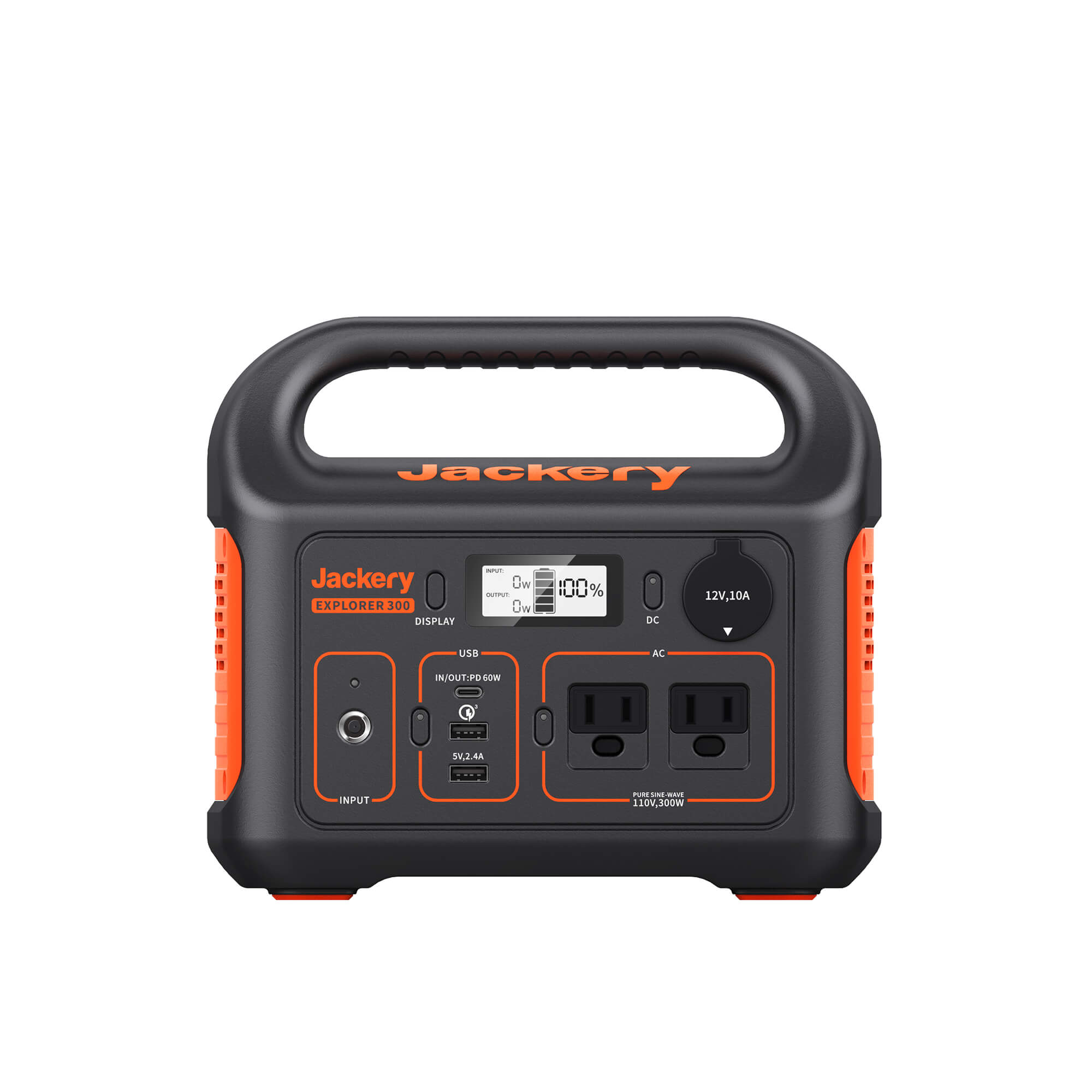
6) Jackery Explorer 300 Portable Power Station
| Capacity | 293Wh |
|---|---|
| AC output | 300W continuous |
| Battery | Li-ion |
| Cycle life | 800 |
| Weight | 3.6 kg |
| Price | $279 |
The Jackery Explorer 300 Portable Power Station is light and simple, but it’s harder to recommend in 2026 because its chemistry and cycle-life numbers now look dated next to newer LFP units. It still works fine for occasional use, especially if low weight matters more than long-term cycling.
Pros
| Pros |
|---|
| 3.6 kg keeps it easy to carry. |
| 293Wh is enough for weekend electronics use. |
| Simple 300W class sizing is easy to shop for. |
Cons
| Cons |
|---|
| Li-ion chemistry is less appealing than LiFePO4 here. |
| 800 cycles trails newer competitors badly. |
| $279 is not a bargain against newer LFP models. |
7) Explorer 100 Plus
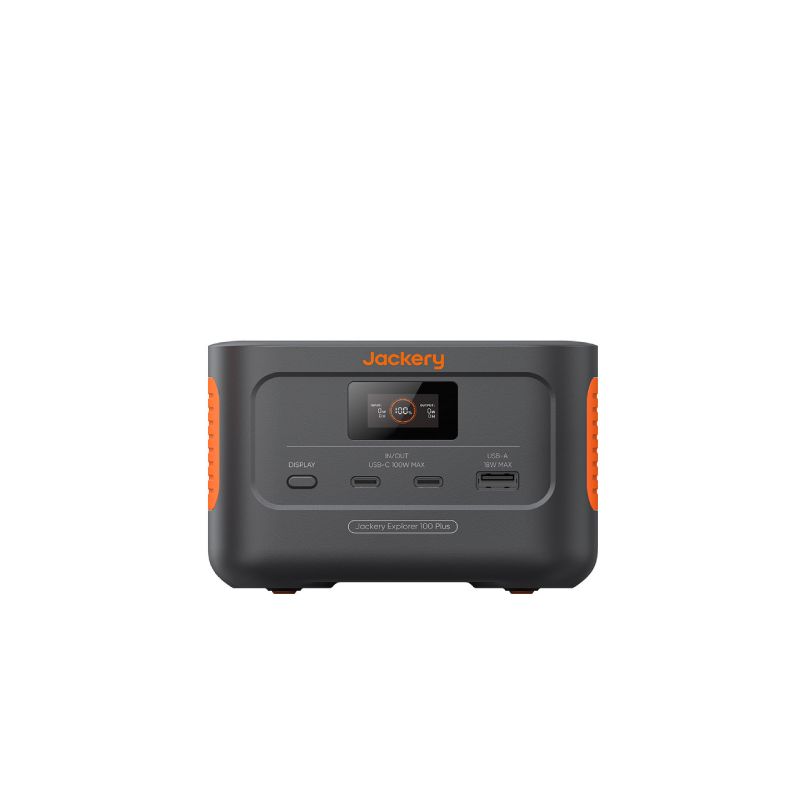
| Capacity | 99Wh |
|---|---|
| AC output | 128W continuous |
| Battery | lifepo4 |
| Cycle life | 0 in structured data; product description says 2,000 cycles to 80% |
| Weight | 1.0 kg |
| Price | $149 |
The Explorer 100 Plus is the pocket pick. At 1.0 kg and 99Wh, it’s best treated as a premium USB-C battery with a little AC capability, not as outage backup. One caution: the structured data lists cycle life as 0, while the product description says 2,000 cycles to 80% capacity. That inconsistency means you should verify the current spec on the manufacturer page before buying.
Pros
| Pros |
|---|
| 1.0 kg is genuinely ultra-portable. |
| LiFePO4 is welcome in a tiny unit. |
| $149 is reasonable for travel and EDC backup. |
Cons
| Cons |
|---|
| 99Wh is far too small for serious outage use. |
| 128W output sharply limits AC devices. |
| Cycle-life data is inconsistent across the supplied source fields. |
For completeness, two models that didn’t make the top seven logic as cleanly are the BLUETTI AC2P Portable Power Station | 300W 230.4Wh, whose structured data conflicts with its product name and description, and the Jackery Explorer 550 Portable Power Station, which is usable but expensive for a 518Wh, 500-cycle Li-ion unit in 2026. If you want to compare every listing and sort by price, output, or chemistry, use the full database.
What you give up at this price
The main thing you give up in this lineup is clean, complete spec transparency. Several models are missing weight, battery chemistry, solar input, or warranty data. That matters because those are not minor details; they affect portability, lifespan, recharge planning, and long-term value. If a manufacturer does not specify a field, I won’t fill in the blank. That’s one reason the Elite 200 V2 and Explorer 240 v2 rise to the top: the known numbers are strong enough to stand on their own.
You also give up some polish at the low end. The sub-$300 class is great for laptops, phones, networking gear, lights, and camera batteries, but it is not real whole-home backup. Even the better compact units here top out at 300W to 600W and around 250Wh to 300Wh. That means short runtimes on AC loads and very limited appliance support. If you need to run a fridge, CPAP, or multiple devices through an outage, move up in both watt-hours and inverter size, then size your system with your actual loads.
Finally, if you came here specifically looking for the best EcoFlow portable power stations in 2026, this page can only go so far because the supplied dataset contains no EcoFlow products. I’d rather say that plainly than pretend otherwise. Use this roundup as a shortlist of the best available models in the provided data, then compare against current EcoFlow listings separately using manufacturer pages and our editorial tools.
Frequently asked questions
Are these actually EcoFlow portable power stations?+
No. The product data provided for this page contains BLUETTI and Jackery models, not EcoFlow units. Rather than invent products, we ranked the real models available in the dataset and called out the mismatch plainly.
What size portable power station should I buy?+
Start with the wattage of the devices you want to run and the runtime you need. Our advice is to match AC output to your peak load, then choose battery capacity in watt-hours based on how many hours of use you need; you can also use our sizing calculator for a faster estimate.
Is LiFePO4 worth paying extra for in 2026?+
Usually yes, especially if you expect frequent cycling or want longer service life. In this lineup, the LiFePO4 models generally offer much higher cycle life than older Li-ion units.
Should I buy a discontinued power station if the price is low?+
Only if the discount is strong enough to offset support risk and limited future availability. A discontinued model can still be a good buy, but active models are safer if warranty handling and replacement accessories matter to you.
Can a portable power station run a refrigerator during an outage?+
Some can, depending on the fridge's running and startup wattage. Check the appliance label, compare it with the station's continuous AC output, and leave margin for startup surges and battery runtime.
Editor at SolarWorld covering portable power, balcony PV and home energy storage. Specifications quoted in this guide are pulled directly from our product database; analysis and recommendations are by Nathan Cole.
Full bio & methodology →Related articles
- Buying guide · 8 min
Best BLUETTI Portable Power Stations 2026: 7 Worth Buying
Our 2026 short list of the best BLUETTI power stations, with exact specs, honest tradeoffs, and the few models actually worth your money.
- Buying guide · 8 min
Best Jackery Power Stations 2026: Only 7 Worth Buying
Our 2026 shortlist of the best Jackery portable power stations, with clear tradeoffs, real specs, and quick picks to help you buy fast.
- Buying guide · 9 min
Best Emergency Power Stations 2026: Only 7 Worth Buying
Our 2026 shortlist of portable power stations for outages, with honest tradeoffs, exact specs, and the best picks by budget and backup need.