Best expandable portable power stations (2026)
If you want a truly expandable portable power station in this dataset, the field is thin: only one model is explicitly marked expandable. That means this list is really a buy-list of the best portable power stations available here, with one genuine expandable option and six smaller fixed-capacity alternatives that still make sense for camping, outages, and light off-grid use.
Quick picks
| Pick | Model | Why it wins | Price |
|---|---|---|---|
| Best overall | BLUETTI AC70P Portable Power Station | 1000W 864Wh | 864Wh and 1,000W is the best balance here for real backup use. | $649 |
| Best value | Jackery Explorer 240 v2 Portable Power Station | 256Wh, 300W, LiFePO4, and 4,000 cycles at $249 is a strong low-cost package. | $249 |
| Best for home backup expansion | Apex 300 Home Integration Kit | The only model here with explicit expansion, scaling from 2,764Wh to 29,400Wh. | $699 |
How we picked
We ranked these units by usable capacity, continuous AC output, battery chemistry, published cycle life, price, and whether the manufacturer explicitly supports battery expansion. We also weighed support risk for discontinued gear and flagged missing specs instead of guessing; see our scoring methodology and our full affiliate disclosure.
What “good” looks like at this price
For sub-$300, “good” means roughly 250Wh to 300Wh, about 300W of AC output, and preferably LiFePO4 chemistry with at least a few thousand cycles. Around $500 to $700, you should expect either more runtime, more inverter power, or both. In this lineup, the sweet spot for actual backup use is 864Wh paired with 1,000W continuous output, while the standout for long-term battery durability is the move from older Li-ion packs to LiFePO4. The U.S. Department of Energy’s consumer battery guidance consistently favors matching storage size to actual load and runtime rather than buying on marketing claims alone (DOE).
The big catch: despite the keyword, there is only one product here with confirmed expansion support. If you need a system that grows over time, the Apex 300 is the only clean fit. If you just need a compact box for weekend trips or short outages, several non-expandable units here are better value.
A quick sizing rule: watt-hours tell you runtime, watts tell you what can start and run. A 300W unit can handle routers, laptops, lights, and many CPAP setups, but not space heaters, kettles, or full-size microwaves. If you need help before buying, size your system or compare these against the full database. For solar users, our solar panel sizing calculator is also useful for matching recharge expectations to battery size.
The 7 best models
Apex 300 Home Integration Kit
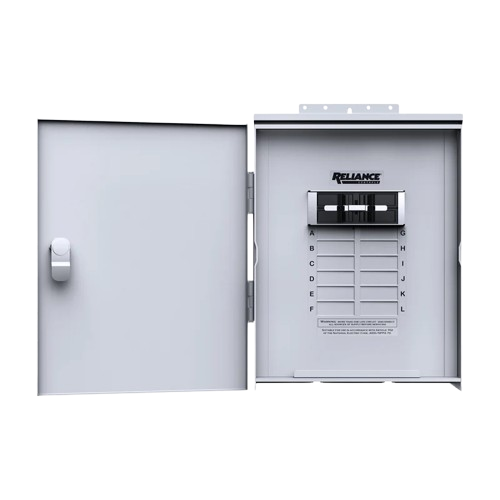
The Apex 300 is the only model in this dataset that is explicitly expandable. Base capacity is 2,764Wh, continuous AC output is 3,840W, and Bluetti lists maximum expansion up to 29,400Wh. That immediately puts it in a different class from the rest of this list.
At 38 kg, this is not a casual grab-and-go station. It is much closer to a semi-portable home backup platform, especially since Bluetti positions this specific kit around home circuit integration. The listed $699 price looks unusually low for the published capacity and power, so I would verify exactly what is included in the package on the product page before purchase.
| Spec | Apex 300 |
|---|---|
| Capacity | 2,764Wh |
| AC output | 3,840W |
| Battery chemistry | LiFePO4 |
| Cycle life | 6,000 |
| Expandable | Yes |
| Max expansion | 29,400Wh |
| Weight | 38.0 kg |
| Price | $699 |
Pros
| Pros |
|---|
| Only confirmed expandable model in this lineup |
| 3,840W output is enough for serious home loads |
| 6,000-cycle LiFePO4 battery is excellent on paper |
Cons
| Cons |
|---|
| 38 kg is heavy for true portable use |
| Solar input not specified by the manufacturer |
| Product bundle details should be verified carefully |
BLUETTI AC70P Portable Power Station | 1000W 864Wh
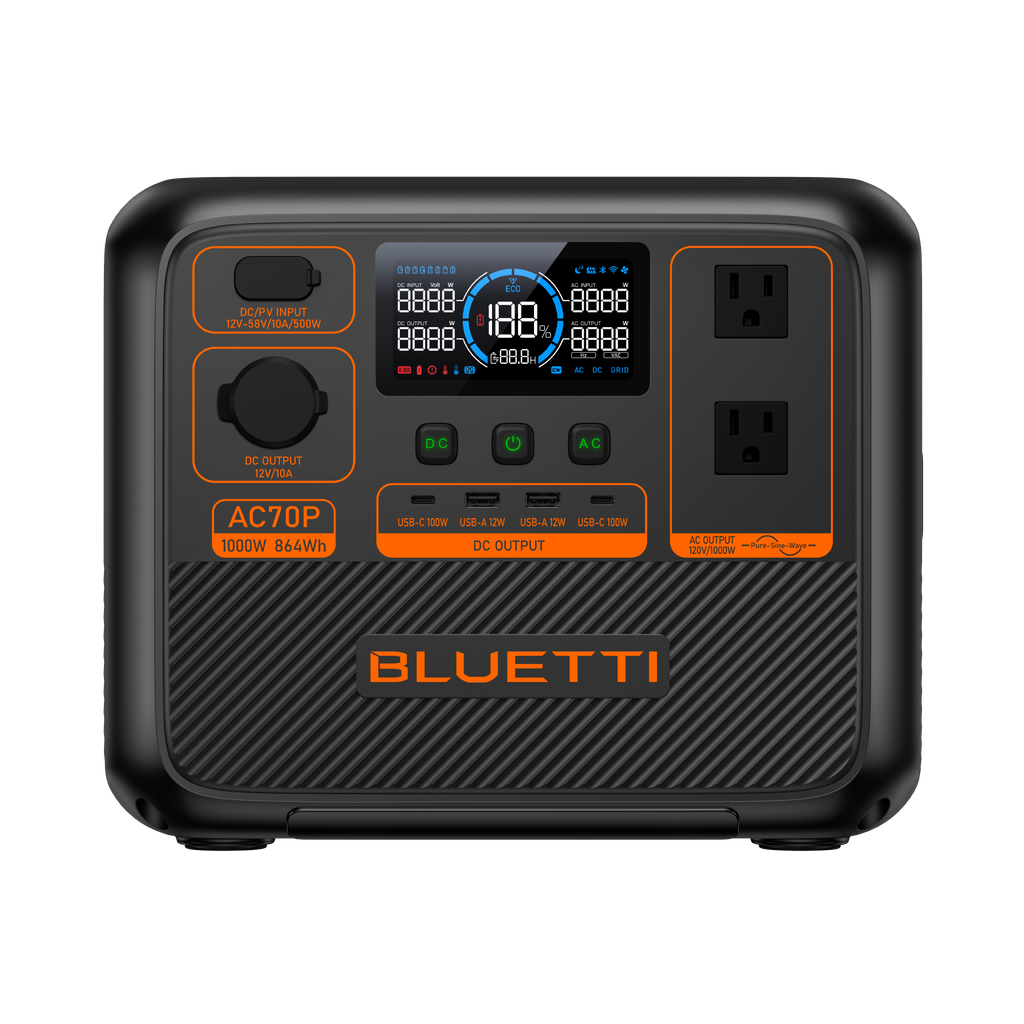
The BLUETTI AC70P Portable Power Station | 1000W 864Wh is the best all-around pick here for buyers who need meaningful runtime and enough inverter headroom for more than just electronics. At 864Wh and 1,000W continuous output, it can cover routers, lights, laptops, TVs, fans, and many small kitchen loads one at a time.
Bluetti does not specify battery chemistry, cycle life, weight, warranty, or solar charging limit in the supplied data, so I won’t fill in the blanks. Even with those gaps, the core numbers are strong enough to put it near the top for outage backup and car camping.
| Spec | BLUETTI AC70P |
|---|---|
| Capacity | 864Wh |
| AC output | 1,000W |
| Battery chemistry | not specified by the manufacturer |
| Cycle life | not specified by the manufacturer |
| Expandable | No |
| Weight | not specified by the manufacturer |
| Price | $649 |
Pros
| Pros |
|---|
| Strong 1,000W inverter for the size |
| 864Wh is enough for real overnight backup |
| Better backup value than smaller 250Wh-class units |
Cons
| Cons |
|---|
| Not expandable |
| Key specs like chemistry and cycle life are not specified |
| Weight not specified by the manufacturer |
Jackery Explorer 240 v2 Portable Power Station
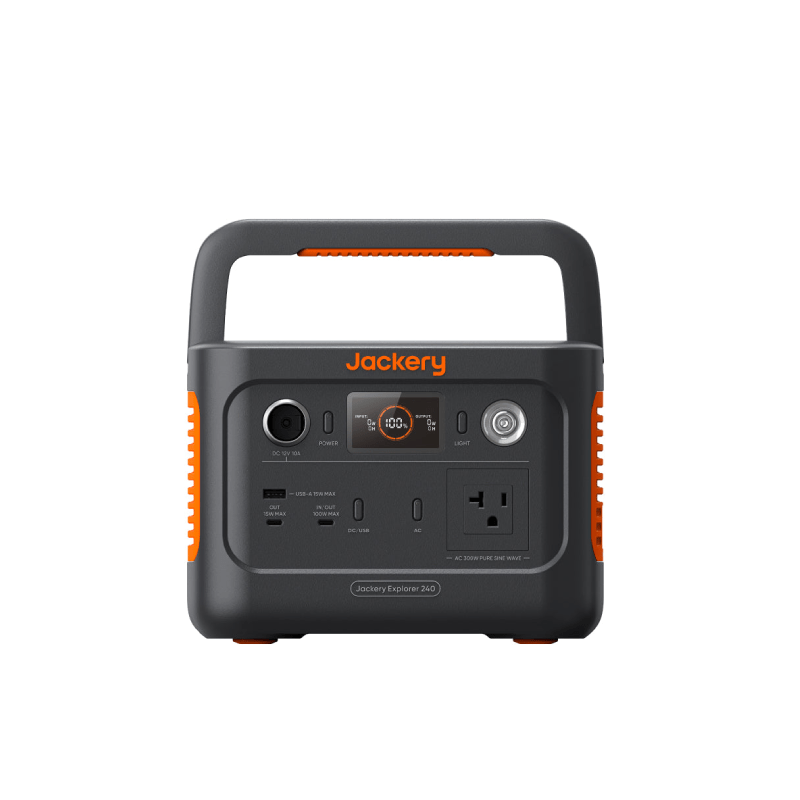
The Jackery Explorer 240 v2 Portable Power Station is the best budget buy in this group. You get 256Wh, 300W continuous AC output, LiFePO4 chemistry, and a published 4,000-cycle life for $249.
That makes it a better long-term value than many older entry-level lithium-ion boxes. At 3.6 kg, it is still easy to carry, and the product description also mentions a 5-year warranty, though the structured data field for warranty years is blank, so I’m not treating that as a normalized spec.
| Spec | Explorer 240 v2 |
|---|---|
| Capacity | 256Wh |
| AC output | 300W |
| Battery chemistry | LiFePO4 |
| Cycle life | 4,000 |
| Expandable | No |
| Weight | 3.6 kg |
| Price | $249 |
Pros
| Pros |
|---|
| Excellent cycle life for the price |
| 300W inverter covers common small loads |
| Light enough for camping and emergency kits |
Cons
| Cons |
|---|
| 256Wh runs out quickly on bigger loads |
| Not expandable |
| Solar input limit not specified by the manufacturer |
(Discontinued) BLUETTI EB3A Portable Power Station | 600W 268Wh
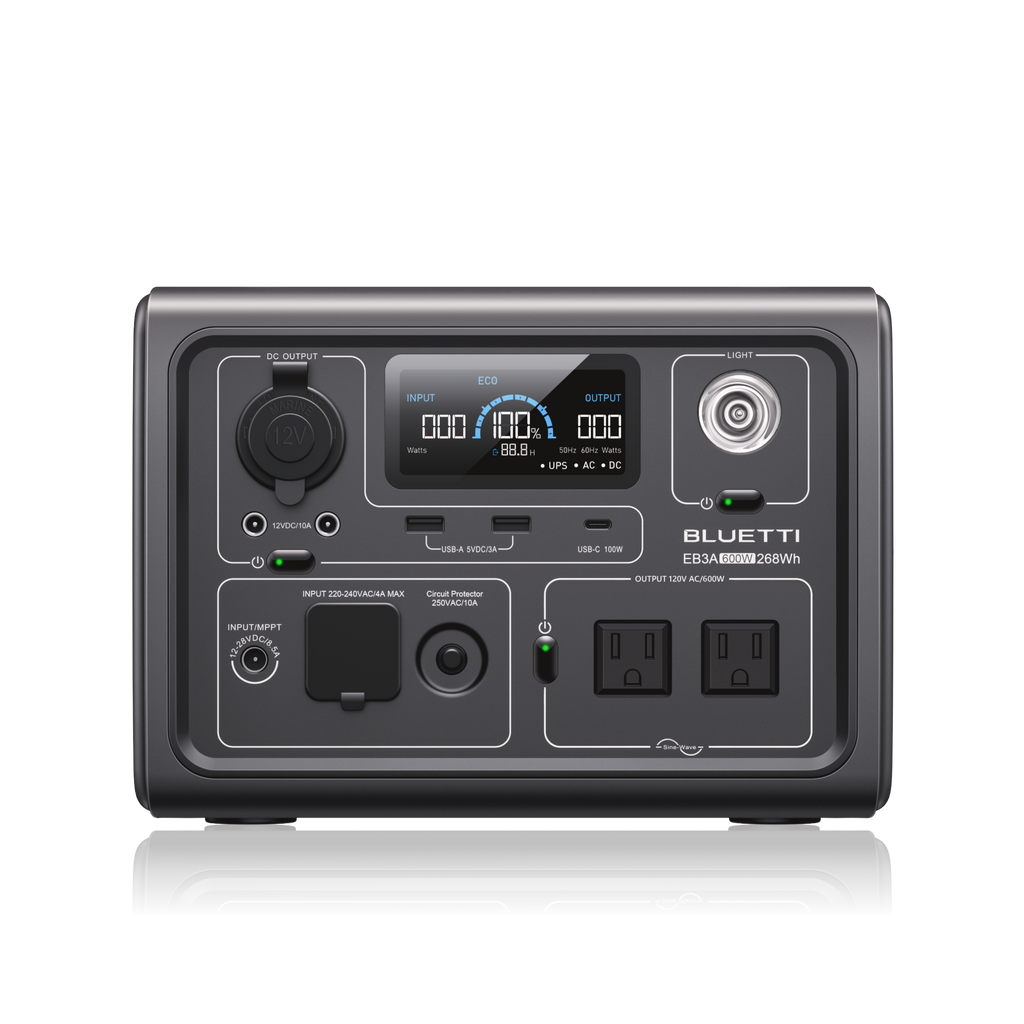
The (Discontinued) BLUETTI EB3A Portable Power Station | 600W 268Wh is the oddball value pick. For $219, it pairs a small 268Wh battery with a relatively large 600W inverter, plus LiFePO4 chemistry and 2,500 cycles.
That high output relative to capacity is useful if your loads are short and punchy: a coffee grinder, a small appliance, a laptop charger plus monitor, or brief kitchen duty. The downside is obvious: 268Wh does not last long, and discontinued status adds support risk.
| Spec | BLUETTI EB3A |
|---|---|
| Capacity | 268Wh |
| AC output | 600W |
| Battery chemistry | LiFePO4 |
| Cycle life | 2,500 |
| Expandable | No |
| Weight | 4.6 kg |
| Price | $219 |
Pros
| Pros |
|---|
| 600W output is unusually high at this size |
| LiFePO4 chemistry at a low price |
| Good fit for short, higher-watt bursts |
Cons
| Cons |
|---|
| Discontinued model |
| 268Wh is still a small battery |
| Warranty not specified by the manufacturer |
Jackery Explorer 300 Portable Power Station
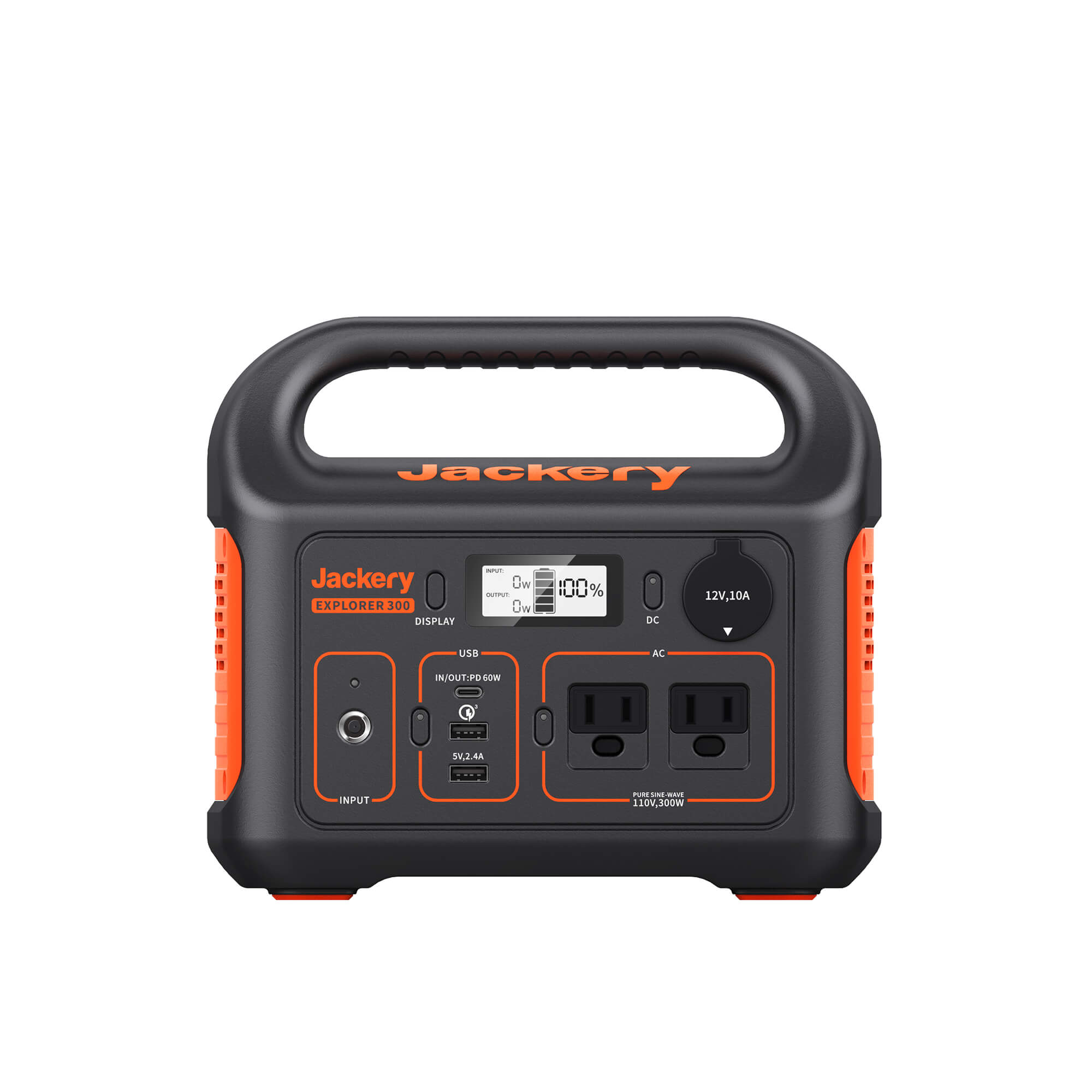
The Jackery Explorer 300 Portable Power Station is a straightforward small power station: 293Wh, 300W AC output, 3.6 kg, and a listed 800-cycle Li-ion battery.
Its problem in 2026 is not that it is bad. It is that the Explorer 240 v2 undercuts it on chemistry and cycle life, while the EB3A beats it on inverter output. You would buy this one if you trust Jackery, want a familiar compact form factor, and find it discounted enough to offset the older battery platform.
| Spec | Explorer 300 |
|---|---|
| Capacity | 293Wh |
| AC output | 300W |
| Battery chemistry | Li-ion |
| Cycle life | 800 |
| Expandable | No |
| Weight | 3.6 kg |
| Price | $279 |
Pros
| Pros |
|---|
| Light 3.6 kg carry weight |
| Slightly more capacity than the 240 v2 |
| Simple fit for lights, laptops, and routers |
Cons
| Cons |
|---|
| Older Li-ion chemistry |
| Only 800 cycles listed |
| Weak value next to newer LFP rivals |
Jackery Explorer 550 Portable Power Station
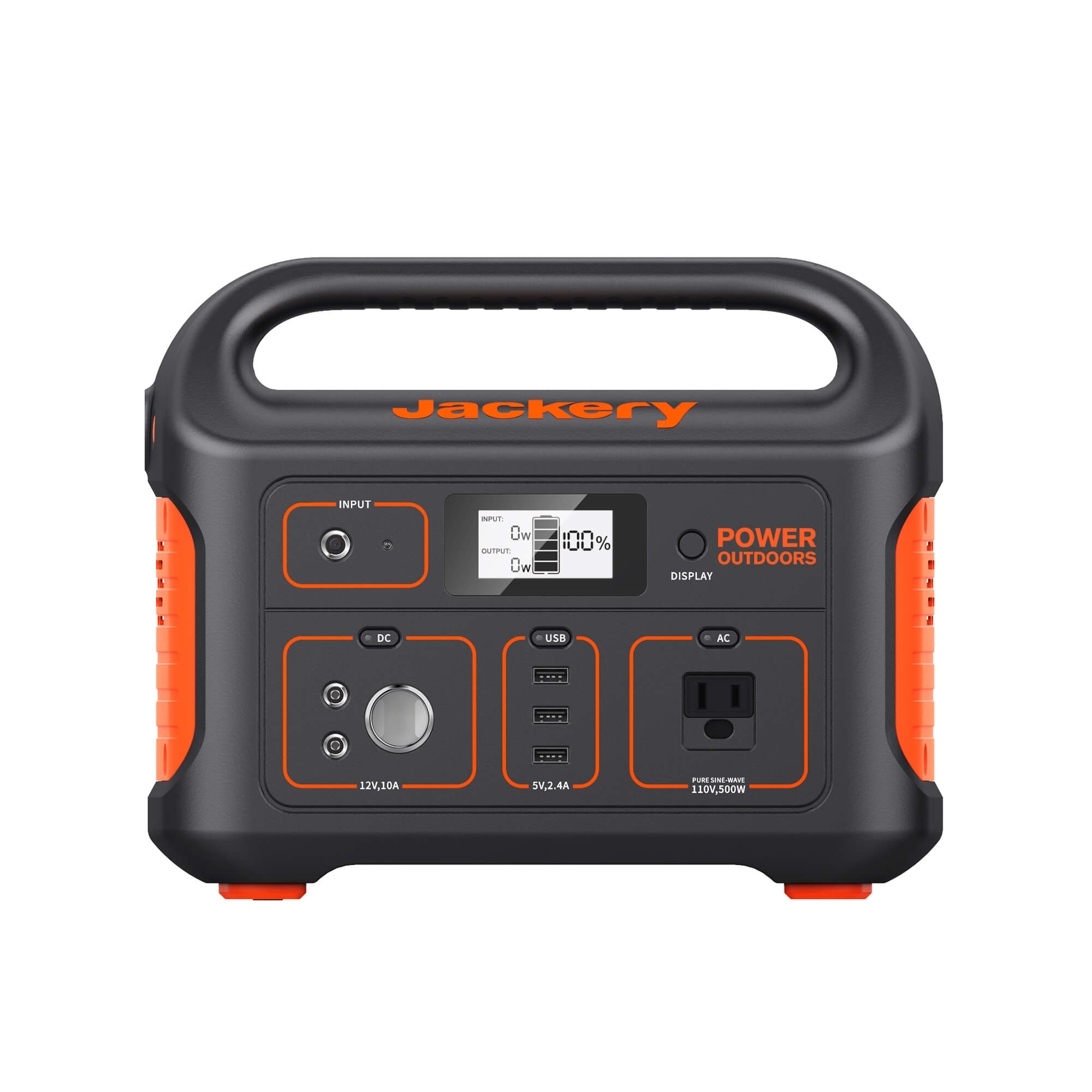
The Jackery Explorer 550 Portable Power Station gives you a useful step up in runtime at 518Wh and 500W output. For moderate loads, that is a practical middle ground between tiny 250Wh-class boxes and the much larger AC70P.
The issue is price-to-spec. At $549, it costs almost as much as the AC70P while offering much less capacity and lower output, plus older Li-ion chemistry and only 500 listed cycles. Unless size or brand preference is the deciding factor, this is a hard sell at current pricing.
| Spec | Explorer 550 |
|---|---|
| Capacity | 518Wh |
| AC output | 500W |
| Battery chemistry | Li-ion |
| Cycle life | 500 |
| Expandable | No |
| Weight | 6.0 kg |
| Price | $549 |
Pros
| Pros |
|---|
| 518Wh is enough for longer small-load runtimes |
| 500W output is more flexible than 300W units |
| Still reasonably portable at 6.0 kg |
Cons
| Cons |
|---|
| Poor value at current $549 price |
| Older Li-ion battery with 500 cycles |
| Not expandable |
Explorer 100 Plus
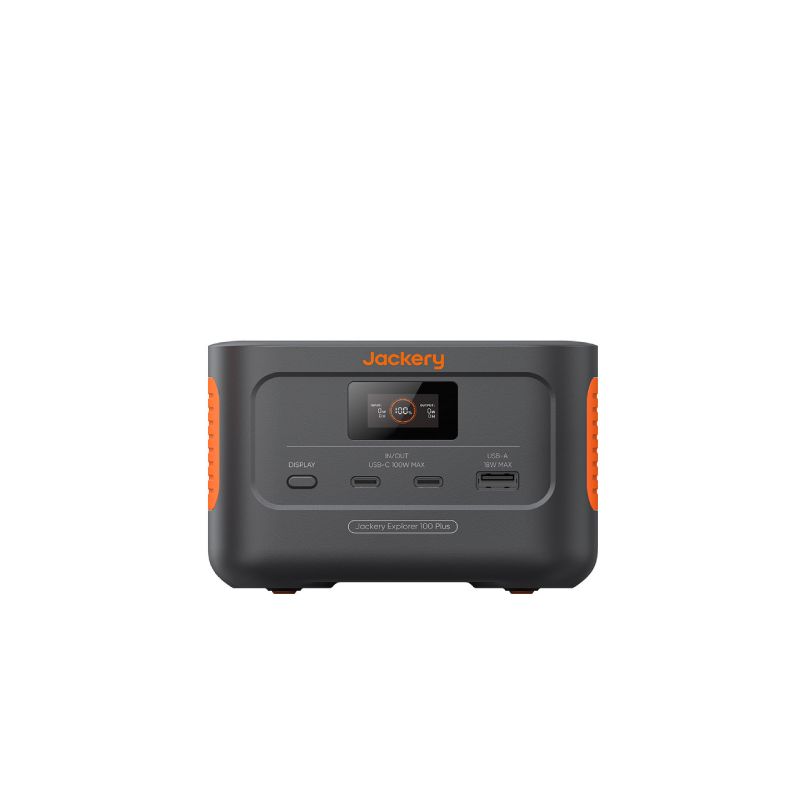
The Explorer 100 Plus is not a serious backup station. It is a pocketable DC-first travel battery with a tiny 99Wh pack and 128W AC output. At 1.0 kg, that is the point.
The data field lists cycle life as 0, but the product description says “2,000 Cycles to 80% Capacity.” Because those fields conflict, I would verify on the manufacturer page before buying. If your goal is charging phones, drones, cameras, and a laptop on the move, it is a useful ultralight option. If your goal is home backup, skip it.
| Spec | Explorer 100 Plus |
|---|---|
| Capacity | 99Wh |
| AC output | 128W |
| Battery chemistry | LiFePO4 |
| Cycle life | 0 listed in data; verify with manufacturer |
| Expandable | No |
| Weight | 1.0 kg |
| Price | $149 |
Pros
| Pros |
|---|
| Very light at 1.0 kg |
| LiFePO4 chemistry |
| Good fit for travel electronics and small USB loads |
Cons
| Cons |
|---|
| Only 99Wh of capacity |
| 128W AC output is very limited |
| Cycle-life data is inconsistent and should be verified |
BLUETTI AC2P Portable Power Station | 300W 230.4Wh
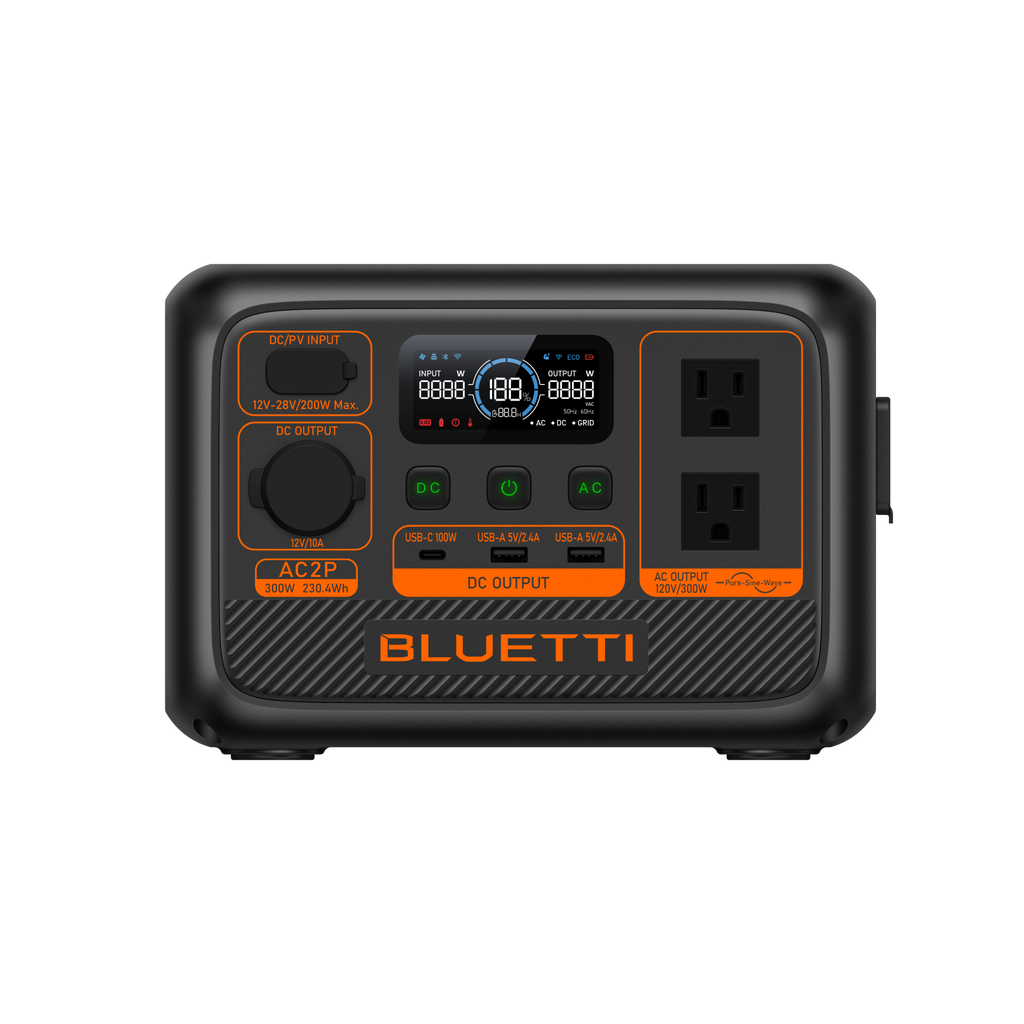
The BLUETTI AC2P Portable Power Station | 300W 230.4Wh is the messiest listing in this dataset. The product name says 300W and 230.4Wh, but the structured data lists 864Wh, and the description references the AC70P with 1,000W and 864Wh. Those numbers clearly conflict.
Because of that mismatch, I would not recommend buying this model without checking the live product page first. At the listed $159, it could be a strong low-budget pick if the true spec is around 230Wh, but I can’t responsibly rank it higher on contradictory data.
| Spec | BLUETTI AC2P |
|---|---|
| Capacity | conflicting data: name says 230.4Wh, dataset says 864Wh |
| AC output | 300W |
| Battery chemistry | not specified by the manufacturer |
| Cycle life | not specified by the manufacturer |
| Expandable | No |
| Weight | not specified by the manufacturer |
| Price | $159 |
Pros
| Pros |
|---|
| Low listed price |
| 300W output is useful for small loads |
| Bluetti product page is available for verification |
Cons
| Cons |
|---|
| Capacity data is contradictory |
| Description appears to reference another model |
| Too much missing normalized spec data |
What you give up at this price
The biggest compromise in this lineup is that “expandable” barely exists here. If you came in looking for the best expandable portable power stations (2026), the honest answer is that only the Apex 300 Home Integration Kit clearly qualifies. Everything else is fixed-capacity. That is not automatically bad; fixed units are often cheaper, simpler, and easier to carry. But if your plan is to start small and add batteries later, your options in this dataset are effectively one deep.
You also give up spec consistency. Several products are missing weight, warranty, chemistry, cycle life, or solar-input data, and one listing has obvious capacity conflicts. That matters because cycle life and chemistry heavily affect long-term value. NREL and other energy-storage researchers consistently stress that battery lifetime and duty cycle are core economics, not side notes (NREL). A cheap box with low cycle life can cost more over time than a pricier LiFePO4 unit.
Finally, many of these smaller stations are limited by either runtime or inverter size. A 99Wh to 300Wh class unit is fine for phones, laptops, lights, and routers. It is not a whole-home backup solution. Before you buy, compare your loads against the full database, use our power consumption calculator, and double-check the manufacturer page for any model with missing or conflicting data. If you only want the short version: buy the Apex 300 for true expansion, the AC70P for the best all-around backup value, and the Explorer 240 v2 if you want the cheapest sensible LiFePO4 option.
Frequently asked questions
What makes a portable power station expandable?+
An expandable power station can add extra battery capacity beyond the base unit, usually through proprietary expansion batteries or a home integration ecosystem. In this lineup, only the Bluetti Apex 300 Home Integration Kit is explicitly listed as expandable.
How much capacity do most portable power stations in this list offer?+
Most models here sit between 256Wh and 864Wh, which is enough for phones, laptops, lights, routers, and some small appliances. If you need longer runtimes for home backup, the 2,764Wh Apex 300 is the clear outlier.
Is LiFePO4 worth paying for in 2026?+
Usually yes, especially if cycle life matters. LiFePO4 models in this dataset include options rated from 2,500 to 6,000 cycles, which is far better on paper than older Li-ion units rated at 500 to 800 cycles.
Are discontinued power stations still worth considering?+
Sometimes, but only if the discount is strong and warranty support is still clear. A discontinued model like the Bluetti EB3A can still make sense if you want high inverter output for the money and accept the support risk.
How do I know what size power station I need?+
Start with your device wattage and how many hours you need to run it, then add margin for inverter losses and battery aging. Our sizing calculator is the fastest way to avoid buying too small or overspending.
Editor at SolarWorld covering portable power, balcony PV and home energy storage. Specifications quoted in this guide are pulled directly from our product database; analysis and recommendations are by Nathan Cole.
Full bio & methodology →Related articles
- Buying guide · 8 min
Best EcoFlow Portable Power Stations 2026: 7 Worth Buying
Our top portable power station picks for 2026, ranked by capacity, output, and value, with honest tradeoffs and direct links.
- Buying guide · 8 min
Best BLUETTI Portable Power Stations 2026: 7 Worth Buying
Our 2026 short list of the best BLUETTI power stations, with exact specs, honest tradeoffs, and the few models actually worth your money.
- Buying guide · 8 min
Best Jackery Power Stations 2026: Only 7 Worth Buying
Our 2026 shortlist of the best Jackery portable power stations, with clear tradeoffs, real specs, and quick picks to help you buy fast.