Best portable power stations for CPAP (2026)
If you want a CPAP-ready power station in 2026, the sweet spot is still around 230Wh to 288Wh for one-night portability, with 2kWh-class units only making sense for long outages, van use, or multi-night reserve. My top pick is the Jackery 240 v2 because 256Wh, LiFePO4 chemistry, 4,000-cycle life, 3.6 kg weight, and a stated 5-year warranty is the cleanest balance in this lineup. If price matters most, the EcoFlow RIVER 3 (230) is hard to ignore at $229.
CPAP runtime depends heavily on your machine, pressure settings, and whether you use heat. The U.S. Department of Energy notes that watt-hours are the right way to compare stored energy across battery products, and that is the number that matters most here for overnight use (DOE battery basics). For a quick estimate before you buy, size your system.
Quick picks
| Category | Model | Why it wins |
|---|---|---|
| Best overall | Jackery Explorer 240 v2 Portable Power Station | 256Wh, LiFePO4, 4,000 cycles, 3.6 kg, and a stated 5-year warranty at $249. |
| Best value | EcoFlow RIVER 3 (230) Portable Power Station | 230Wh for $229 with LiFePO4 chemistry, 600W AC output, and 3,000-cycle life. |
| Best for home backup + CPAP | EcoFlow DELTA 3 Max Series Portable Power Station (2048Wh) | 2,048Wh, 3,000W output, 10ms auto-switch claim, and enough reserve for CPAP plus other essentials. |
How we picked
We prioritized usable battery capacity, battery chemistry, cycle life, price, portability, and whether the unit makes sense for real CPAP use rather than generic camping. We also favored products with fewer missing specs and clearer manufacturer documentation; see our scoring methodology for the framework, and read our affiliate disclosure for how links are handled.
What “good” looks like at this price
For CPAP duty, “good” usually means 230Wh to 300Wh of LiFePO4 storage, a modest inverter, and a carry weight under 4 kg. That class is portable enough for travel and usually large enough for one night on many CPAP setups, especially if you run without heated humidification. If you want less guesswork, use the battery watt-hour figure, estimate your overnight watt draw, and compare the result with our size your system and backup-time tools like our /calculators/runtime-calculator.
The big tradeoff is simple: small stations are easier to carry, but they leave less margin for humidifiers, heated hoses, or back-to-back nights. In this lineup, the practical CPAP tier is 230Wh to 288Wh. The 99Wh class is ultra-portable but too small for many full-night AC-powered CPAP setups. At the other extreme, 2,042Wh to 2,048Wh units are overkill for travel but excellent for outages.
Another point: AC output wattage matters less for CPAP than battery size, because most CPAP machines draw relatively low continuous power. What hurts runtime is conversion loss and heat features. If your machine supports a direct DC input cable, that can stretch runtime versus using the AC inverter. For broader shopping context, see our full database and /portable-power-stations.
Which CPAP power station is best for one-night use?
For one-night use, the best fit here is the Jackery Explorer 240 v2 or the EcoFlow RIVER 3 (230). Both sit in the right capacity band for overnight backup while staying light enough to pack, and both use LiFePO4 cells.
The Jackery Explorer 240 v2 Portable Power Station gets the nod because Jackery publishes 4,000 cycles and a 5-year warranty in the product description, which is stronger documentation than several rivals in this dataset. The EcoFlow RIVER 3 (230) Portable Power Station is the better value if you want to spend the least without dropping below 200Wh.
Are 99Wh power stations enough for CPAP?
Usually not for a full night if you are running a CPAP through AC. A 99Wh unit can work as a short backup, for naps, or in very low-draw DC setups, but it is the wrong default recommendation for most buyers shopping specifically for CPAP power.
That is why the 99Wh Jackery models below are niche picks, not top picks. They are useful if airline-friendly size and minimal weight matter more than overnight reserve, but most readers should start at roughly 230Wh and up.
Are large 2kWh power stations worth it for CPAP?
Only if your use case is bigger than CPAP. A 2kWh-class station makes sense for home outage backup, van camping, or powering a CPAP for multiple nights along with phones, lights, or even a fridge. For pure bedside travel use, they are too heavy and too expensive.
The upside is reserve capacity and flexibility. The EcoFlow DELTA 3 Max Series Portable Power Station (2048Wh) and Jackery Portable Power Station Explorer 2000 Plus are the clear picks if you want one box to cover CPAP and broader outage needs.
The 7 best models
Jackery Explorer 240 v2 Portable Power Station
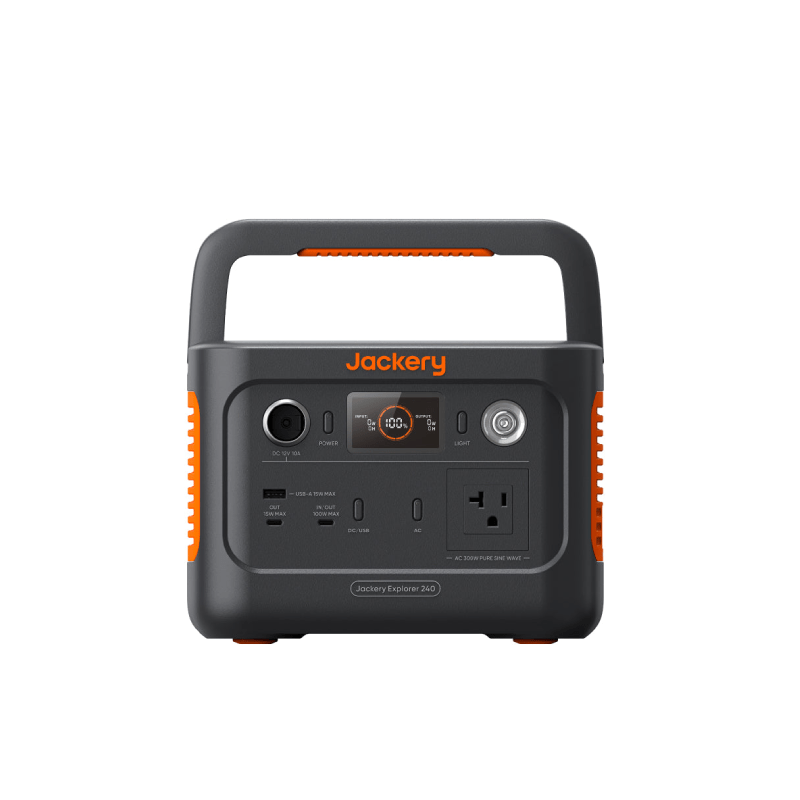
Best overall for most CPAP buyers. At 256Wh and 3.6 kg, this is the clean middle ground between ultra-small travel packs and oversized home backup units. Jackery also states LiFePO4 chemistry, 4,000-cycle life, and an extended 5-year warranty in the product description.
| Spec | Value |
|---|---|
| Capacity | 256Wh |
| AC output | 300W |
| Battery chemistry | LiFePO4 |
| Cycle life | 4,000 |
| Weight | 3.6 kg |
| Price | $249 |
Pros - 256Wh is right in the one-night CPAP sweet spot - 4,000-cycle life is excellent for this size - 3.6 kg is still easy to carry
Cons - 300W inverter is basic for non-CPAP loads - Solar input max not specified by the manufacturer - Surge rating not specified by the manufacturer
BLUETTI Elite 30 V2 Portable Power Station | 600W 288Wh (Twilight Glow Purple)

This is the highest-capacity sub-$250 option in the list at 288Wh, and BLUETTI also claims UPS-style switching of 10ms or less. For a CPAP user who also wants a desk UPS or more headroom for heated accessories, it is a strong value.
| Spec | Value |
|---|---|
| Capacity | 288Wh |
| AC output | 980W listed in data |
| Battery chemistry | LiFePO4 |
| Cycle life | not specified by the manufacturer in provided data |
| Weight | not specified by the manufacturer |
| Price | $239 |
Pros - 288Wh is the biggest battery in the compact tier - Low price for the stated capacity - UPS claim may help for outage backup use
Cons - Weight not specified by the manufacturer - Cycle life field is unclear in provided data - Product description contains inconsistent wattage wording
BLUETTI Elite 30 V2 Portable Power Station | 600W 288Wh (Glacier Blue)

Functionally, this is the same pick as the purple Elite 30 V2, just in a different colorway and with the same listed specs. I am including it because it is a separate product page and may have separate stock or pricing.
| Spec | Value |
|---|---|
| Capacity | 288Wh |
| AC output | 980W listed in data |
| Battery chemistry | LiFePO4 |
| Cycle life | not specified by the manufacturer in provided data |
| Weight | not specified by the manufacturer |
| Price | $239 |
Pros - 288Wh capacity for one-night CPAP use - Same low price as the purple version - LiFePO4 chemistry
Cons - Same documentation gaps as the other Elite 30 V2 - Weight not specified by the manufacturer - Duplicative option unless you prefer this color
EcoFlow RIVER 3 (230) Portable Power Station

The best value pick. You get 230Wh, LiFePO4, 600W AC output, 3,000-cycle life, and a 3.4 kg carry weight for $229. For buyers who want the cheapest serious CPAP option in this dataset, this is the one I would start with.
| Spec | Value |
|---|---|
| Capacity | 230Wh |
| AC output | 600W |
| Battery chemistry | LiFePO4 |
| Cycle life | 3,000 |
| Weight | 3.4 kg |
| Price | $229 |
Pros - Lowest price among the practical CPAP picks - 3.4 kg is travel-friendly - 3,000 cycles is solid at this price
Cons - Slightly less capacity than the 256Wh to 288Wh rivals - Warranty not specified by the manufacturer in provided data - Solar input max not specified by the manufacturer
Jackery Explorer 100 Plus Portable Power Station
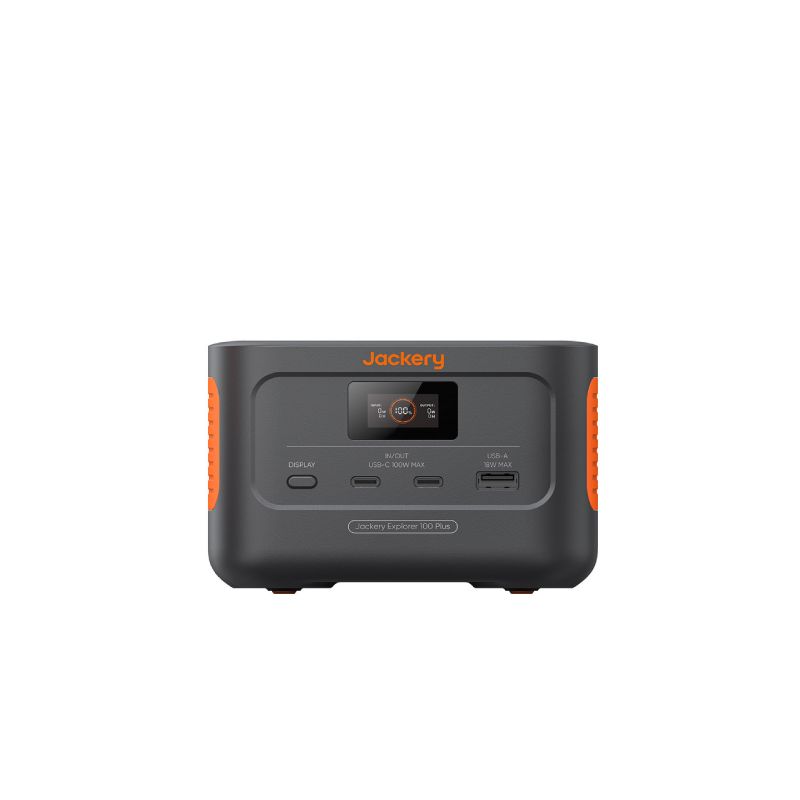
This is the smallest serious battery here: 99Wh, 128W AC, and 1.0 kg. For CPAP specifically, I see it as an emergency buffer or ultra-light travel companion, not a default overnight solution. The manufacturer description mentions 2,000 cycles to 80% capacity, but the structured cycle-life field in the data is not populated.
| Spec | Value |
|---|---|
| Capacity | 99Wh |
| AC output | 128W |
| Battery chemistry | LiFePO4 |
| Cycle life | not specified by the manufacturer in structured data |
| Weight | 1.0 kg |
| Price | $149 |
Pros - Very light at 1.0 kg - Lowest-cost Jackery in the list - Useful for short CPAP backup or DC-only minimalist setups
Cons - 99Wh is too small for many full-night CPAP loads - Only 128W AC output - Best used as a niche travel battery, not primary backup
Jackery Portable Power Station Explorer 2000 Plus
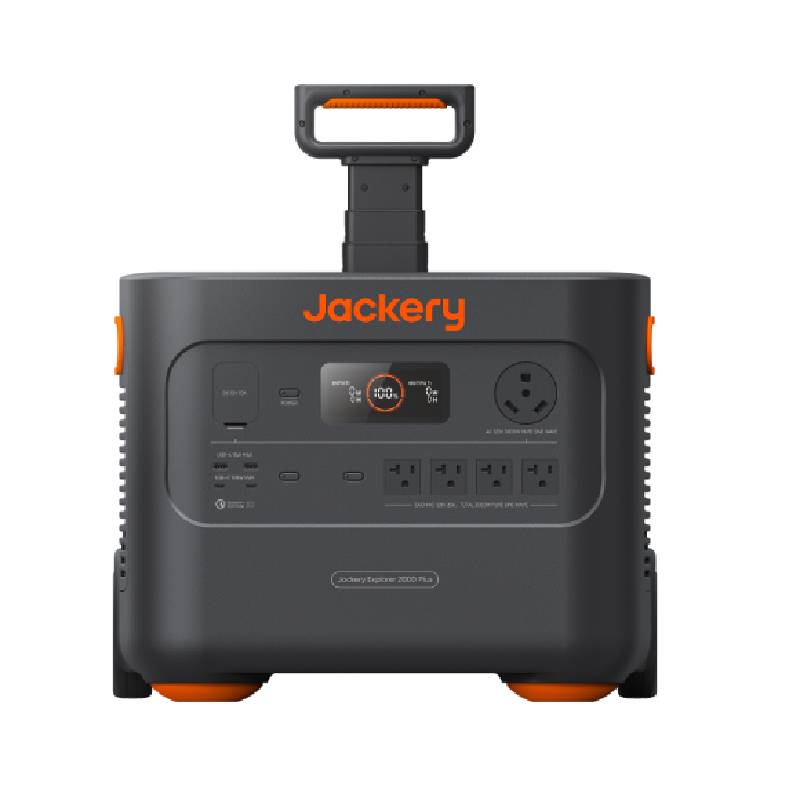
If you want CPAP backup plus serious outage coverage, this is the Jackery to buy. It packs 2,042Wh, 3,000W AC output, 4,000-cycle life, and expansion up to 12,000Wh. The downside is obvious: 27.9 kg is not portable in the everyday sense.
| Spec | Value |
|---|---|
| Capacity | 2,042Wh |
| AC output | 3,000W |
| Battery chemistry | LiFePO4 |
| Cycle life | 4,000 |
| Weight | 27.9 kg |
| Price | $899 |
Pros - Huge reserve for multi-night CPAP use - Expandable to 12,000Wh - 4,000-cycle LFP pack is strong for heavy use
Cons - 27.9 kg is very heavy - Expensive if CPAP is your only load - Solar input max not specified by the manufacturer
EcoFlow DELTA 3 Max Series Portable Power Station (2048Wh)

This is my top “CPAP plus everything else” pick. You get 2,048Wh, 3,000W output, a claimed 10ms auto-switch, quiet operation, app control, and a stated 5-year warranty in the description. EcoFlow also positions the series at 2–10kWh capacity, though this specific product page in the dataset is the 2,048Wh version.
| Spec | Value |
|---|---|
| Capacity | 2,048Wh |
| AC output | 3,000W |
| Battery chemistry | LiFePO4 |
| Cycle life | not specified by the manufacturer |
| Weight | not specified by the manufacturer |
| Price | $1,099 |
Pros - 2,048Wh is enough for extended CPAP backup - 10ms auto-switch claim suits home outage use - 5-year warranty stated in the description
Cons - Weight not specified by the manufacturer - Costs more than the Jackery 2000 Plus - Not a sensible travel pick for most users
What you give up at this price
If you stay in the sub-$250 range, you are buying enough battery for many one-night CPAP scenarios, not unlimited reserve. That means less tolerance for heated humidification, heated hoses, inverter losses, and second-night use without recharging. It also means you will often see missing specs, especially around weight, solar input, surge power, and warranty terms. In this dataset, BLUETTI and EcoFlow both leave some fields unspecified on certain models, which makes direct comparison harder than it should be.
If you move down to the 99Wh class, portability improves sharply, but overnight certainty drops. That is the core compromise. A 1.0 kg pack like the Jackery Explorer 100 Plus Portable Power Station is easy to toss in a bag, but it is not the right answer for most CPAP buyers unless you know your machine’s actual draw and plan to run lean.
If you move up to the 2kWh class, you gain serious outage protection and multi-use flexibility, but you give up easy transport and low upfront cost. Before buying, cross-check your own runtime needs with size your system, compare current listings in the full database, and review the exact product pages for BLUETTI Elite 30 V2 Portable Power Station | 600W 288Wh (Twilight Glow Purple), BLUETTI Elite 30 V2 Portable Power Station | 600W 288Wh (Glacier Blue), and EcoFlow DELTA 3 Max Series Portable Power Station (2048Wh) if you are choosing between compact and whole-home-leaning options.
Frequently asked questions
How big a portable power station do I need for a CPAP?+
For most CPAP users, 200Wh to 300Wh is the practical starting point for a single night, especially if you run without a heated humidifier or heated tube. If you want more margin or multi-night runtime, move up to around 500Wh and above, and use our sizing calculator to estimate your own draw.
Can I run a CPAP from DC instead of AC?+
Usually yes, and that often improves runtime because you avoid inverter losses from converting battery DC to AC and back again inside the CPAP brick. You need the correct manufacturer-approved DC cable for your specific CPAP model.
Do heated humidifiers and heated hoses reduce runtime?+
Yes, often by a lot. Heat is the biggest battery drain in CPAP use, so turning off the humidifier and heated tube can materially extend overnight runtime on smaller 200Wh to 300Wh power stations.
Is LiFePO4 better for a CPAP battery backup?+
For most buyers, yes. LiFePO4 chemistry usually offers longer cycle life and better long-term durability than older lithium-ion chemistries, which matters if you use the station often for travel, outages, or nightly backup.
Can a portable power station work as CPAP outage backup at home?+
Yes, but look for a unit with UPS or fast switchover features if seamless backup matters. Keep in mind that manufacturer claims vary, and you should confirm compatibility with your CPAP and power brick before relying on it for medical backup.
Editor at SolarWorld covering portable power, balcony PV and home energy storage. Specifications quoted in this guide are pulled directly from our product database; analysis and recommendations are by Nathan Cole.
Full bio & methodology →Related articles
- Buying guide · 8 min
Best Balcony Solar Kits for Renters 2026: 7 Worth Buying
Our 2026 shortlist of renter-friendly plug-and-play balcony solar kits, with honest tradeoffs, prices, and the few setups actually worth your click.
- Buying guide · 8 min
Best 400W+ Solar Panels 2026: Only 7 Worth Buying
Our top 400W+ solar panel picks for 2026, ranked by watts, efficiency, warranty, and value—so you can buy the right high-output module fast.
- Buying guide · 10 min
Best Home Battery Storage 2026: Only 7 Worth Buying
Our 2026 picks for whole-home backup batteries, with real kWh, kW, cycle-life and price tradeoffs so you can choose faster.