Verdict at a glance
For most buyers, the BLUETTI AC70P Portable Power Station | 1000W 864Wh wins this matchup because it delivers the same 1,000W continuous AC output as the Jackery Explorer 880 Portable Power Station for $150 less. The Jackery counters with a slightly larger battery at 880Wh vs 864Wh, plus published battery details: Li-ion chemistry, 500-cycle life, and 8.5 kg weight. If you want the better bargain, BLUETTI is the easier recommendation. If you want more published transparency around battery specs and portability, Jackery has the cleaner spec sheet. For how we compare products across the site, see our scoring methodology, and for monetization details, here is our affiliate disclosure.
| Best pick | Who it fits |
|---|---|
| Pick A: BLUETTI AC70P | If you want the lowest price for a 1,000W / ~1kWh class unit and do not need the extra published battery detail. |
| Pick B: Jackery Explorer 880 | If you prefer slightly more capacity, a listed 8.5 kg weight, and a published 500-cycle Li-ion battery spec. |
Side-by-side specifications
| Spec | BLUETTI AC70P Portable Power Station | 1000W 864Wh | Jackery Explorer 880 Portable Power Station |
|---|---|---|
| Official product page | BLUETTI AC70P | Jackery Explorer 880 |
| Capacity | 864Wh | 880Wh |
| AC output continuous | 1000W | 1000W |
| AC surge output | not specified by the manufacturer | not specified by the manufacturer |
| Battery chemistry | not specified by the manufacturer | Li-ion |
| Cycle life | not specified by the manufacturer | 500 cycles |
| Weight | not specified by the manufacturer | 8.5 kg |
| Warranty | not specified by the manufacturer | not specified by the manufacturer |
| Expandable battery | No | No |
| Max expansion | not applicable | not applicable |
| Max solar charging input | not specified by the manufacturer | not specified by the manufacturer |
| Current price | $649 | $799 |
| MSRP | not specified by the manufacturer | not specified by the manufacturer |
| Ports | not specified by the manufacturer | not specified by the manufacturer |
Where BLUETTI AC70P Portable Power Station | 1000W 864Wh wins
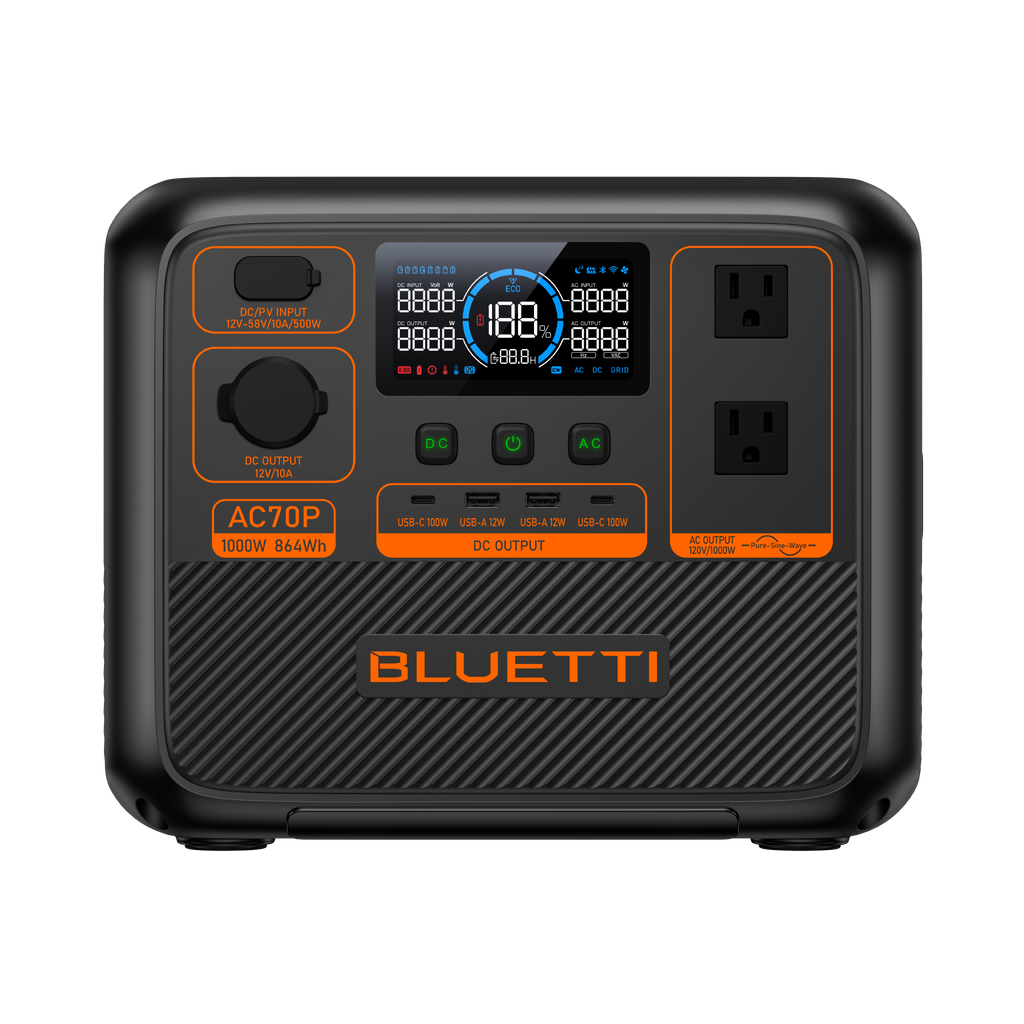
The biggest BLUETTI advantage is simple: price. The AC70P is listed at $649, while the Jackery Explorer 880 is $799. That is a $150 difference, or about 18.8% less than the Jackery’s current price. In a class where both units are capped at 1,000W continuous output, that gap matters more than a tiny capacity swing. If your goal is to run the same category of loads for less money, BLUETTI starts ahead.
The second BLUETTI edge is cost per watt-hour. Using the listed prices and capacities, the AC70P lands at roughly $0.75/Wh ($649 ÷ 864Wh), while the Explorer 880 comes in near $0.91/Wh ($799 ÷ 880Wh). That is a meaningful spread for shoppers trying to maximize stored energy per dollar. The raw capacity difference between these two is only 16Wh, which is about 1.85% of the BLUETTI’s capacity. In practice, 16Wh is a rounding-error class difference for most real loads.
That leads to the third advantage: the Jackery’s small battery lead does not offset the price gap. A 16Wh delta might amount to about one extra hour for a 15W device, or less than 20 minutes for a 50W load, before inverter losses. Real-world runtimes always come in below the nameplate battery number because AC conversion and system overhead consume part of the stored energy; the U.S. Department of Energy’s consumer guidance on backup power and storage explains why usable runtime depends on load and conversion losses, not just battery label capacity alone (DOE). So if you are choosing between these two on pure practical output, BLUETTI gives up very little.
BLUETTI also wins on straightforward buying logic. Because both are non-expandable in the provided data and both sit at 1,000W AC output, neither model has a future-proofing edge through add-on batteries. That pushes the decision back to current value. If you need help estimating whether ~864–880Wh is enough for your actual devices, use our calculator to size your system. For buyers whose loads fit inside this class, the AC70P is the more economical way in.
Where Jackery Explorer 880 Portable Power Station wins
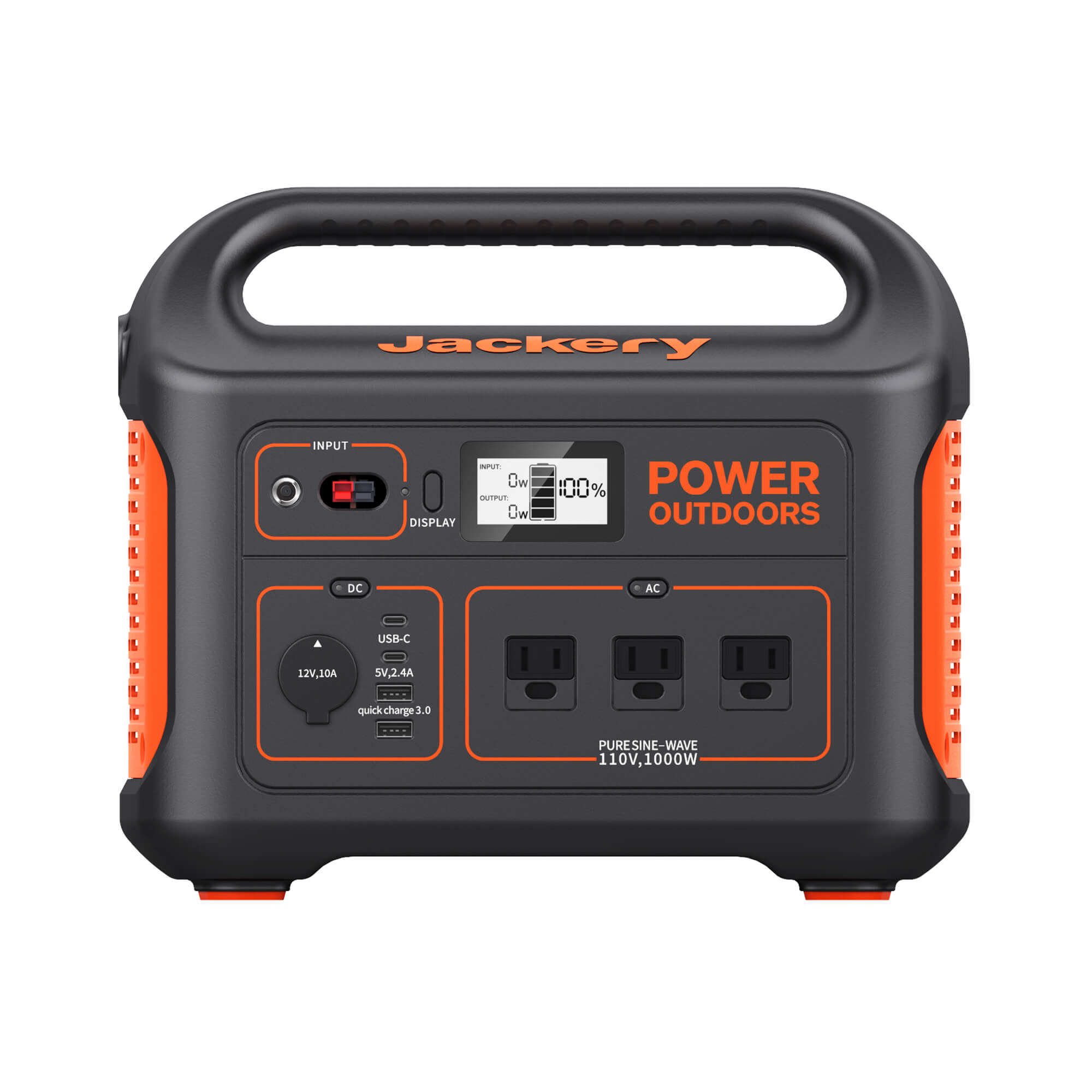
The Jackery’s clearest win is published battery detail. In the provided data, Jackery specifies Li-ion chemistry and 500 cycles, while BLUETTI does not specify chemistry or cycle life for the AC70P. That does not automatically make the Jackery battery better; it means the buyer has more concrete information before purchase. For anyone comparing long-term degradation risk, cycle count is one of the few durability metrics that can be directly compared across products. IEC battery testing standards exist for repeatable performance and cycling evaluation, though brands do not always publish the same test conditions, so the exact meaning of a cycle figure can vary by manufacturer (IEC standards overview).
Jackery also wins on published weight. The Explorer 880 is listed at 8.5 kg, while BLUETTI does not specify the AC70P’s weight in the provided dataset. For a portable power station, weight is not a minor line item; it affects whether the unit is easy to move from car to campsite, from closet to kitchen during an outage, or from RV compartment to picnic table. If portability is near the top of your list, a stated number is better than guessing.
The Explorer 880 has a small but real advantage in battery capacity: 880Wh vs 864Wh. I would not overstate this. The difference is just 16Wh, and it will not transform what the station can power. Still, if two products are in the same output class, more capacity is still more capacity. If you are trying to squeeze the maximum runtime from a CPAP, router, laptop stack, or low-draw cooler, Jackery technically lasts a bit longer.
Jackery’s final edge is spec-sheet confidence for cautious buyers. The BLUETTI AC70P may still be the better value, but several fields in the provided data are missing: weight, chemistry, cycle life, warranty, charging details, and ports. Jackery is also missing some items here, but it gives more of the basics. Buyers who dislike unknowns often prefer the product with more published data, even if it costs more.
Common ground
These two products overlap heavily where it matters most. Both are sub-1kWh portable power stations with 1,000W continuous AC output, and both are non-expandable in the provided data. That makes them suitable for the same general job: short outages, car camping, tailgating, road trips, and running modest household or outdoor electronics. Think laptops, phones, routers, lights, fans, camera gear, and some small appliances that stay within the 1,000W continuous ceiling.
They also share the same main limitation: they are not large backup systems. With 864Wh and 880Wh of rated storage, neither is built for long-duration home backup or high-draw appliances. If you want to keep a fridge, microwave, coffee maker, and communications gear going through a longer outage, this class gets tight fast. You can browse the full database if you want to compare larger units, but for this matchup the takeaway is simple: both are compact, useful, and best treated as light-duty backup or mobile power rather than whole-home solutions.
Who should buy BLUETTI AC70P Portable Power Station | 1000W 864Wh
Buy the BLUETTI AC70P if your priority is value per dollar. At $649, it undercuts the Jackery by $150 while matching it on 1,000W continuous output and coming within 16Wh on battery capacity. That makes it the stronger pick for buyers who care most about what the unit can do right now rather than having every battery detail spelled out on the spec sheet. If your loads are modest and you want to spend less without dropping to a weaker output class, the AC70P is the sharper buy.
Buy BLUETTI AC70P Portable Power Station | 1000W 864Wh →
Who should buy Jackery Explorer 880 Portable Power Station
Buy the Jackery Explorer 880 if you are willing to pay more for more published transparency. In the provided data, Jackery tells you the battery is Li-ion, rates it for 500 cycles, and lists the weight at 8.5 kg. That is enough to matter for buyers who want a clearer picture of longevity and portability before they click buy. You also get a slight capacity bump to 880Wh, though I would treat that as a minor bonus rather than the main reason to choose it.
Buy Jackery Explorer 880 Portable Power Station →
Alternatives worth considering
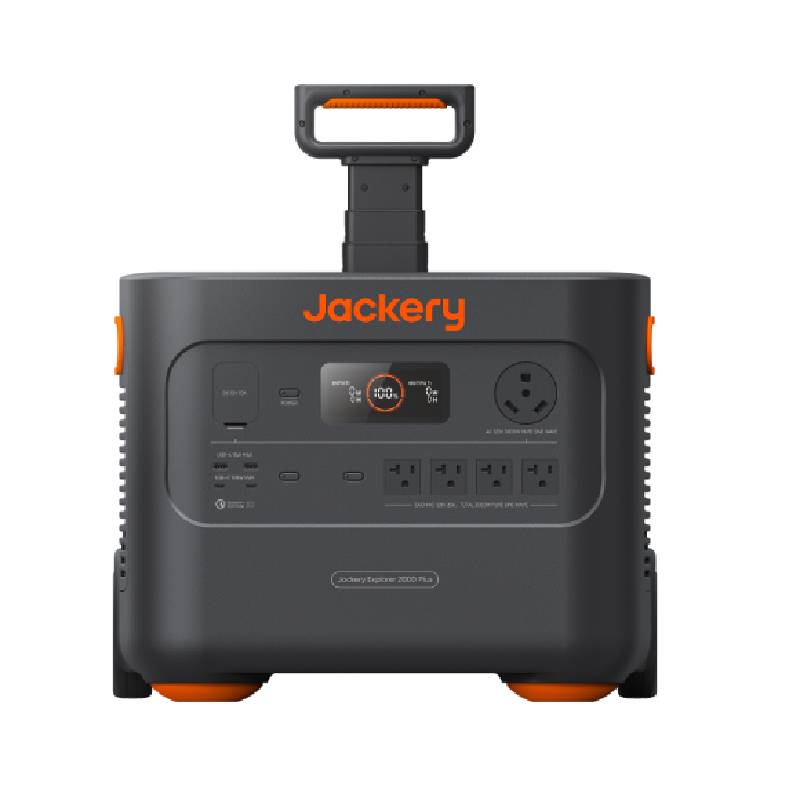
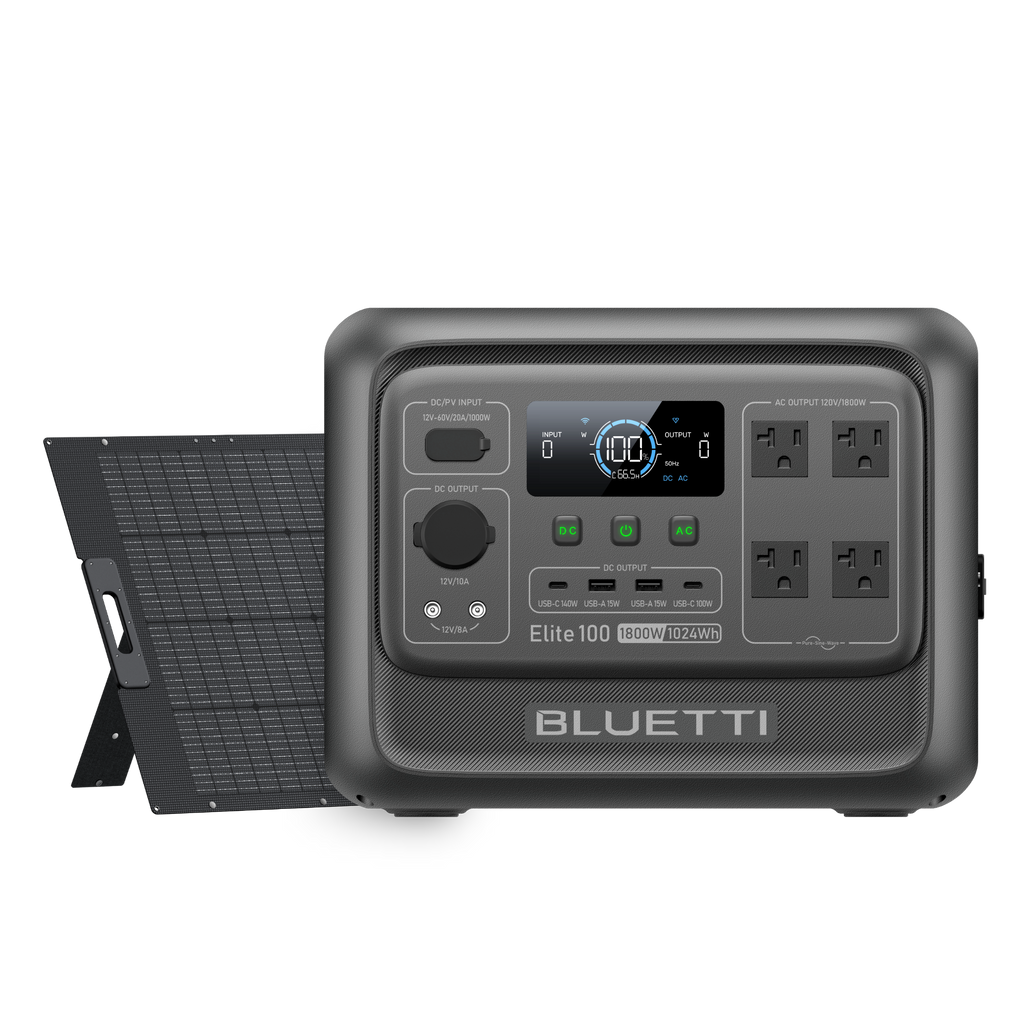
If neither of these feels like the right fit, the next step depends on what you actually need. If you want much more output and expansion, the Jackery Portable Power Station Explorer 2000 Plus is a different class entirely at 2,042Wh, 3,000W continuous output, LiFePO4, 4,000 cycles, and expansion up to 12,000Wh. If you want a ~1kWh Bluetti-branded option with published LiFePO4 chemistry in the provided data, the Elite 100 V2+350W Solar lists 1,024Wh and 11.5 kg, though the dataset also shows 200W AC output, which conflicts with the product description’s higher output claim, so I would verify current specs on the manufacturer page before buying. And if your goal is not portable power at all but home integration hardware, the AC500 Home Integration Kit serves a different purpose and should not be compared directly with these carry-style stations.
Frequently asked questions
Which has better value: BLUETTI AC70P or Jackery Explorer 880?+
Based on the provided pricing, the BLUETTI AC70P is the stronger value play at $649 versus $799 for the Jackery Explorer 880. Both are rated at 1,000W continuous output, and the Jackery only adds 16Wh of extra capacity.
Is the Jackery Explorer 880 battery likely to age faster?+
The product data lists the Explorer 880 as Li-ion with 500 cycles, while BLUETTI does not specify chemistry or cycle life in the provided data. In general, cycle life is one of the clearest durability metrics, so Jackery at least gives buyers a published number to compare.
Are these good for home backup?+
They can cover light backup loads, but both are still sub-1kWh units with no expansion listed in the provided data. For longer outages or heavier appliances, a larger expandable model is usually the better fit.
Editor at SolarWorld covering portable power, balcony PV and home energy storage. Specifications quoted in this guide are pulled directly from our product database; analysis and recommendations are by Nathan Cole.
Full bio & methodology →Related articles
- Buying guide · 7 min
Jackery Explorer 500 vs 550: Best Buy in 2026?
Jackery Explorer 500 and 550 have the same 518Wh capacity and 500W output. Here’s the clear winner, key differences, and who should buy each.
- Buying guide · 7 min
Jackery Explorer 240 vs 240 v2: Best Buy in 2026?
Jackery Explorer 240 vs 240 v2 compared on capacity, power, battery life, weight, and price. See the clear winner for small portable use in 2026.