Short answer
For a typical 48-hour RV weekend averaging 120 W, buy at least 7,500 Wh of battery capacity. That number is bigger than the raw 5,760 Wh load because you need to cover inverter losses, avoid running the battery to empty, and leave a buffer for fridge cycling, weather, and the loads that always show up after you think the math is done.
The math
Start with the reference scenario the reader actually cares about:
- Average load: 120 W
- Trip length: 48 hours
1) Base energy use
Formula:
W × hours = Wh
So:
120 W × 48 h = 5,760 Wh
That is the usable energy your RV loads consume over the weekend.
A 120 W average is realistic for a modest setup with a 12V compressor fridge, lights, phone charging, router/hotspot, laptop charging, and occasional TV use. If you want to run your own numbers, use the calculator behind these numbers.
2) Add inverter losses
If some or most of those loads run on AC, the inverter adds losses. The U.S. Department of Energy notes that inverters are not 100% efficient, and real systems lose energy in conversion; many quality portable power stations land around the low-90% range under typical loading, though efficiency varies by load level and design (DOE). For a planning estimate, I use a 10% loss factor, which means dividing by 0.90.
So:
5,760 Wh ÷ 0.90 = 6,400 Wh
If your RV loads are mostly native 12V DC and you avoid the inverter, your real requirement can be lower. For a generic “weekend RV trip” article, 10% is a fair planning assumption.
3) Account for depth of discharge
Portable power stations with LiFePO4 batteries can usually be discharged deeply, but buying a system that must hit 0% every trip is bad sizing practice. Battery makers and system designers generally preserve service life by avoiding full discharge, and many off-grid sizing methods assume you should not plan around using 100% of nameplate capacity every cycle. NREL also treats usable energy and nameplate energy as different things in storage analysis (NREL).
For a practical weekend-RV recommendation, assume you want to use 90% of rated capacity at most:
6,400 Wh ÷ 0.90 = 7,111 Wh
4) Add a safety margin
Now add reserve for the stuff that breaks neat spreadsheet math:
- fridge compressor cycling harder in hot weather
- furnace fan overnight
- phone/laptop charging you forgot to count
- battery aging over time
- colder conditions reducing effective output
A 5% safety margin is modest:
7,111 Wh × 1.05 = 7,467 Wh
Rounded to a real buying number:
Recommended battery size = 7,500 Wh
Final sizing formula
Here it is in one line:
Required battery Wh = (load W × hours) ÷ inverter efficiency ÷ usable DoD × safety margin
Plugging in the reference trip:
(120 × 48) ÷ 0.90 ÷ 0.90 × 1.05 = 7,467 Wh
Round up to 7,500 Wh.
That is why the answer to “how many wh of battery do I need for a weekend RV trip? (2026)” is not 5,760 Wh, even though that is the raw load. The battery you buy needs to be larger than the energy you plan to consume.
Real examples from our database
Below are real products from our full database, using only listed specs. Runtime is calculated for this same 120 W average RV weekend scenario:
Runtime (hours) = capacity Wh × 0.90 inverter efficiency ÷ 120 W
That gives an apples-to-apples estimate for how long each unit can support the reference load. None of the single units below reaches the full 48-hour target by itself except a DELTA Pro + Smart Extra Battery pairing in practical terms, so this is a good case where expansion matters.
| Image | Product | Key spec | Runtime in this scenario | Price |
|---|---|---|---|---|
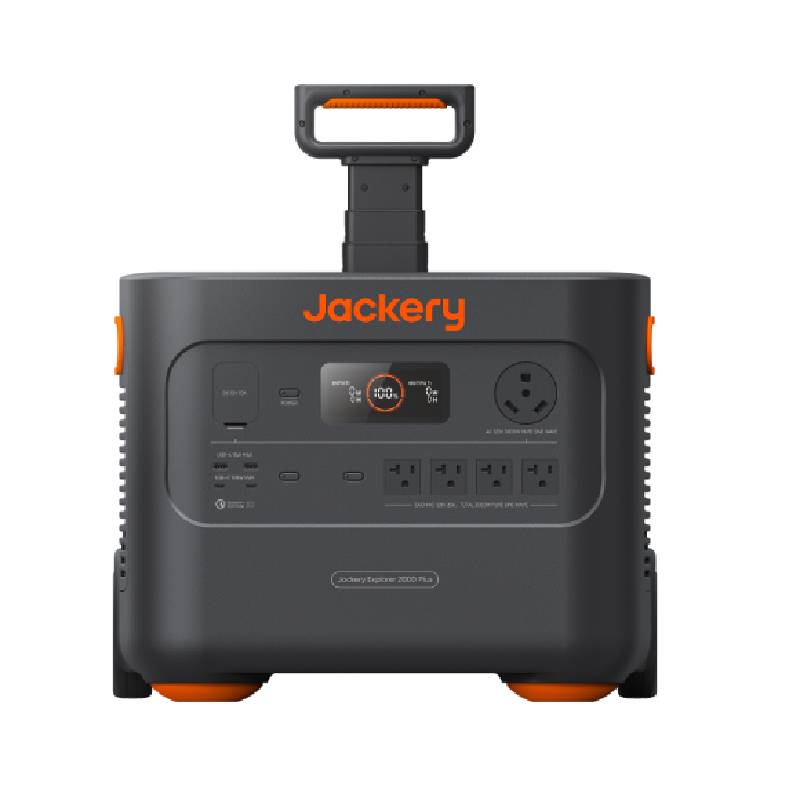 |
Jackery Portable Power Station Explorer 2000 Plus | 2042 Wh, 3000 W AC, LiFePO4, expandable | 15.3 hours | $2,199 |
 |
EcoFlow DELTA 3 Max Series Portable Power Station (2048Wh) | 2048 Wh, 3000 W AC, LiFePO4, not expandable | 15.4 hours | $1,099 |
 |
EcoFlow DELTA 3 Ultra Series Portable Power Station (3072Wh) | 3072 Wh, 3600 W AC, LiFePO4, not expandable | 23.0 hours | $1,499 |
 |
EcoFlow DELTA Pro Portable Power Station | 3600 Wh, 3600 W AC, LiFePO4, expandable | 27.0 hours | $1,799 |
 |
EcoFlow DELTA Pro Smart Extra Battery | 3600 Wh extra battery, LiFePO4; accessory for DELTA Pro | Used with DELTA Pro, adds about 27.0 more hours | $1,199 |
|
EcoFlow DELTA Pro Portable Power Station —— Special Offer | 3600 Wh, 3600 W AC, LiFePO4, expandable | 27.0 hours | $2,799 |
What these examples mean in plain English
If your goal is the full 48-hour, 120 W average weekend, the standout practical match from this list is:
- EcoFlow DELTA Pro Portable Power Station + EcoFlow DELTA Pro Smart Extra Battery
Combined rated capacity: 7,200 Wh
Estimated AC runtime at 120 W using the same 90% inverter factor:
7,200 × 0.90 ÷ 120 = 54 hours
That pairing clears the 48-hour target with some reserve, which is exactly what you want.
The single-unit options are better for:
- one-night trips
- lighter average loads
- trips with reliable daytime solar charging
- RVers who already have a house battery and just want supplemental capacity
If you want to inspect the exact product pages, start with the EcoFlow DELTA Pro Portable Power Station, the matching EcoFlow DELTA Pro Smart Extra Battery, the EcoFlow DELTA 3 Ultra Series Portable Power Station (3072Wh), the EcoFlow DELTA 3 Max Series Portable Power Station (2048Wh), and the Jackery Portable Power Station Explorer 2000 Plus.
What goes wrong
1) You size to nameplate load, not real delivered energy
A lot of buyers stop at 120 W × 48 h = 5,760 Wh and then shop for a 6 kWh battery. That ignores inverter losses and reserve, so the battery that looked “big enough” runs short on day two.
2) You match watt-hours but miss surge power
A fridge may average modest power but still pull a startup surge. If your battery has enough Wh but not enough inverter headroom, the compressor may fail to start even though the battery is mostly full. Surge specs are not specified for several products in this dataset, so check the manufacturer page before buying.
3) Cold weather cuts real-world performance
LiFePO4 is durable and cycle-friendly, but cold temperatures can reduce available power and charging performance. Battery University and multiple manufacturer datasheets show that lithium batteries lose effective performance as temperature drops, especially below freezing for charging (Battery University). A setup that is barely large enough in mild weather can become undersized on a cold trip.
4) Port mismatch forces inefficient workarounds
If your RV gear is mostly 12V DC but your power station setup pushes you into AC adapters and back down to DC again, you waste energy in conversion. The result is shorter runtime than the simple nameplate math suggested.
When to step up a tier
Step up to the next-bigger battery if any of these are true:
- Your calculated result is within 10-15% of a product’s rated capacity.
- You plan to run a fridge plus furnace fan overnight.
- You expect hot weather, which makes compressor fridges work harder.
- You need two nights with no charging at all.
- Your battery will age in service for a few years and you still want the same trip length.
- You want to use AC for more than just occasional charging.
For this specific scenario, a single 3,600 Wh unit is borderline only for a one-night trip, not a full weekend. A 7,200 Wh class setup is the first tier that actually fits the 48-hour target with realistic losses.
That is why I would treat the DELTA Pro + Smart Extra Battery as the most on-target buy here, not because it is the cheapest per se, but because it meets the use case without forcing heroic assumptions. The EcoFlow DELTA Pro Portable Power Station —— Special Offer appears in the database too, but at the listed price it is less compelling than the standard DELTA Pro entry for this use case.
If you know you will add solar and camp in good sun, then a smaller expandable unit like the Jackery Portable Power Station Explorer 2000 Plus can make sense as a modular starting point. Just do not confuse “expandable” with “already big enough today.”
How we picked the products above
We filtered our full database for portable power stations and matched batteries relevant to RV use, then compared listed capacity, continuous AC output, chemistry, expandability, and current listed price. Runtime was calculated consistently from rated capacity using the same 120 W reference load and a 90% inverter-efficiency assumption, so every row is directly comparable. We did not invent missing fields; where a spec was absent in the source data, we treated it as not specified. You can read our scoring methodology for the broader framework behind product evaluation.
Frequently asked questions
Is 2,000 Wh enough for a weekend RV trip?+
Not for the reference case here. A 2,000 Wh class power station only covers roughly 16 to 17 hours at a 120 W average load before adding extra reserve, so it works for a light overnight but not a full 48-hour weekend.
Why is the battery recommendation bigger than 5,760 Wh?+
Because the 5,760 Wh figure is the usable energy your appliances need, not the nameplate battery size you should buy. Inverter losses, depth-of-discharge limits, and a safety margin all push the recommended battery capacity higher.
Can I use one power station plus solar instead of buying a bigger battery?+
Yes, if you have reliable daytime charging and enough panel wattage. But for a sizing baseline, it is safer to assume the battery must carry the full weekend load unless you know your solar harvest from real conditions.
Editor at SolarWorld covering portable power, balcony PV and home energy storage. Specifications quoted in this guide are pulled directly from our product database; analysis and recommendations are by Nathan Cole.
Full bio & methodology →Related articles
- Explainer · 7 min
Laptop WFH Backup: What Size Power Station in 2026?
Buy about 700 Wh for an 8-hour laptop workday. That covers 480 Wh of use plus inverter losses, battery reserve, and a real safety margin.
- Explainer · 6 min
CPAP Overnight: What Size Power Station in 2026?
Buy about 800 Wh for a CPAP overnight. That covers a 60 W CPAP for 8 hours with inverter losses and a practical safety margin.
- Explainer · 7 min
Fridge Backup Power: What Size Station Do You Need?
For a 150W fridge over 24 hours, plan on about 5,000Wh rated capacity. Here’s the math, the runtime, and real portable power station picks.